 EN
EN


In the rapidly expanding electric vehicle (EV) infrastructure sector, commercial charging hubs, fleet depots, and public fast-charging stations require robust front-end electrical infrastructure. As high-power DC fast chargers and multi-port AC chargers demand high continuous currents, direct grid connection without dedicated feeder protection poses significant operational risks.
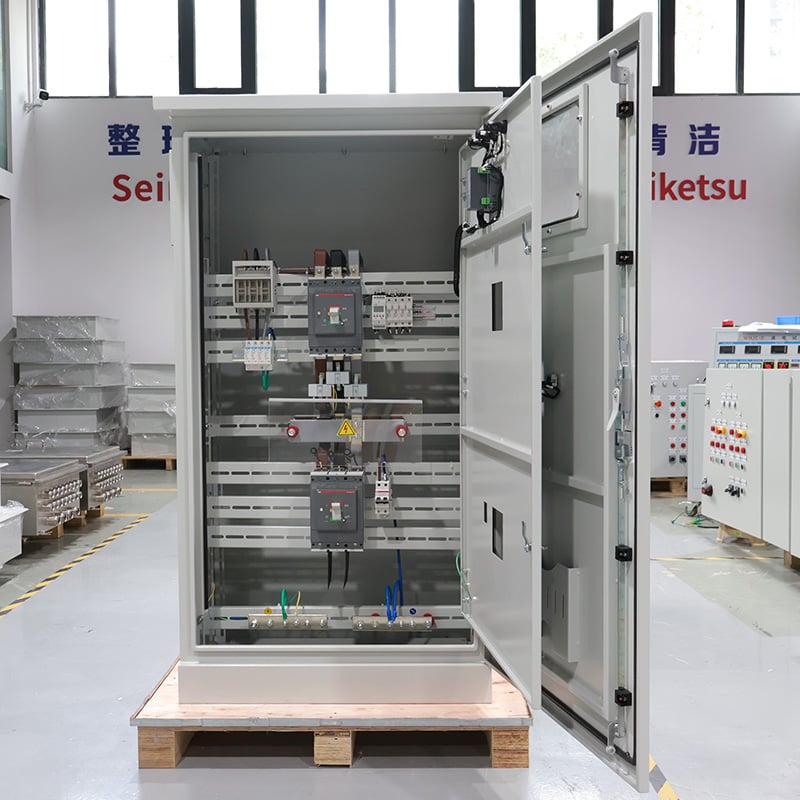
To bridge the utility power grid and outdoor charging equipment, the 500A Outdoor Low-Voltage Power Distribution Cabinet serves as the primary electrical control hub. Engineered specifically for exposed environments, this feeder panel handles power reception, circuit protection, energy metering, and power distribution for charging clusters.
Why Do Outdoor EV Charging Clusters Need Dedicated 500A Distribution Cabinets?
1. Charging stations present unique electrical load profiles compared to standard industrial facilities. DC fast chargers operate under sustained high currents with sudden load spikes, creating continuous thermal stress and potential harmonic distortion across the station's electrical architecture.When deploying charging infrastructure outdoors, utility power must be safely stepped down, monitored, and distributed across multiple charging units. Standard indoor distribution boards or unrated junction boxes fail to handle these demands due to environmental degradation and inadequate fault withstand capacity.
2. Key Risks of Inadequate Front-End Distribution Infrastructure:
1) Thermal Overload and Nuisance Tripping: EV charging loads run continuously near maximum capacity for extended periods. Inadequate busbar sizing or improper ventilation leads to thermal accumulation, degraded insulation, and frequent tripping under full station load.
2) Environmental Ingress: Rain, wind-blown dust, humidity, and extreme ambient temperatures cause contact oxidation, busbar corrosion, and short-circuit faults inside unsealed enclosures.
3) Voltage Instability and Transient Damage: Outdoor power lines are exposed to lightning strikes and switching transients. Without dedicated surge suppression and incoming isolation, voltage spikes can damage sensitive charging module electronics downstream.
4) A specialized 500A outdoor power distribution cabinet resolves these challenges. Acting as an intermediate power hub, it accepts incoming feeder lines from the main utility transformer, conditions the power through incoming protection devices, and distributes current across downstream sub-circuits while shielding internal components behind weatherproof seals.
Core Differences:
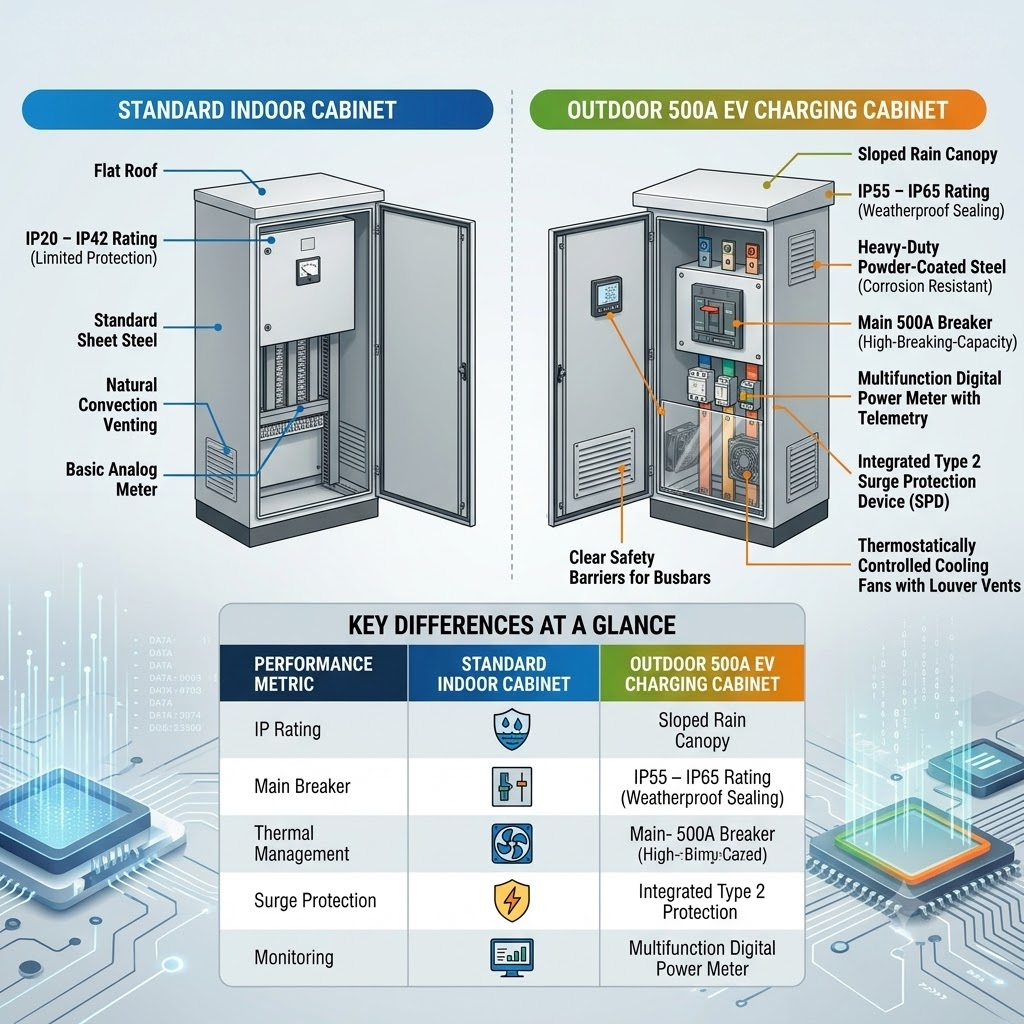
Comparison:Standard Indoor Enclosure vs. The Outdoor 500A EV Distribution Cabinet
Performance Metric |
Standard Indoor Enclosure |
Outdoor 500A EV Distribution Cabinet |
Ingress Protection (IP) |
IP20 – IP42 (Indoor rating, limited protection) |
IP55 – IP65 (Full protection against dust and rain) |
Enclosure Structure |
Flat roof, standard sheet steel |
Sloped rain canopy, sealed door with weather gaskets |
Overcurrent Protection |
Standard low-capacity circuit breakers |
High-breaking-capacity 500A MCCB |
Surge Suppression |
Optional or missing |
Integrated Type 2 / Class II Surge Protective Devices |
Monitoring & Control |
Basic analog meters or none |
Digital multifunction power meter with telemetry |
Thermal Management |
Natural convection |
Rainproof louver vents, filtered air paths |
Core System Architecture and Component Layout
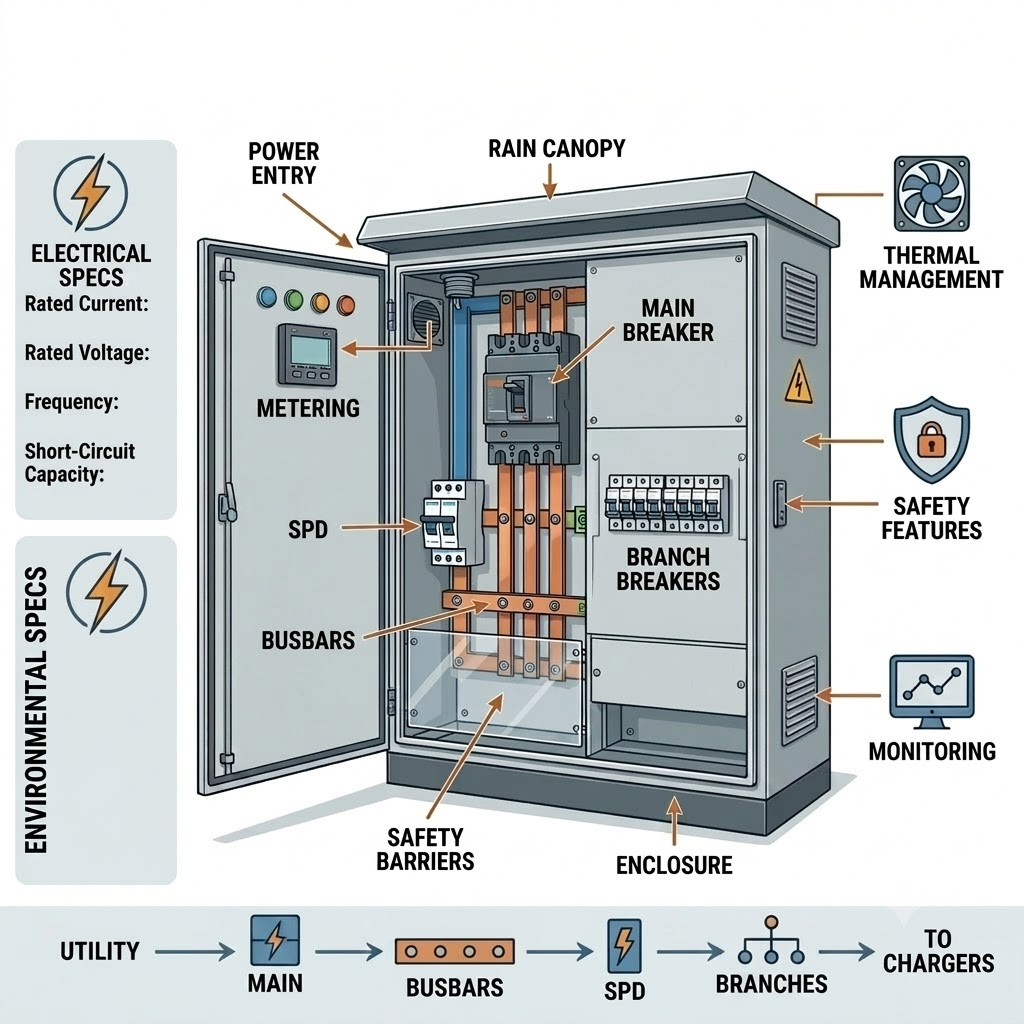
A 500A outdoor power distribution cabinet integrates low-voltage switchgear, circuit protection devices, and monitoring equipment into a self-contained, weatherproof housing.
Core Components and Operational Functions:
1. Weatherproof Enclosure & Protective Canopy: Fabricated from heavy-gauge galvanized steel or stainless steel with anti-corrosion powder coating. Includes a sloped top roof to prevent standing water accumulation.
2. 500A Main Molded Case Circuit Breaker (MCCB): Positioned at the incoming power entrance. Provides primary manual isolation and overload protection for total station capacity up to approximately 300kW to 350kW at 400V 3-phase.
3. High-Conductivity Copper Busbar Assembly: Phase lines and neutral/ground bars are rated for high continuous current densities, shielded by clear acrylic protective barriers.
4. Branch Distribution Breakers: Secondary MCCBs or MCBs feed individual AC or DC chargers, allowing targeted isolation during servicing without shutting down the entire station.
5. Multifunction Power Meter & Indicators: A door-mounted digital meter monitors active power, voltage fluctuations, current draw, and total energy consumption in real time.
6. Surge Protection Device (SPD): Diverts high-voltage surges caused by lightning and grid switching away from sensitive charging electronics.
7. Emergency Stop Mechanism: Door-mounted mushroom switch allows immediate manual power cutoff during emergencies.
FAQ
Q1: What size transformer is required for a 500A outdoor distribution cabinet?
A1: A 500A cabinet on a 400V three-phase grid handles roughly 346kVA of apparent power. For stable, continuous heavy-load operation, it should be paired with a dedicated 400kVA or 500kVA distribution transformer.
Q2: How does the cabinet support dynamic load management?
A2: Digital meters and CT sensors send real-time current data to the station's energy management system (EMS). If total demand nears 500A, the EMS automatically throttles downstream chargers to prevent breaker trips.
Q3: What earthing (grounding) configurations are suitable?
A3: These cabinets easily integrate into TN-S, TN-C-S, or TT networks. Dedicated copper ground busbars connect directly to site earth pits to establish equipotential bonding and ensure user safety during faults.
Q4: Why use stainless or galvanized steel for the enclosure?
A4: Standard mild steel rusts quickly outdoors. Powder-coated 304/316 stainless or hot-dip galvanized steel resists corrosion from rain, UV rays, and salt spray, ensuring the cabinet maintains its IP rating for decades.
Q5: How can overheating be prevented during peak summer charging?
A5: Overheating is prevented by utilizing oversized copper busbars, IP-rated ventilation louvers, and performing routine infrared thermal inspections to identify and tighten any loose connections.
Conclusion
Deploying a reliable and robust front-end electrical infrastructure is critical for the success of any commercial EV charging hub or fleet depot. Standard indoor enclosures fall short when exposed to harsh outdoor conditions, thermal stress, and continuous high-current demands
Table of Contents
- Why Do Outdoor EV Charging Clusters Need Dedicated 500A Distribution Cabinets?
- Core Differences:
- Core System Architecture and Component Layout
-
FAQ
- Q1: What size transformer is required for a 500A outdoor distribution cabinet?
- Q2: How does the cabinet support dynamic load management?
- Q3: What earthing (grounding) configurations are suitable?
- Q4: Why use stainless or galvanized steel for the enclosure?
- Q5: How can overheating be prevented during peak summer charging?
- Conclusion