 EN
EN


Understanding the Core Logic and Applications of Explosion-Proof Technology
1. Hazardous Area Classification and Selection of Protection Type
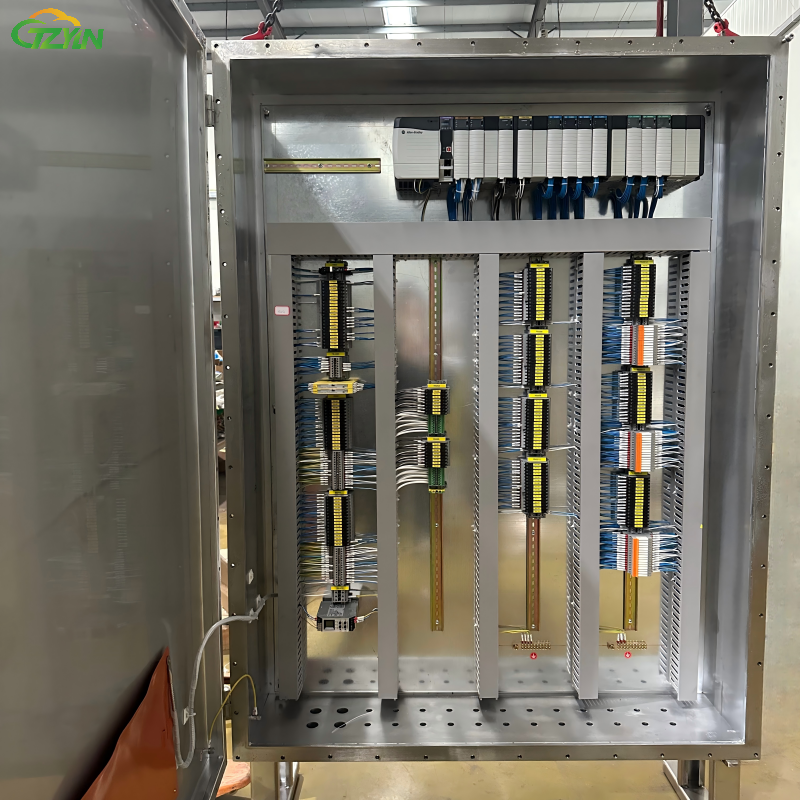
First, you must determine the equipment's Hazardous Area Classification based on the nature and frequency of the explosive gas or dust present on-site. This directly dictates the required type of explosion protection. Pressurization is a common technique for the type of control cabinet shown in the picture; it works by continuously supplying clean air to the cabinet interior to maintain a slight positive pressure, which physically prevents external hazardous media from entering. This is the preferred protection solution for complex, large-scale PLC systems (such as Allen-Bradley ControlLogix) operating in Zone 1/Zone 2 environments.
2. StainleS Steel Material: Environmental Durability and Corrosion Protection
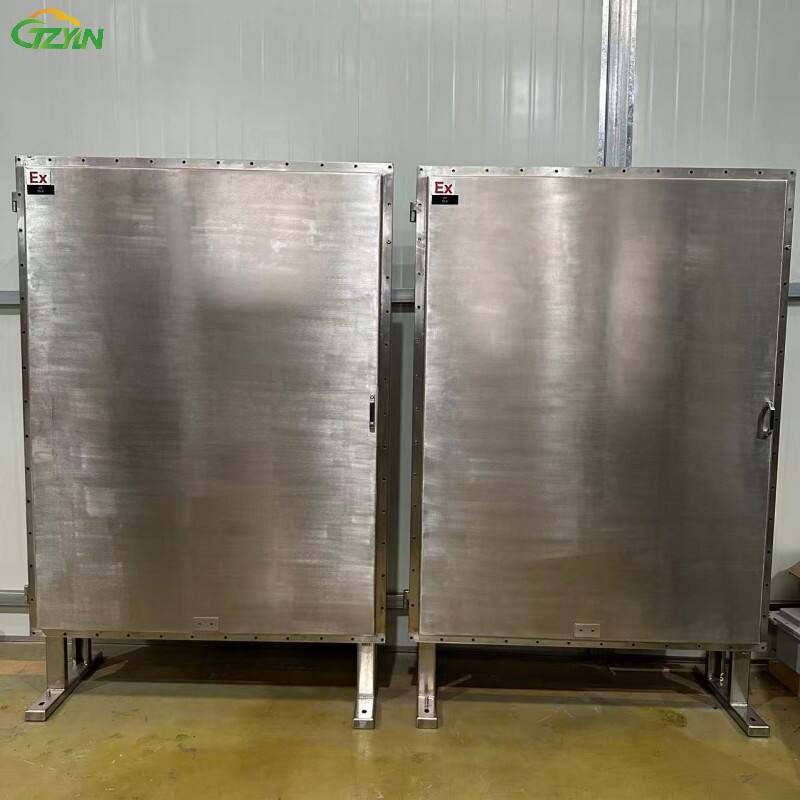
The choice of a Stainless Steel Explosion-Proof Enclosure (such as S304 or S316L grades) is mandatory for severe industrial conditions. In environments that are humid, subject to salt spray, or exposed to corrosive chemicals, stainless steel effectively resists corrosion, ensuring the enclosure's gas-tightness and structural integrity do not fail over time, which is the long-term basis for maintaining explosion-proof performance. Furthermore, the smooth surface of stainless steel aids in cleaning, meeting the hygienic standards of the food and pharmaceutical industries.
Technical Core: Selection Criteria for Internal Integration and Safety Barriers
The value of a high-qualityStainless Steel Explosion-Proof PLC Cabinetis demonstrated through the quality of its internal integration and the application of key safety components.
1. The Isolation Function of Intrinsic Safety Barriers
Within the control cabinet, the yellow safety barrier modules are visible. They are the core link for achieving Intrinsic Safety, connecting field instruments (like sensors and transmitters) in the hazardous area to the non-explosion-proof PLC I/O modules inside the control cabinet.
The safety barrier uses components like resistors and Zener diodes to limit the electrical energy transmitted to the hazardous area to an extremely low level, ensuring that even in the event of a short circuit or ground fault, the resulting energy is insufficient to ignite the explosive mixture. This represents the lowest-risk solution for field signal connections in modern automation systems.
2. PLC System Hardware Integration and Thermal Design
The internal design of the explosion-proof PLC cabinet must ensure the stable operation of the control core (such as the Allen-Bradley ControlLogix processor, power supplies, communication, and I/O modules). A pressurization design must include a reliable ventilation/purging system. This system must not only meet the pre-purging time requirements before power-up but also maintain stable positive pressure during operation to dissipate the heat generated by the running PLC modules. Precise thermal calculations and airflow design are crucial for guaranteeing PLC system lifespan and control system reliability.
Procurement Decision: Vendor Vetting, Compliance, and Cost-Effectivene
For procurement managers, a qualified explosion-proof control cabinet supplier provides more than just equipment; they provide safety certification, integration services, and long-term support.
1. Strict Verification of Qualifications and Certifications
The supplier must possess Explosion Protection Certification from an accredited authority (such as ATEX, IECEx, CCC), and the certificate's Ex marking (e.g., Ex de px IIB T4) must exactly match your site's Hazardous Area Classification, Gas Group, and Temperature Class. Prior to procurement, demand that the supplier provides complete design drawings and calculation reports to confirm that their pressurization system, safety barrier selection, and explosion-proof cable glands comply with national and international standards.
2. Long-Term Maintenance Costs and Risk Investment ROI
While the price of a stainless steel explosion-proof PLC cabinet is higher than that of a standard industrial cabinet, the long-term benefits are substantial.By selecting corrosion-resistant materials like S316L and high-reliability components, you can significantly extend the equipment lifespan and reduce maintenance frequency. More importantly, compliant explosion-proof equipment is the only effective investment in mitigating the "infinite cost" risk of a potential explosion accident. When calculating the Total Cost of Ownership (TCO), the assurance of production continuity and personnel safety must be factored in to justify the high Return on Investment (ROI) of a high-quality explosion-proof cabinet.
In-Depth Product Performance FAQs: Common Questions about Stainless Steel Explosion-Proof PLC Cabinets
1.Why is "pre-purging" required before starting a pressurized explosion-proof cabinet, and how does this relate to safety?
Pre-purging is a mandatory step before starting a pressurized explosion-proof cabinet. Its purpose is to use the protective gas (such as clean air) to thoroughly displace or dilute any external explosive mixture that may have seeped into the cabinet to a safe concentration level before applying power to the internal components. The system only permits the internal electrical components to be energized once pre-purging is complete and the internal pressure has reached and stabilized at the safe value, ensuring no ignition source is created upon startup if residual hazardous gas is present.
2. What is the fundamental difference in explosion protection function between an Intrinsic Safety Barrier and a standard signal isolator?
A standard signal isolator only provides electrical isolation to prevent interference between circuits, but it does not have energy-limiting capability. The core function of an Intrinsic Safety Barrier is to limit the electrical energy (current, voltage, power) transmitted to the hazardous area. Even in the event of a fault, the energy output to the field will not exceed the minimum ignition energy required to ignite the explosive gas, which is the physical guarantee of achieving intrinsic safety.
3. Is it safe enough to use a stainless steel (S304) enclosure in a corrosive environment?
S304 is adequate for mildly corrosive or dry environments. However, if the environment contains chlorides (such as coastal areas or chemical proceSes with chlorine compounds), S304 is susceptible to pitting corrosion and crevice corrosion. This corrosion can compromise the structural integrity and sealing of the enclosure, leading to failure of the explosion protection function. In these highly corrosive scenarios, it is strongly recommended to procure a S316L stainless steel explosion-proof enclosure to ensure long-term explosion integrity.
4. What role do explosion-proof cable glands play in the explosion-proof system, and how is their quality verified?
The explosion-proof cable gland is the last line of defense for ensuring the integrity of the explosion-proof enclosure. It ensures that when cables pass through the cabinet wall, the enclosure's flameproof or gas-tight requirements are maintained. For pressurized systems, the glands must be well-sealed to maintain positive pressure. Quality verification involves not only checking if the gland itself has explosion-proof certification but also confirming that the supplier uses matching sealing rings and strictly follows the specified installation torque to ensure the actual installation performs according to standard.
5. How can data from this explosion-proof PLC cabinet be integrated into an upper-level SCADA system, and what explosion-proof compatibility issues should be noted?
The PLC system achieves data transmission through explosion-proof communication modules (such as the Ethernet module 1756-EN2TR, which does not require a special flameproof enclosure inside a pressurized cabinet). Standard industrial protocols like Modbus TCP or EtherNet/IP are typically used for data acquisition. Compatibility issues primarily revolve around ensuring that communication cables passing through the explosion-proof boundary still use explosion-proof certified cable glands; if fiber optic communication is used, explosion-proof fiber optic penetrators must be used to mitigate the risk associated with fiber cable failure.
Table of Contents
- Understanding the Core Logic and Applications of Explosion-Proof Technology
- Technical Core: Selection Criteria for Internal Integration and Safety Barriers
- Procurement Decision: Vendor Vetting, Compliance, and Cost-Effectivene
-
In-Depth Product Performance FAQs: Common Questions about Stainless Steel Explosion-Proof PLC Cabinets
- 1.Why is "pre-purging" required before starting a pressurized explosion-proof cabinet, and how does this relate to safety?
- 2. What is the fundamental difference in explosion protection function between an Intrinsic Safety Barrier and a standard signal isolator?
- 3. Is it safe enough to use a stainless steel (S304) enclosure in a corrosive environment?
- 4. What role do explosion-proof cable glands play in the explosion-proof system, and how is their quality verified?
- 5. How can data from this explosion-proof PLC cabinet be integrated into an upper-level SCADA system, and what explosion-proof compatibility issues should be noted?