 EN
EN


Matching Procurement Decisions: Key Considerations for Outdoor Distribution Cabinet Selection Standards
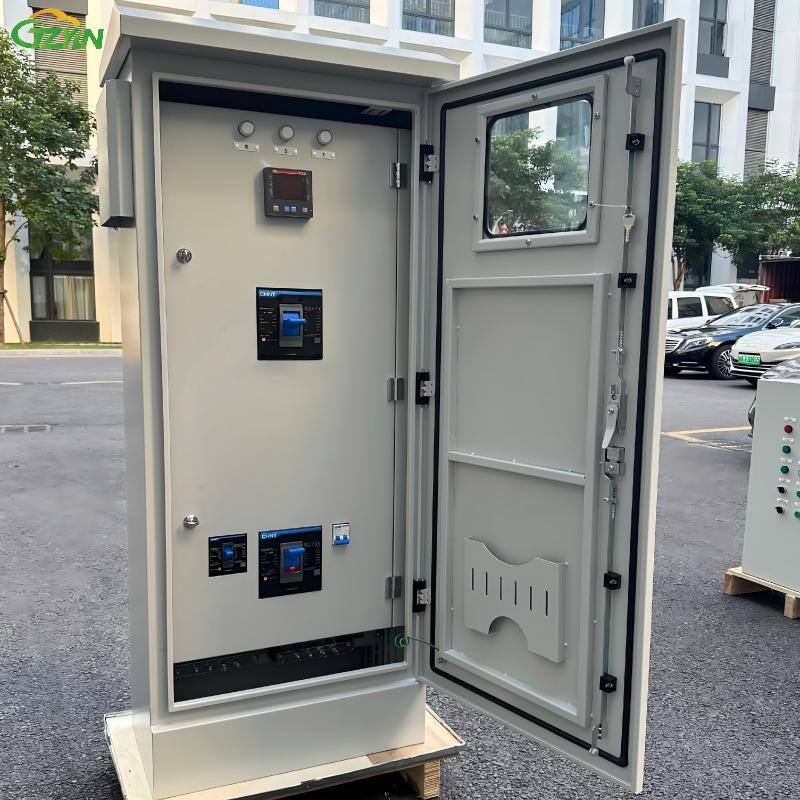
In centralized EV charging station systems (especially in high-power outdoor scenarios like commercial complexes, residential areas, and highway service areas), the power distribution protection cabinet is crucial for the system's long-term reliability and operational safety. Procurement managers and production supervisors must focus their selection on functionality, reliability, and compliance.
Functionality and Capacity Matching
The core focus is on the cabinet's rated current and breaking capacity. The distribution cabinet utilizes large-capacity Molded Case Circuit Breakers (MCCBs) (such as CHNT NXDM-400S), which is fundamental to ensuring multiple charging terminals can operate at high power simultaneously. During selection, the capacity of the incomer and outgoing circuit breakers must be precisely calculated based on the anticipated maximum charging load (the sum of all charging piles at full capacity). The capacity selected should include a margin of over 20% to accommodate future expansion needs.
Outdoor Environmental Adaptability and Protection Rating
As an outdoor device, its Ingress Protection rating is vital. Our outdoor cabinet features excellent dust-proof, moisture-proof, and anti-corrosion capabilities, which guarantee long-term stable operation. Before procurement, it is essential to require the cabinet to meet at least IP54 or a higher outdoor protection standard, ensuring internal electrical components are protected from rain, dust, and extreme temperatures.
Safety Compliance and Certification
Ensure the product complies with mandatory national standards (such as GB/T 14048.2, GB/T 7251.1, etc.) and relevant CCC certification. This is not only a necessary condition for project acceptance but also the cornerstone for mitigating operational risks.
Technical Core Analysis: How the Distribution Cabinet Ensures Charger Safety and Stability
The core value of this distribution cabinet lies in its three-layer protection and distribution functions, making it the critical link in the "grid-to-pile" safety chain.
Core Protection Components: Main Incomer and Branch Circuit Protection
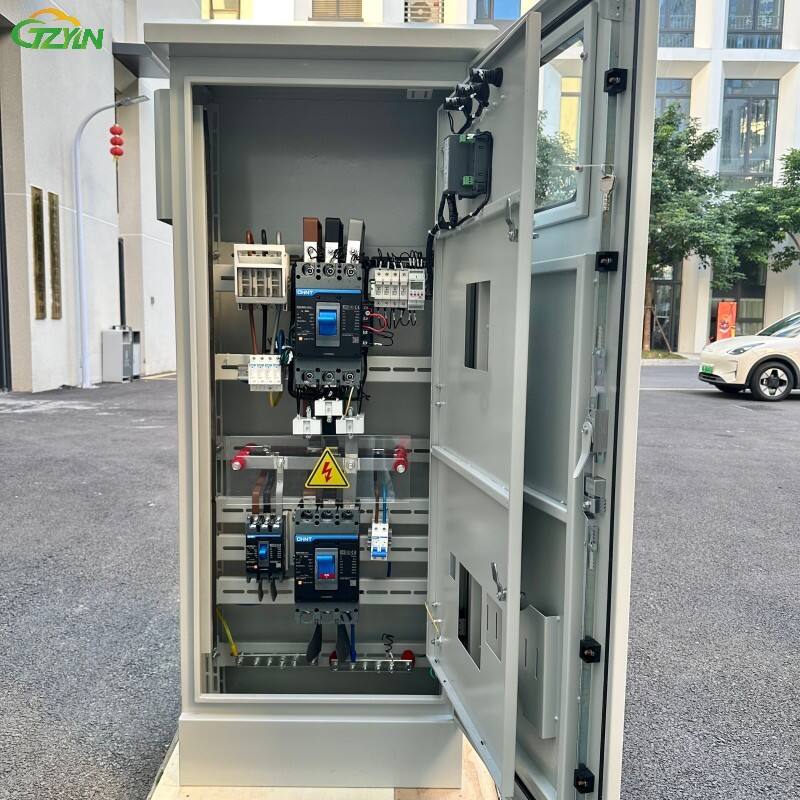
The distribution cabinet typically adopts an architecture comprising a Main Incomer Circuit Breaker (used for overall overload, short circuit, and leakage protection) and multiple Outgoing Branch Circuit Breakers (connected to individual charging piles). The main switch's high breaking capacity can swiftly interrupt fault currents, preventing accident escalation. Branch switches provide precise protection for individual circuits, ensuring that a fault in one charging pile does not affect the operation of the entire charging station.
Overvoltage, Undervoltage, and Lightning Protection
Outdoor distribution cabinets require built-in reliable Surge Protective Devices (SPD) and voltage monitoring modules to handle lightning strikes and grid fluctuations. The SPD should be T1+T2 rated to provide effective protection against both direct and induced lightning. This is crucial for protecting expensive charging pile modules, offering an effective means of extending equipment lifespan and reducing maintenance costs.
Metering and Status Monitoring (EMS)
A high-quality distribution cabinet front-end should integrate electricity meters and status monitoring interfaces. By continuously collecting data on current, voltage, and power factor, it enables remote fault diagnosis, energy consumption analysis, and preventive maintenance, significantly boosting the operational efficiency of the charging station.
Return on Investment Analysis: How High-Quality Cabinets Deliver Long-Term Cost-Effectiveness
Procurement decisions should not focus solely on the initial price but rather on the Total Cost of Ownership (TCO) and the value of risk mitigation.
Reducing Unplanned Downtime
High-quality circuit breakers and components offer a higher number of operating cycles and greater reliability, effectively preventing charging station outages caused by component failure. A single outage not only results in lost charging revenue but also severely damages user experience. Selecting a reliable outdoor power distribution cabinet supplier is the prerequisite for guaranteeing continuous operation.
Lowering Maintenance and Replacement Costs
Adopting outdoor enclosure structures with high-temperature resistance, UV resistance, and a high IP rating effectively slows down the aging process, reducing the need for maintenance or replacement due to environmental factors (such as rust or water ingress). Although the initial procurement cost for a vertical outdoor distribution cabinet is slightly higher, its maintenance cost over its lifespan is significantly lower than that of low-end products.
Simplifying System Integration and Installation
Optimized internal layouts (such as clear busbar systems and rational component placement) can drastically reduce on-site installation and commissioning time, thereby lowering labor costs.
Mitigating Procurement Risks: Vendor Vetting and Transactional Attributes
In B2B procurement, vetting the distribution cabinet manufacturer or a reliable complete equipment supplier is key to risk mitigation.
Focus on Core Component Brands
Verify that the supplier uses industry-recognized brands for core electrical components such as circuit breakers, contactors, and thermal relays —this is the most direct endorsement of product quality.
Customization and Design Capability
Inquire whether the supplier can provide customized power distribution cabinet solutions that meet your specific charging station layout, multi-way output needs, and special protection level requirements. This demonstrates the supplier's professional engineering design capability.
After-Sales Service and Technical Support
The operation of the power distribution cabinet involves high voltage, requiring the supplier to offer rapid-response fault handling and spare parts services. This is the transactional attribute that guarantees the project's long-term stable operation.
Procurement Manager's Must-Ask: In-Depth Technical FAQs on Outdoor Distribution Cabinets
1. Why are outdoor cabinets more expensive than indoor cabinets?
Outdoor cabinets must meet a higher IP protection rating, utilize UV-resistant and anti-corrosion materials and coating processes, and include thermal management capabilities (such as cooling fans or heating elements) to cope with day-night temperature variations and internal heat generation, ensuring components operate within a safe temperature range. These design and material requirements increase manufacturing costs but guarantee reliability in outdoor environments.
2. Why is it necessary for centralized charging stations to have distribution cabinets with power limiting functions?
In locations with limited power supply capacity, such as residential areas or commercial complexes, the total power of the charging station often cannot exceed the maximum capacity allocated by the grid. A distribution cabinet configured with a power limiting function (implemented via an EMS system or smart circuit breakers) can dynamically adjust the power distributed to each charging pile during peak charging periods. This ensures the total load does not exceed the grid capacity, preventing transformer overload trips, and thereby guaranteeing the stable operation of the entire site and grid safety.
3. What is the Breaking Capacity (Icu/Ics) of a Molded Case Circuit Breaker (MCCB)?
Breaking Capacity is the maximum short-circuit current the breaker can safely interrupt. Icu (Ultimate Short-Circuit Breaking Capacity) is the maximum current the breaker can interrupt without being damaged, while Ics (Service Short-Circuit Breaking Capacity) requires the breaker to remain operational after interruption. In selection, the breaking capacity must be greater than the maximum short-circuit fault current that may occur at the installation point—this is the core safety parameter for preventing equipment explosion or damage.
4. If our project is located in a coastal area, are there special requirements?
Coastal areas experience severe salt spray corrosion, requiring the cabinet to be made of stainless steel or treated with special anti-corrosion coatings (such as hot-dip galvanizing). Internal components must undergo three-proof treatment (moisture-proof, mildew-proof, and salt-spray-proof) to prevent internal short circuits or corrosion caused by salt film deposition. Additionally, all terminals and busbars should be tin-plated or silver-plated to enhance conductivity and corrosion resistance.
5. What are the advantages of using a modular design for a distribution cabinet?
A modular distribution cabinet design facilitates quick expansion or replacement of faulty modules. When an increase in charging piles or a fault in a branch circuit occurs, maintenance personnel can quickly plug in or replace a module without affecting the power supply of other circuits. This significantly simplifies on-site maintenance procedures and reduces fault recovery time, making it the ideal choice for high-efficiency operation charging station systems.
Table of Contents
- Matching Procurement Decisions: Key Considerations for Outdoor Distribution Cabinet Selection Standards
- Technical Core Analysis: How the Distribution Cabinet Ensures Charger Safety and Stability
- Return on Investment Analysis: How High-Quality Cabinets Deliver Long-Term Cost-Effectiveness
- Mitigating Procurement Risks: Vendor Vetting and Transactional Attributes
-
Procurement Manager's Must-Ask: In-Depth Technical FAQs on Outdoor Distribution Cabinets
- 1. Why are outdoor cabinets more expensive than indoor cabinets?
- 2. Why is it necessary for centralized charging stations to have distribution cabinets with power limiting functions?
- 3. What is the Breaking Capacity (Icu/Ics) of a Molded Case Circuit Breaker (MCCB)?
- 4. If our project is located in a coastal area, are there special requirements?
- 5. What are the advantages of using a modular design for a distribution cabinet?