 EN
EN


Core Insights: Why Elevators Require High-Spec ATS Cabinets
In modern high-rise buildings, elevators are more than just transportation—they are critical lifelines for emergency evacuation. For facility managers and equipment procurement heads, understanding the core value of an Automatic Transfer Switching (ATS) cabinet is the first step in risk mitigation.
Seamless Power Continuity
The ATS cabinet acts as a high-precision monitoring center. When the primary power supply fails, under-voted, or loses a phase, the system detects the anomaly within milliseconds and automatically triggers the switch to backup power (such as a generator or secondary utility grid).
Protection for Sensitive Electronics
Power switching involves complex phase verification and arc suppression. A high-spec ATS cabinet suppresses inrush currents during the transfer, preventing irreversible electronic damage to the elevator’s precision Variable Frequency Drives (VFDs).
Standardized Industrial Design
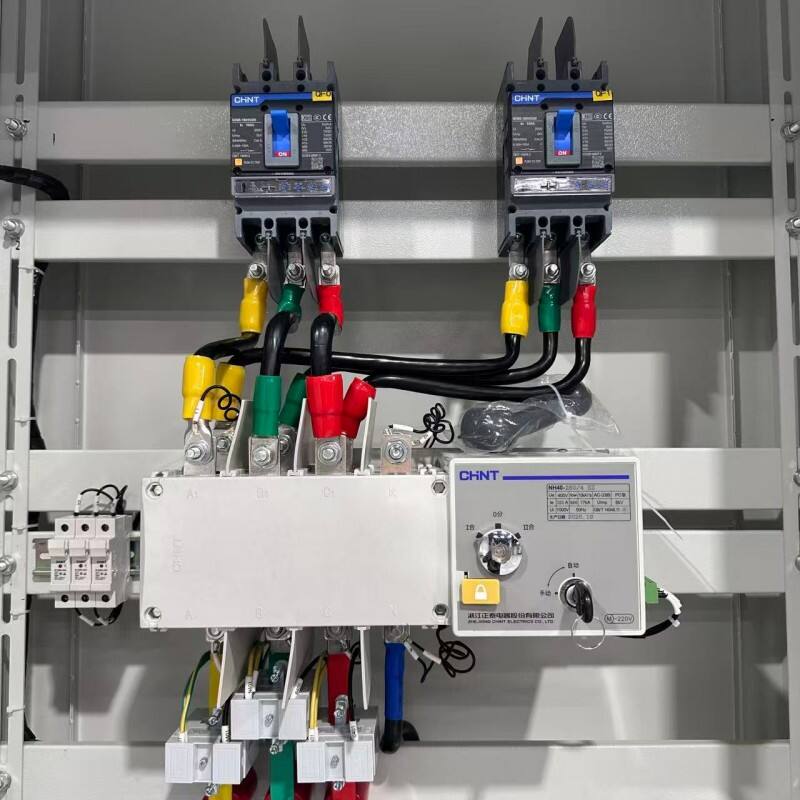
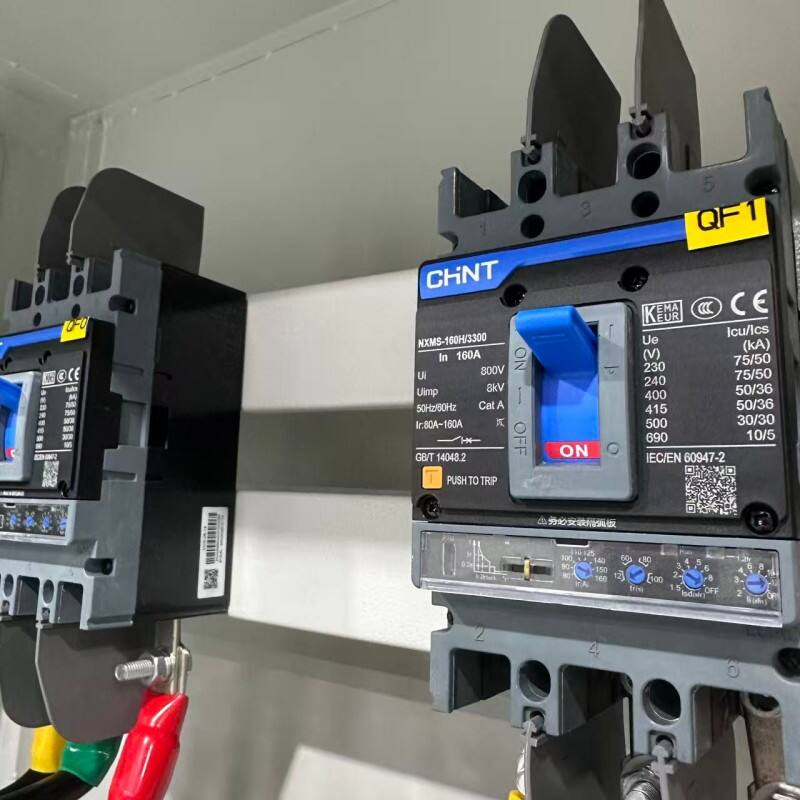
Premium cabinets, like the XL-21 type shown in our technical photos, feature heavy-duty enclosures and high-breaking capacity Molded Case Circuit Breakers (MCCB). Utilizing tier-1 components such as CHNT (Chint) ensures stable short-circuit and overload protection in extreme environments.
Selection Logic: Identifying Technical Barriers in High-Performance Cabinets
When engaging in B2B cross-border trade or bulk procurement, price should not be the sole metric. Experienced procurement officers identify supplier quality through these technical details:
Temperature Rise Control & Busbar Craftsmanship
Elevators generate massive inductive loads during startup. High-performance ATS cabinets utilize high-purity copper busbars and tightly crimped terminals. Professional wiring follows standard color-coding (Yellow, Green, Red for Phases A, B, and C), ensuring that electrical connections do not overheat due to oxidation or loosening over years of operation.
Smart Monitoring Interface
Modern cabinets must be equipped with digital display meters on the door to monitor three-phase voltage, current, and power factor. This provides facility managers with real-time data for operational oversight.
Customization & Fault Isolation
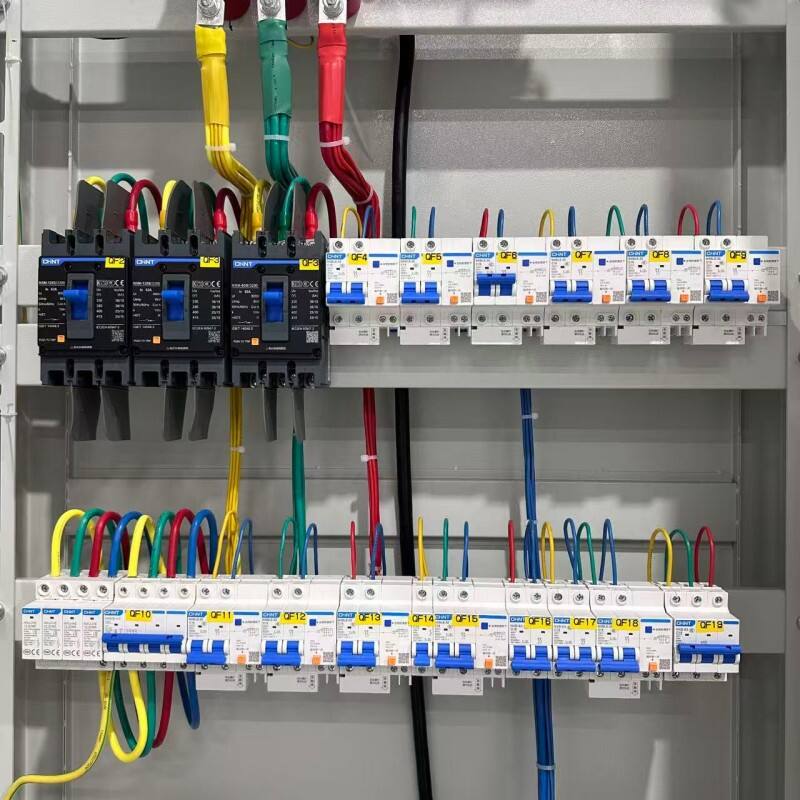
A reliable supplier can customize the trip settings of circuit breakers based on the specific floor count and elevator load of the building. A mature distribution plan ensures "Selective Coordination"—meaning a fault in a branch circuit trips only the local breaker, keeping the building’s main power backbone unaffected.
Digital Transformation: The Role of Intelligent Monitoring Modules
In the era of Industry 4.0, ATS control cabinets are no longer "silent" hardware. Smart selection has become the new focus for production managers:
IoT Integration
Modern cabinets integrate smart power meters supporting Modbus-RTU or Ethernet protocols. This allows the status of circuit breakers, real-time energy consumption, and contact wear-and-tear data to be uploaded to the building’s Energy Management System (EMS).
Predictive Maintenance
The core of digital upgrading is shifting from "reactive" to "predictive" maintenance. By monitoring current waveform anomalies during power transfers, managers can identify risks like contact welding or cable aging before a failure occurs.
Long-term Efficiency
While smart modules slightly increase the initial CAPEX, they significantly reduce labor costs for manual inspections. Data-driven energy optimization is the key to achieving green building certifications and ESG goals.
Risk Mitigation: Cost-Benefit Analysis of Long-term Reliability
Decision-makers must realize that the initial purchase price of an ATS cabinet represents only a small fraction of its total life-cycle cost.
Avoiding the "Non-Standard" Trap
Low-end, non-standard cabinets often use inferior contact materials that are prone to melting or "welding" during frequent switching. The resulting elevator downtime or entrapment accidents carry immense legal liability and brand damage.
The "Operating Insurance" Value
Investing in ATS cabinets with CQC or CE certifications and reputable breaker brands is essentially purchasing a long-term insurance policy. High breaking capacity ensures that the power is cut instantly before an electrical fire can start.
Maintenance Accessibility
Quality suppliers provide comprehensive wiring diagrams and ensure adequate heat dissipation space within the cabinet. This determines how easily the equipment can be serviced and the availability of spare parts over the next 15 years.
Professional FAQ
1. What is the standard transfer time for an elevator ATS?
The industry standard is typically between 100ms and 500ms. It is vital to ensure the transfer time is fast enough so that the elevator control system does not lose its operational parameters or trigger a system lockout.
2. Why are Molded Case Circuit Breakers (MCCB) preferred over standard MCBs for elevators?
MCCBs offer much higher breaking capacities (Icu) and superior arc-quenching characteristics. Since elevator motors are inductive loads, they generate strong arcs; MCCBs handle these fluctuations more reliably and offer adjustable protection settings.
3. How do I calculate the rated current for an elevator ATS cabinet?
It is generally recommended to size the ATS at 1.25 to 1.5 times the total rated current of the elevator system. For example, if the system draws 100A, a 125A or 160A breaker should be selected to handle startup inrush currents without nuisance tripping.
4. Is internal wiring color-coding standardized globally?
While many regions use Yellow/Green/Red for L1/L2/L3, international standards vary (e.g., Brown/Black/Grey in the EU). A top-tier supplier will customize the color-coding to match the local electrical code of the destination country.
5. What routine checks are required after installation?
In addition to annual dust removal and terminal tightening, the most important test is a "Live Load Transfer Test." Furthermore, infrared thermography is recommended to check for hotspots at connection points to prevent fire hazards.
Table of Contents
- Core Insights: Why Elevators Require High-Spec ATS Cabinets
- Selection Logic: Identifying Technical Barriers in High-Performance Cabinets
- Digital Transformation: The Role of Intelligent Monitoring Modules
- Risk Mitigation: Cost-Benefit Analysis of Long-term Reliability
-
Professional FAQ
- 1. What is the standard transfer time for an elevator ATS?
- 2. Why are Molded Case Circuit Breakers (MCCB) preferred over standard MCBs for elevators?
- 3. How do I calculate the rated current for an elevator ATS cabinet?
- 4. Is internal wiring color-coding standardized globally?
- 5. What routine checks are required after installation?