 EN
EN


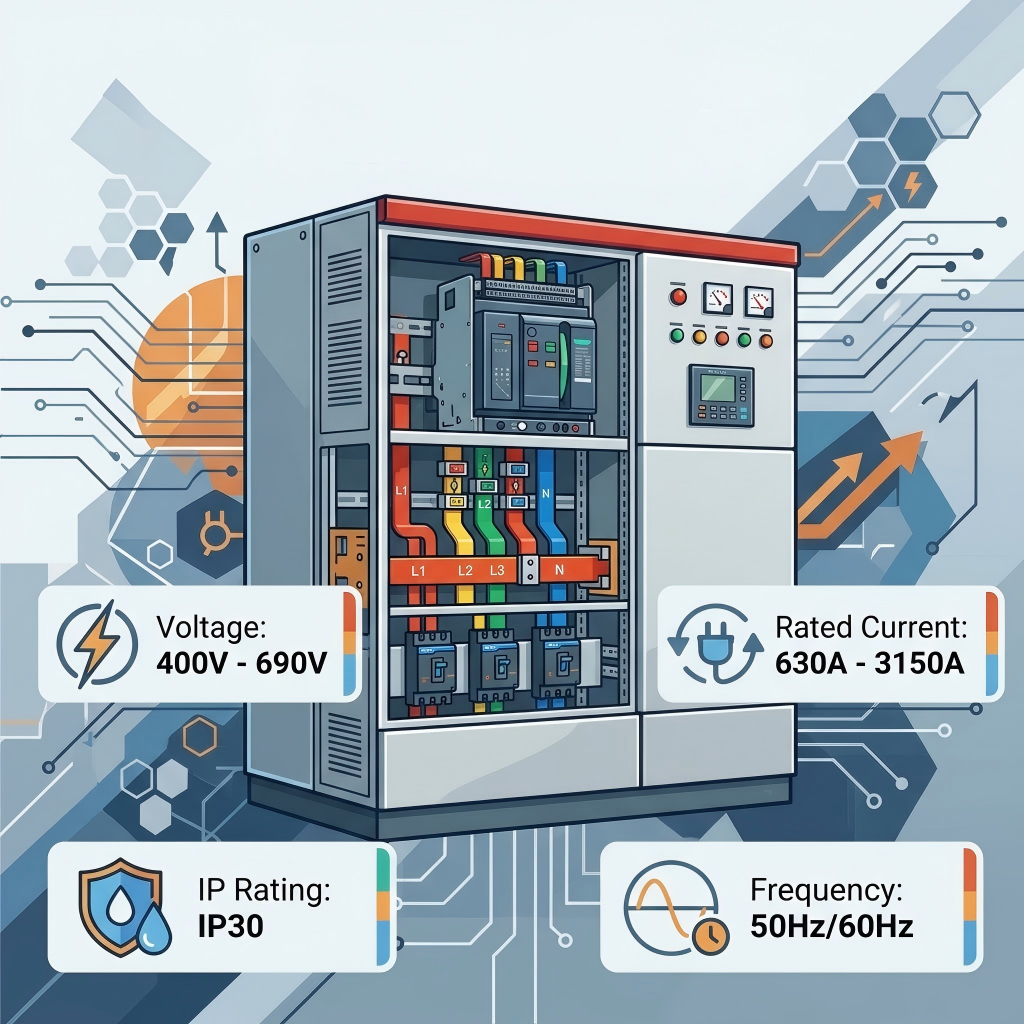
In modern industrial power distribution, a reliable electrical panel is the backbone of any production facility. As factories and commercial buildings require stable energy to run heavy loads and motor control centers, facility managers often look for robust and cost-effective solutions. Among the various standardized panel designs, the GGD AC low-voltage fixed-type complete switchgear remains one of the most widely implemented systems worldwide.
Designed for high electrical reliability, thermal efficiency, and mechanical strength, GGD switchgear delivers steady power receiving, feeding, and bus-coupling capabilities for heavy-duty applications. Here is a deep dive into how it works and why it is a staple in power distribution rooms.
Understanding the GGD Distribution Cabinet
The designation "GGD" represents a highly standardized design framework for AC low-voltage distribution panels:
G: AC Low-Voltage Distribution Equipment
G: Fixed Component Installation
D: Power Cabinet / Power Distribution Board
Typically operating at a rated voltage of 400V to 690V and a system frequency of 50Hz or 60Hz, GGD cabinets are deployed in indoor substations. They handle high nominal operating currents, with short-circuit withstand capacities engineered to endure severe electrical stress.
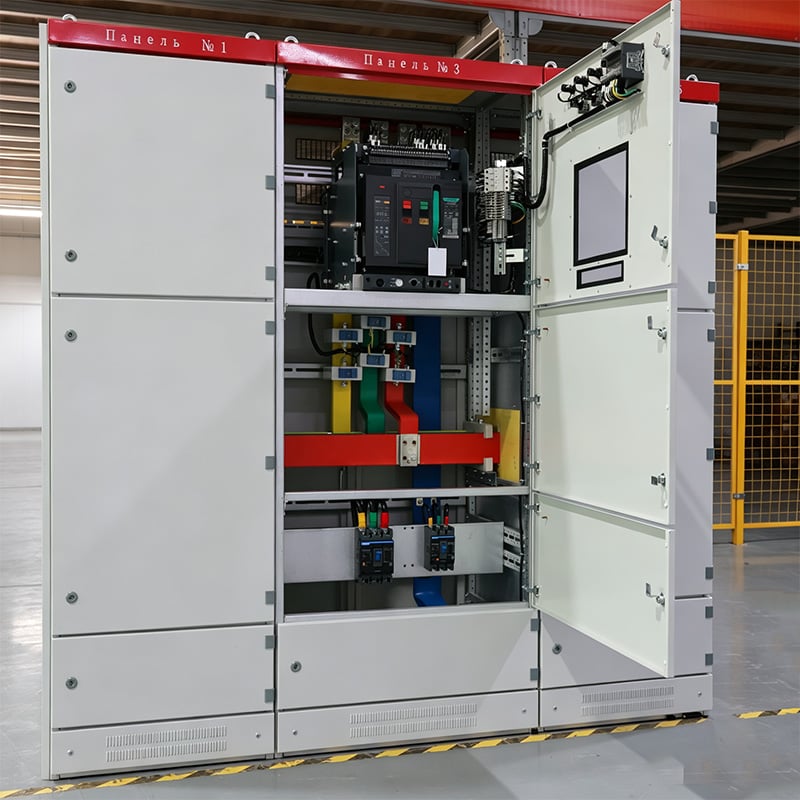
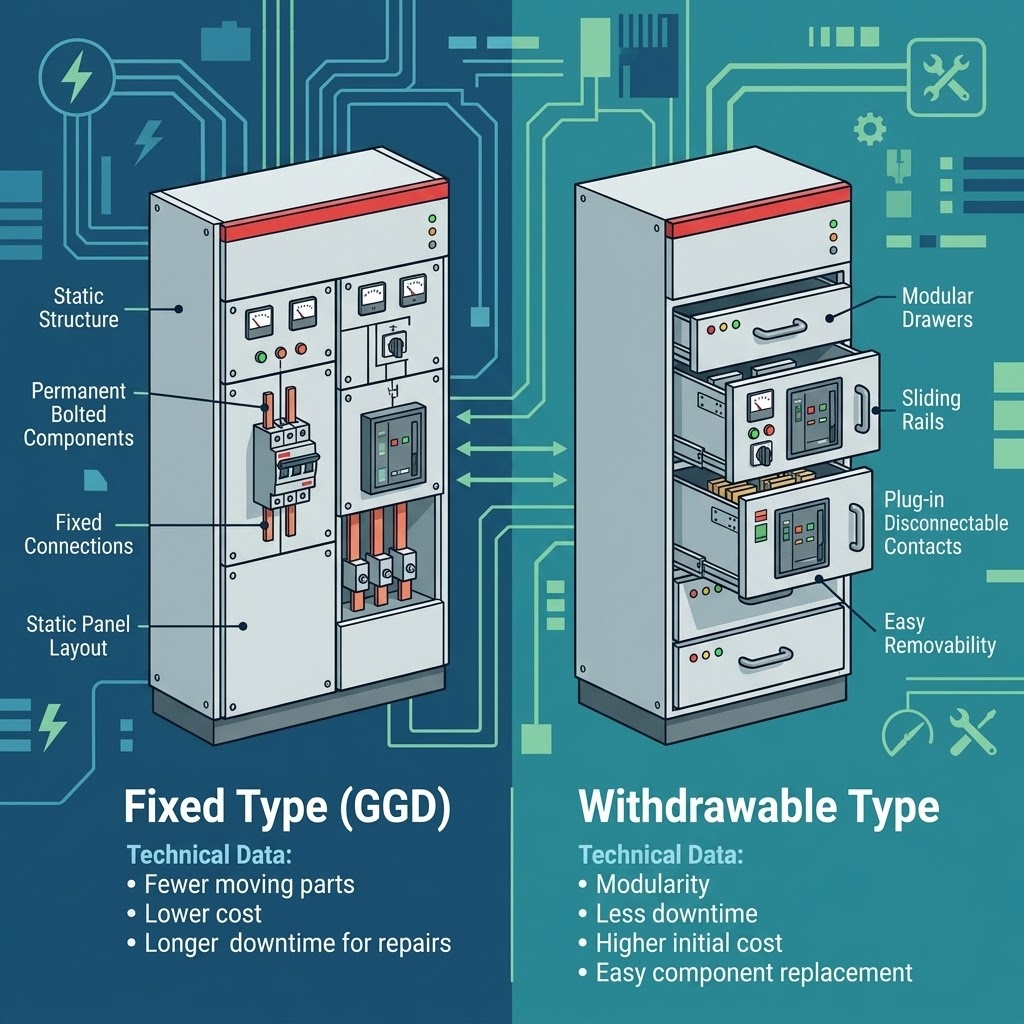
Unlike modular withdrawable cabinets, GGD switchgear utilizes a fixed internal mounting arrangement. Primary switching devices—such as air circuit breakers (ACBs) and molded case circuit breakers (MCCBs)—are bolted directly to internal frame structures. This straightforward architecture provides low contact resistance, minimal maintenance complexity, and excellent long-term operational stability under heavy, continuous loads.
Core Differences:
Comparison: Fixed (GGD) vs.Withdrawable Switchgear
Evaluation Metric |
Fixed-Type Switchgear (GGD) |
Withdrawable Switchgear |
Internal Architecture |
Stationary frame mounting with direct busbar connection. |
Modular drawer units with plug-in contact fingers. |
Thermal Dissipation |
Open internal air channel allowing natural convection. |
Enclosed modular compartments requiring forced airflow. |
Maintenance |
Requires circuit de-energization for primary hardware service. |
Live drawer replacement without interrupting adjacent units. |
Capital Cost |
High cost-effectiveness with low manufacturing complexity. |
Higher upfront investment due to complex drawer mechanisms. |
Mechanical Rigidity |
High structural stability built on welded or bolted profiles. |
Dependent on precise mechanical drawer alignment. |
Primary Use Cases |
Main incoming, feeder panels, steady continuous loads. |
High-density motor control centers, complex process control. |
Internal Architecture and Core Components
To ensure safe power transmission, long-term durability, and short-circuit protection, a standard GGD low-voltage fixed switchgear unit integrates multiple highly structured sub-assemblies:
Universal 8MF Frame Structure: The cabinet skeleton is constructed from standardized 8MF cold-formed profile steel, providing exceptional mechanical rigidity. The internal frame features a modular matrix with precision mounting holes spaced at 20mm intervals. This allows for highly flexible mounting configurations for diverse components without requiring on-site drilling or custom modifications.
High-Conductivity Busbar System: The main power arteries consist of premium electrolytic copper busbars. To prevent phase-to-phase flashover and protect against physical contact hazards, these busbars are wrapped in flame-retardant, color-coded heat-shrinkable insulation tubing (e.g., Yellow, Green, and Red for active phases). The busbars are firmly secured by high-strength insulating clamp blocks designed to withstand massive electrodynamic forces during short-circuit events.
Primary Switchgear & Breaker Configuration: The internal layout is logically divided based on power flow. Main incoming cabinets are equipped with heavy-duty air circuit breakers (ACBs) featuring intelligent trip units, engineered to handle massive primary currents up to 6300A for large-scale grid connections. Conversely, power feeder main cabinets utilize robust molded case circuit breakers (MCCBs) or disconnect switches, safely distributing precise operational loads up to 3200A to downstream sub-panels.
Secondary Control & Metering Isolation: The upper section or front instrument door isolates the sensitive low-voltage control circuits from the high-power compartments. This dedicated area houses digital multi-function power meters, indicator lights, current transformers (CTs), and operational push buttons, allowing technicians to monitor voltage and current safely.
Convective Thermal Management: Heat dissipation is a critical design element. Ventilation slots are strategically stamped into the bottom skirt and the top cover plates of the steel frame. This creates a natural thermal chimney effect: cooler air is drawn in from the bottom, absorbs the heat generated by the heavily loaded breakers and copper busbars, and effortlessly vents through the top roof, maintaining an optimal operating temperature without the need for mechanical cooling fans.
FAQ
Q1: What are standard GGD voltage and ratings?
A1: GGD switchgear typically operates at 400V or 690V. Main busbar current ratings generally range from 630A up to 6300A, handling short-circuit currents up to 50kA.
Q2: Why choose GGD for main power panels?
A2: Its direct, bolted busbar connections eliminate the friction and overheating risks of plug-in contacts. This makes it highly reliable and stable for continuous, high-current power delivery.
Q3: What is the standard GGD IP rating?
A3: The standard indoor rating is IP30. However, enclosures can be upgraded with specialized filters and gaskets to reach IP40 or IP42 based on specific site requirements.
Q4: How does GGD handle short circuit forces?
A4: The main busbars are secured with high-strength, flame-retardant insulating supports. These robust blocks prevent conductor deformation and phase faults during high short-circuit events.
Q5: What routine maintenance does GGD require?
A5: Key maintenance includes checking bolted joints for hot spots, verifying busbar connection tightness, clearing dust from ventilation slots, and testing circuit breaker calibrations.
Conclusion
The GGD AC low-voltage fixed switchgear is a highly reliable and cost-effective distribution panel essential for modern industrial power systems. Operating between 400V and 690V, it utilizes a stationary 8MF steel frame with directly bolted primary components, providing superior mechanical rigidity, lower contact resistance, and less maintenance complexity than modular withdrawable cabinets. Engineered with high-conductivity copper busbars, isolated control circuits, and a natural convective cooling design, the GGD system safely manages heavy continuous loads up to 6300A while enduring severe short-circuit stresses, establishing it as the standard choice for main incoming and power feeder applications.