 EN
EN


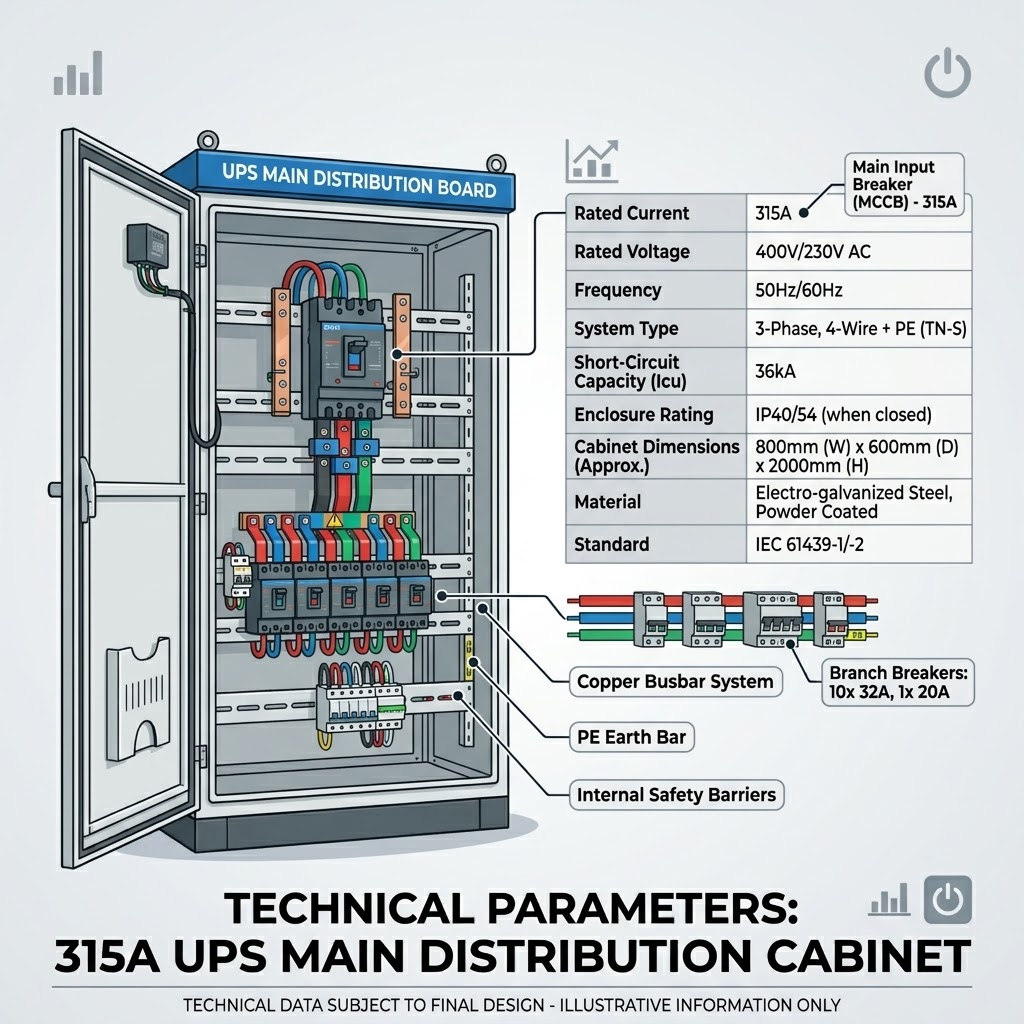
In modern healthcare facility design, electrical reliability is directly linked to patient outcomes. Operating theaters, intensive care units (ICUs), diagnostic imaging systems, and automated medical storage rely on an uninterrupted stream of clean, stable electricity. While high-capacity Uninterruptible Power Supply (UPS) units act as the primary defense against power outages, delivering that back-up power efficiently to downstream equipment requires a specialized terminal switchgear: the 315A UPS Main Power Distribution Cabinet.
Positioned at the core downstream terminal of a facility's emergency power network, this cabinet functions as the main electrical hub. It receives high-capacity backup power from the central UPS, regulates distribution across multiple branch circuits, protects against electrical transients, and provides continuous system visibility.
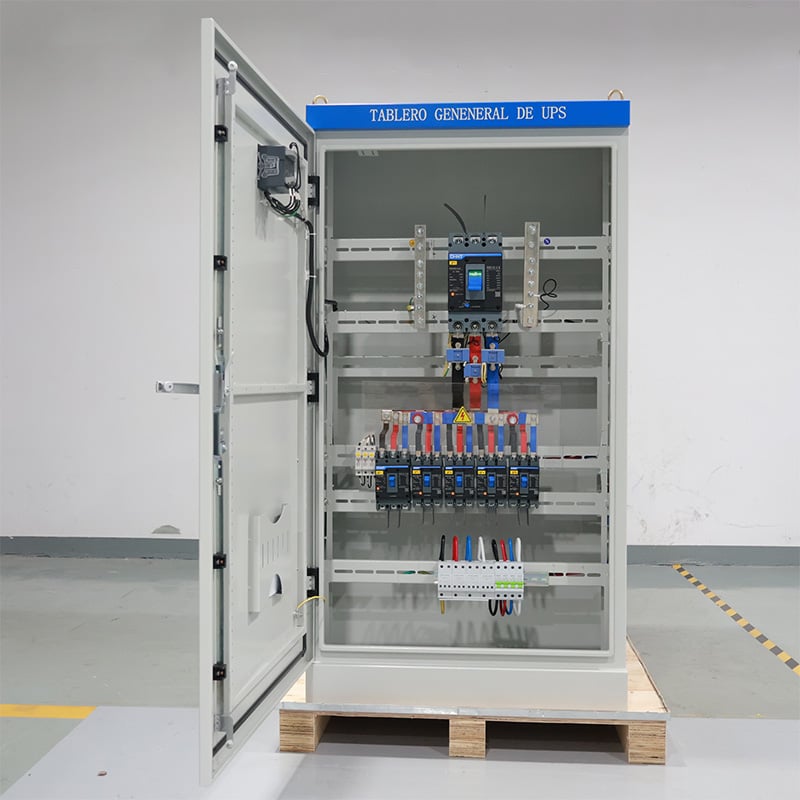
Why Do Critical Healthcare Facilities Need Dedicated 315A UPS Main Distribution Cabinets?
In a standard commercial building, power distribution focuses primarily on general load handling and basic overcurrent protection. In healthcare environments, however, electrical demands are far more stringent. Delivering power directly from a central UPS to diverse end-use loads without dedicated main distribution introduces significant operational risks.
A 315A configuration provides an optimal current capacity—delivering approximately 200 kW of balanced three-phase clean power—making it ideal for dedicated hospital wings, surgical suites, or critical medical equipment clusters.
Key Risks Solved by Dedicated UPS Distribution:
1. Cascade Outages (Lack of Breaker Selectivity): If a localized short-circuit occurs on a single monitoring device, a poorly designed panel can cause the main upstream UPS breaker to trip. This cuts backup power to the entire department. Dedicated distribution cabinets utilize coordinated, tiered Moulded Case Circuit Breakers (MCCBs) to isolate faults locally without interrupting the main supply.
2. Transient Voltage Spikes & Noise: High-frequency electrical noise from utility switching, medical equipment motors, or atmospheric disturbances can pass through standard panels, potentially damaging sensitive diagnostic electronics or disrupting telemetry signals.
3. Phase Imbalance and Overheating: Unbalanced single-phase loads in large facilities can overload neutral conductors, cause zero-potential drift, and trigger thermal stress on main busbars.
4. Unplanned Downtime During Maintenance: Maintenance on individual branch circuits should never require shutting down the entire UPS backup line. Modular branch breakers and clear physical isolation allow safe servicing of individual sub-feeds.
Structural Value: Standard Electrical Panel vs. Dedicated 315A UPS Distribution Cabinet
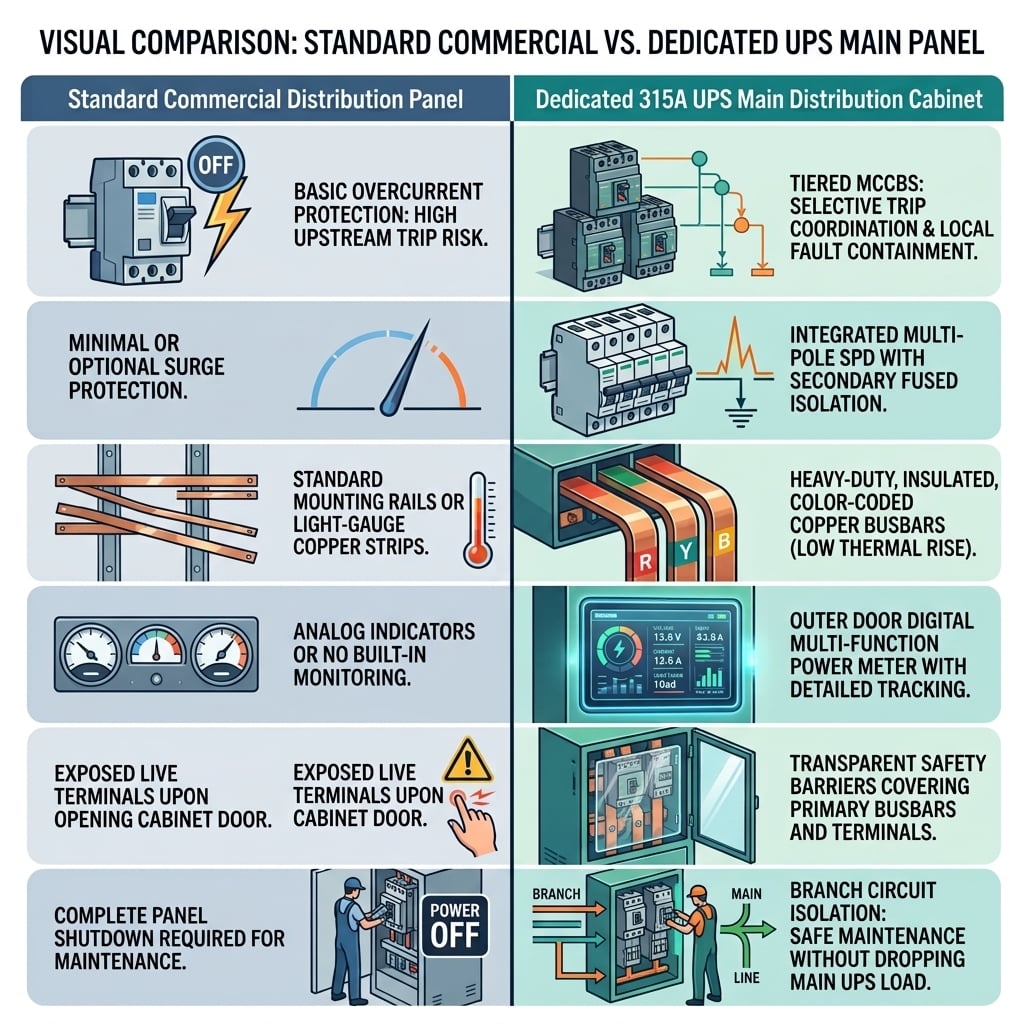
To understand the operational difference a healthcare-grade 315A UPS distribution cabinet makes, the table below highlights key performance and design distinctions:
Feature / Metric |
Standard Commercial Distribution Panel |
Dedicated 315A UPS Main Distribution Cabinet |
Fault Protection |
Basic overcurrent protection; high risk of upstream tripping. |
Tiered MCCBs engineered for selective trip coordination; local fault containment. |
Transient Safeguards |
Minimal or optional surge protection. |
Integrated multi-pole Surge Protective Devices (SPD) with secondary fused isolation. |
Busbar Architecture |
Standard mounting rails or light-gauge copper strips. |
Heavy-duty, insulated, color-coded copper busbars engineered for low thermal rise. |
System Visibility |
Analog indicators or no built-in monitoring. |
Outer door digital multi-function power meter tracking voltage, current, and load status. |
Safety Isolation |
Exposed live terminals upon opening cabinet door. |
Transparent safety barriers covering primary busbars and incoming line terminals. |
Service Continuity |
Complete panel shutdown required for minor maintenance. |
Branch circuit isolation allows safe maintenance without dropping main UPS load. |
System Architecture and Core Components
A high-reliability 315A UPS main power distribution cabinet relies on a clear, modular internal architecture. Each component is chosen to minimize electrical resistance, withstand short-circuit stresses, and ensure long-term durability.
Core Components and Operational Functions
1. Main 315A Incoming Moulded Case Circuit Breaker (MCCB): Serves as the primary disconnect and main protection threshold for incoming UPS power. Features adjustable thermal-magnetic or electronic trip settings to align precise overcurrent limits with downstream load requirements.
2. Tiered Branch Feeder Breakers: A bank of sub-feed MCCBs (rated at varying capacities, such as 50A, 63A, 80A, or 100A) splits the main 315A bus into dedicated downstream sub-circuits. This modular structure enforces breaker selectivity across different medical loads.
3. Insulated Solid Copper Busbars: Heavy-gauge, high-purity copper bars distribute power from the main incoming breaker to the branch devices. Insulated with flame-retardant sleeves and color-coded by phase, these busbars minimize line losses, prevent phase-to-phase flashovers, and handle high short-circuit withstand currents.
4. Surge Protective Device (SPD) Array: DIN-rail mounted Class II / Type 2 surge arresters connected directly to the primary power lines absorb incoming transient overvoltages. Equipped with individual secondary disconnects, the SPD safeguards downstream loads without causing main breaker trips during surge suppression.
5. Multi-Function Digital Power Meter: Mounted on the exterior enclosure door, this unit communicates directly with internal current transformers and voltage taps. It displays real-time line voltages, phase currents, active power, frequency, and load percentages, enabling facility engineers to prevent overloads proactively.
6. Isolated Neutral (N) and Protective Earth (PE) Busbars: Dedicated, heavy-duty grounding and neutral bars run parallel within the enclosure. Keeping ground paths physically separate and low-impedance stops ground loops, stabilizes zero-potential voltage, and ensures safety compliance.
7. Transparent Acrylic Protective Barriers: Clear safety shields are installed over primary live busbars and main terminal points. This allows visual inspection of connections while protecting maintenance personnel from accidental contact.
FAQ
Q1: What is the primary function of a 315A UPS main distribution cabinet?
A1: It acts as the central hub downstream of the UPS, dividing clean backup power into protected sub-circuits, containing electrical faults locally, and providing real-time power monitoring.
Q2: How does trip selectivity prevent facility-wide power outages?
A2: Selective tripping ensures downstream branch breakers react faster to local short circuits than the main 315A breaker, isolating faults to a single circuit while keeping remaining equipment powered.
Q3: Why is an SPD needed downstream if a UPS is already present?
A3: While the UPS conditions main incoming power, localized switching transients and external voltage spikes can still enter downstream wiring. The integrated SPD clamps these surges before they hit sensitive equipment.
Q4: How does this panel differ from a standard commercial sub-panel?
A4: It features higher short-circuit interrupting ratings, heavy-duty insulated copper busbars, integrated multi-function metering, dedicated transient suppression, and touch-safe acrylic barriers over live rails.
Q5: What basic maintenance is required for long-term reliability?
A5: Routine maintenance includes infrared thermal scans for hot spots, verifying connection bolt torques, monitoring SPD indicator windows, and keeping ventilation clear of dust.
Conclusion
A robust emergency power system relies as much on terminal switchgear precision as it does on the primary UPS supply. Implementing a dedicated 315A UPS Main Power Distribution Cabinet ensures that critical healthcare loads—from operating theaters to ICUs—stay protected against localized short circuits, voltage surges, and system downtime. By enforcing strict breaker selectivity, integrated multi-function metering, and isolated busbar architecture, facility engineers can safeguard patient-critical equipment and guarantee uninterrupted operational continuity.
Table of Contents
- Why Do Critical Healthcare Facilities Need Dedicated 315A UPS Main Distribution Cabinets?
- Structural Value: Standard Electrical Panel vs. Dedicated 315A UPS Distribution Cabinet
- System Architecture and Core Components
-
FAQ
- Q1: What is the primary function of a 315A UPS main distribution cabinet?
- Q2: How does trip selectivity prevent facility-wide power outages?
- Q3: Why is an SPD needed downstream if a UPS is already present?
- Q4: How does this panel differ from a standard commercial sub-panel?
- Q5: What basic maintenance is required for long-term reliability?
- Conclusion