 EN
EN


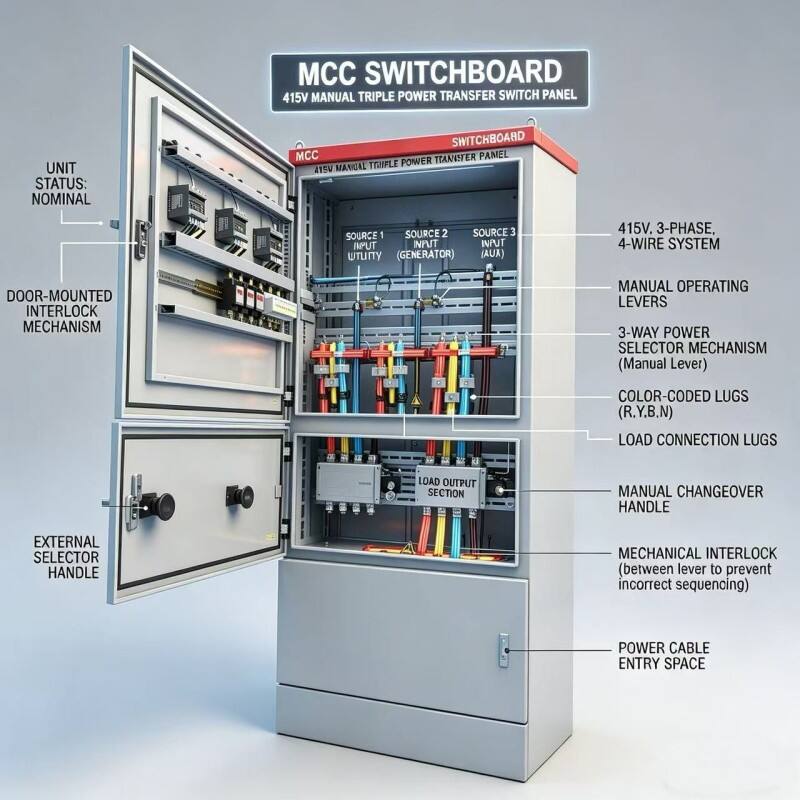
In modern industrial power distribution projects, ensuring the continuity of power supply is the lifeline of production management. Especially for factories relying on multiple backup power sources, how can you switch between three generators safely and reliably?
This 415V Manual Transfer Switch (MTS) cabinet is specifically designed for the distribution needs of three-generator systems in industrial plants. With its ultimate physical reliability, it has become the core equipment for multi-source power management.
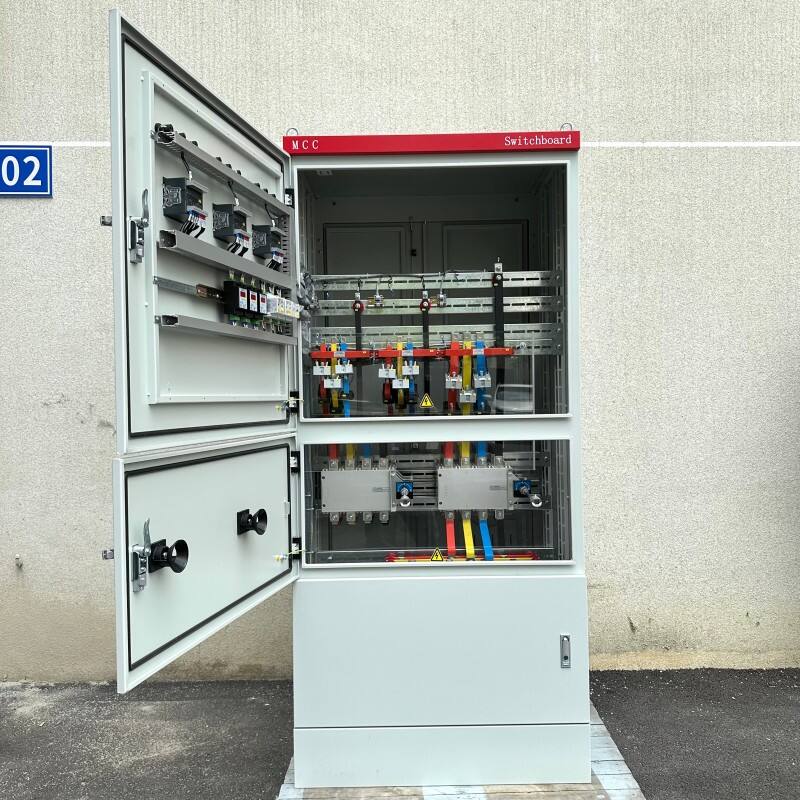
Core Mission: The Safety Dispatcher for Triple Power Sources
In complex industrial projects, factories often use multiple generators to handle grid failures. The core function of this MTS cabinet is to implement a "choose one out of three" logic: it connects to three independent power inputs but physically allows only one to supply the load at any given time.
Physical Isolation Advantage: Unlike Automatic Transfer Systems (ATS), this manual cabinet uses a pure mechanical interlock. This eliminates the risk of catastrophic grid paralleling (where two power sources meet) caused by electronic logic errors or sensor malfunctions.
Emergency Control: In extreme environments with high heat or electromagnetic interference, manual operation provides the most reliable means of recovery. It gives onsite electricians absolute control to dispatch power based on real-time generator fuel levels and load priority.
MTS vs. ATS: A Quick Comparison
The following table summarizes why many industrial plants prefer the manual approach for critical multi-generator setups:
Feature |
Manual Transfer Switch (MTS) |
Automatic Transfer Switch (ATS) |
Switching Logic |
Manual operation; physical interlock |
Automatic sensing; electronic control |
Reliability |
Extremely High: No electronic failure risk |
High: But dependent on sensors |
Safety |
Absolute: Physical isolation of sources |
Conditional: Risk of program error |
Environment |
Resists dust, heat, and interference |
Sensitive to harsh conditions |
Maintenance |
Minimal (basic lubrication) |
Regular (electronic testing required) |
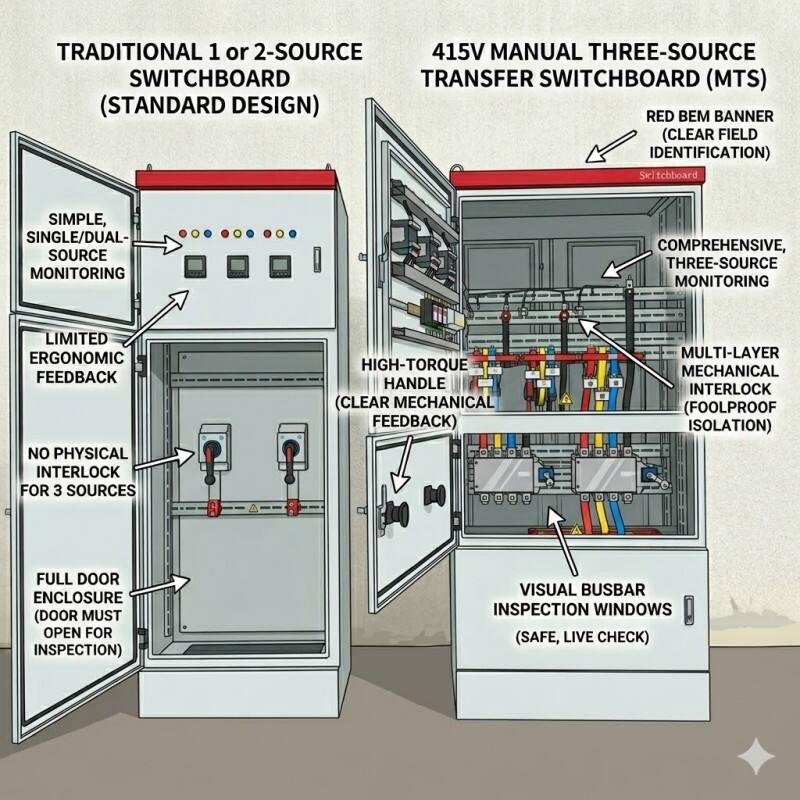
Visual Safety Logic: A Standardized Industrial Language
The interior of the equipment reflects rigorous electrical safety management through standardized "visual language":
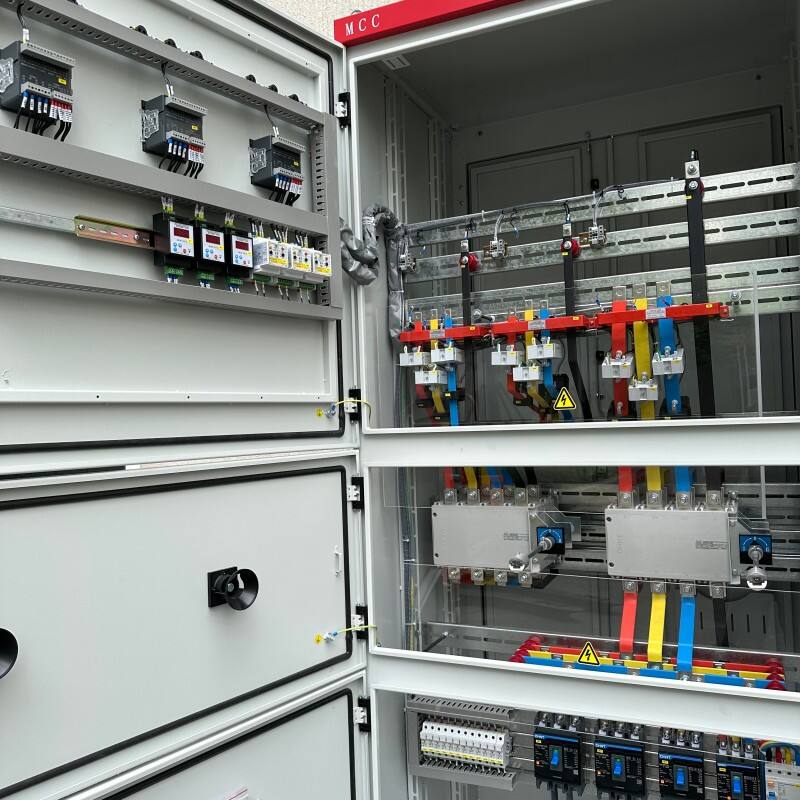
Phase Sequence Standardization: The high-purity copper busbars are painted red, yellow, and blue to represent L1, L2, and L3 phases. Consistent phase sequence is vital; a mistake would cause industrial motors to reverse, damaging conveyor belts or pumps. This clear color coding ensures accurate wiring even in complex triple-source setups.
Visual Inspection & Protection: Critical contacts are covered by high-strength transparent insulation shields. This allows technicians to confirm the switch status with the naked eye without opening the insulation. Combined with prominent yellow warning signs, it minimizes human error and ensures "visualized safety" during routine checks.
Mechanical Interlock: The Fuse That Never Fails
This 415V switchgear integrates a heavy-duty mechanical interlocking device:
1.Forced Logic Lock: The physical structure restricts handle movement, ensuring that if one source is closed, the other two are forcibly locked open. It is physically impossible to close two sets of switches simultaneously.
2.Zero Power Dependency: This protection relies entirely on physics. Even if the factory loses all control power or the software system crashes, this mechanical insurance remains 100% effective.
FAQ
Q1: What are the primary applications for this MTS?
A1:Designed for facilities with three power sources (e.g., three generators), common in mines, large factories, and emergency centers.
Q2: Does switching cause a power outage?
A2:Yes. It follows a "break-before-make" principle, causing a brief outage to ensure different power sources never collide.
Q3: Why are the internal copper bars so thick?
A3:Thickness determines current capacity. Heavy-duty bars handle large industrial loads while keeping operating temperatures low.
Q4: Is the equipment safety-certified?
A4:Yes. It complies with international switchgear standards (like IEC) and includes a full grounding system for operator safety.
Q5: Is customization available for different currents?
A5:Yes. Busbar size and switch capacity can be customized for various generator ratings (e.g., 250A, 630A, 1250A).
Conclusion
Conclusion: The Hardcore Safety Guarantee for Industrial PowerIn an era increasingly focused on automation and intelligence, the 415V Manual Transfer Switch (MTS) remains a cornerstone of modern industrial power distribution due to its irreplaceable physical safety features. By translating complex electrical logic into intuitive mechanical interlocks, this equipment fundamentally eliminates the catastrophic risks associated with power source conflicts, providing the most robust line of defense for generator sets. For any industrial project that prioritizes production continuity, environmental resilience, and low long-term operating costs, choosing an MTS is more than just selecting a switchgear—it is a commitment to a power safety system that is visible, controllable, and physically incapable of failure.