 EN
EN


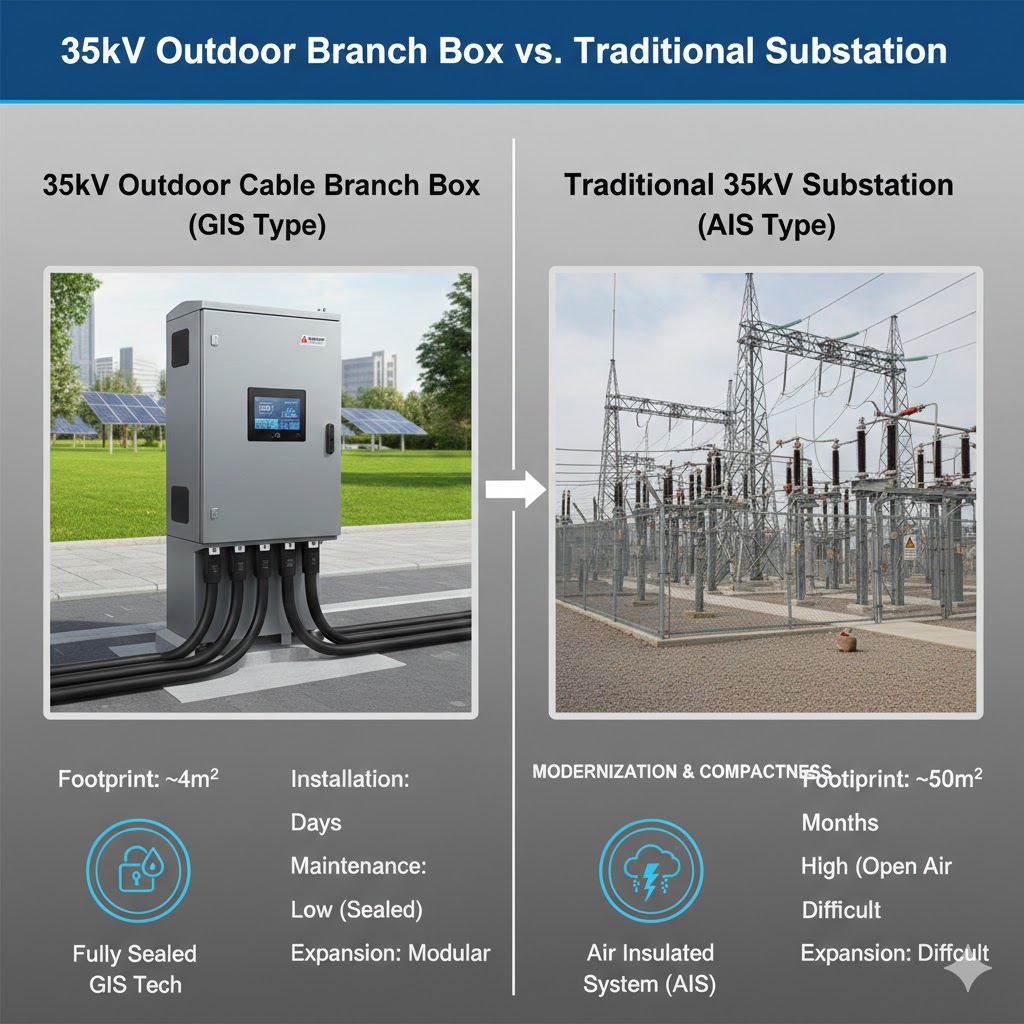
When planning a 35kV high-voltage distribution network, electrical engineers and project managers face a core challenge: how to achieve high-reliability multi-way cable branching and control within limited outdoor space?
Traditionally, the preference has been for large prefabricated substations or civil engineering distribution rooms. However, with rising urban land values and the demand for "compactness" in industrial parks, the 35kV Outdoor Cable Branch Box—especially the Gas Insulated Switchgear (GIS) type featuring full insulation and total sealing—is becoming the mainstream choice. Today, we will explore the differences between these two to help you optimize your 35kV distribution plan.
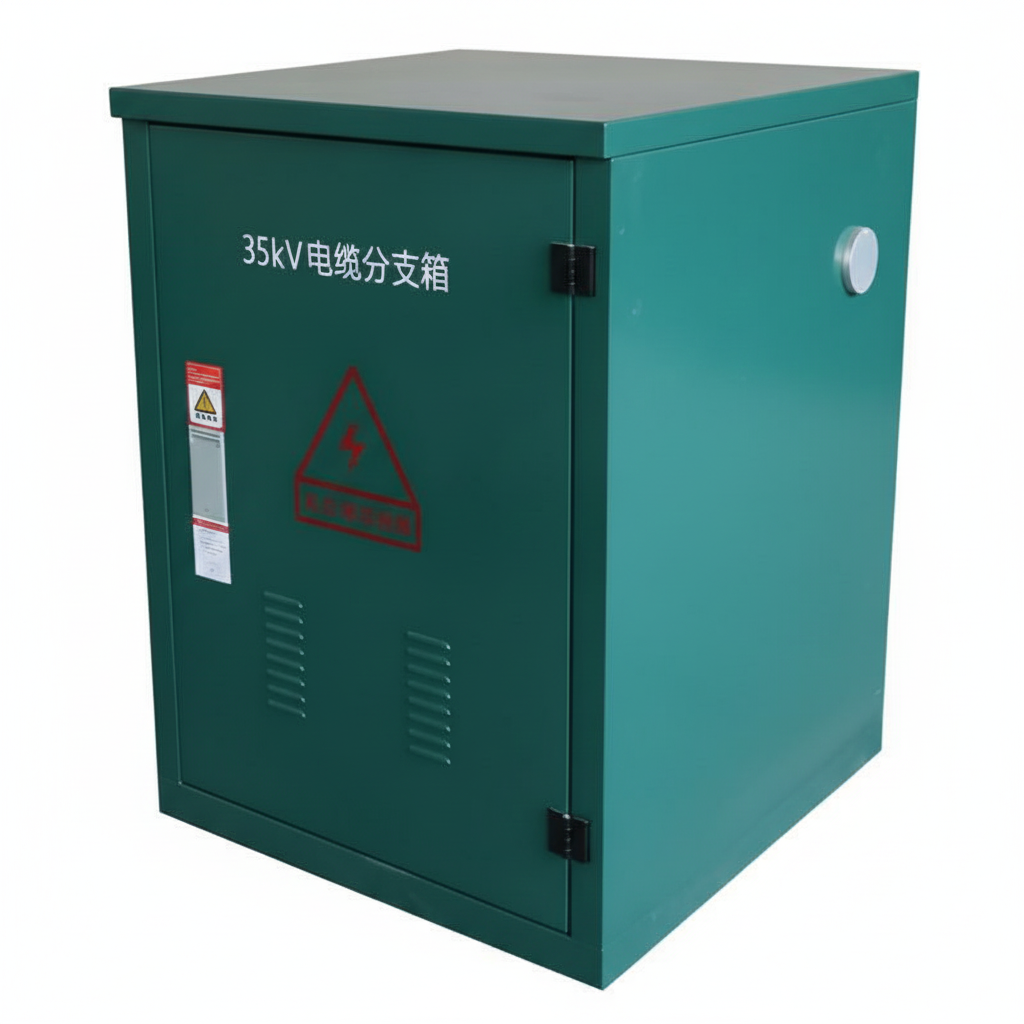
Core Differences: The Evolution of Structural Logic and Space Utilization
1. Insulation Technology and Volume Control
Traditional Solution: Because 35kV systems have high voltage levels, air insulation distance requirements are immense, resulting in bulky equipment with a footprint often exceeding 20 square meters.
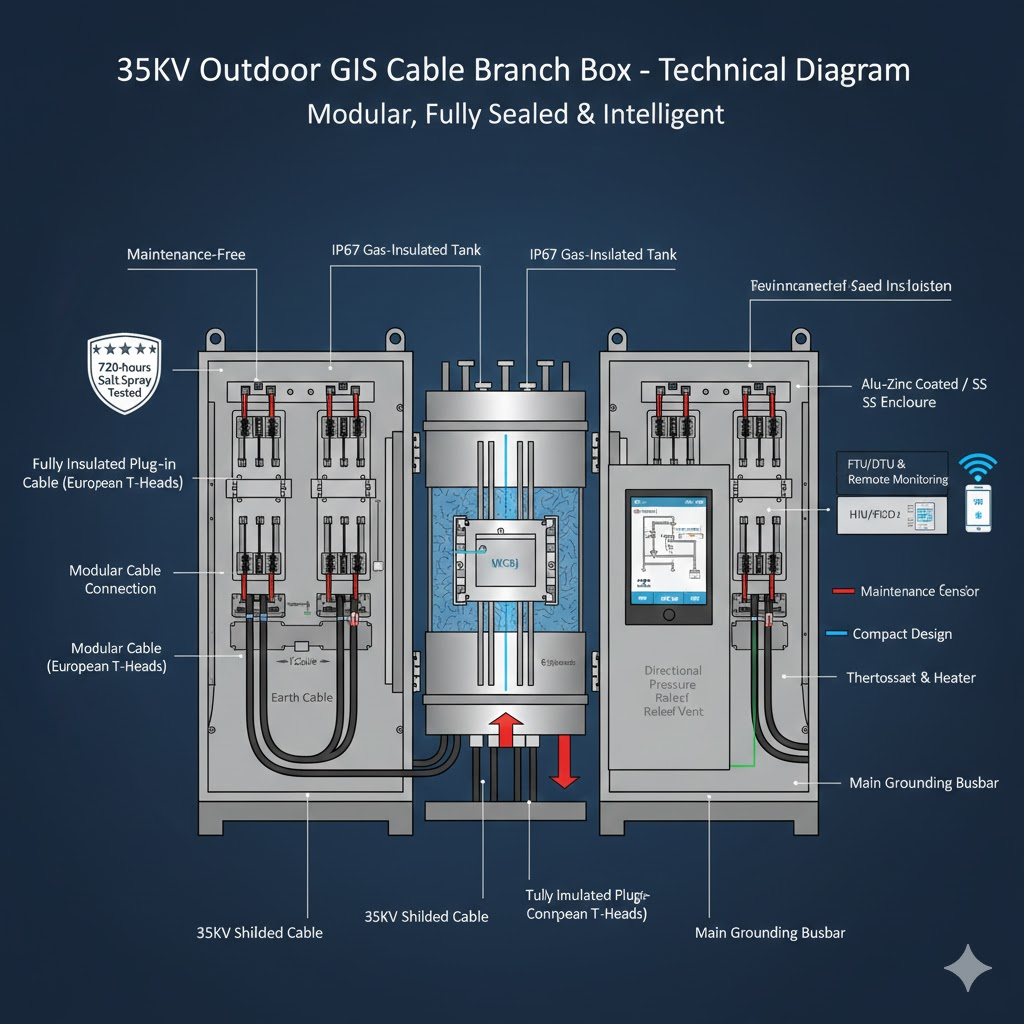
35kV Cable Branch Box: Utilizing fully insulated silicone rubber cable connectors, the core switching components (such as vacuum circuit breakers) are sealed within a gas-filled stainless steel tank. This design compresses electrical clearances to the extreme, resulting in a volume only 1/4 that of traditional solutions—ideal for city streets and narrow industrial corridors.
2. Outdoor Protection and Enclosure Craftsmanship
Our solution utilizes a "golden combination" of a 3.0mm stainless steel gas tank + Alu-zinc coated steel or powder-coated stainless steel exterior:
Core Safety: The IP67-rated fully sealed gas tank completely isolates internal components from external humidity, salt spray, and pollution, ensuring 30 years of maintenance-free operation.
Weather-Resistant Enclosure: Designed for harsh outdoor environments, the enclosure undergoes 720 hours of salt spray testing. It possesses superior anti-UV and anti-corrosion capabilities, ensuring the equipment remains stable even under scorching sun or torrential rain.
In-Depth Comparison: 35kV Outdoor Branch Box vs. Traditional 35kV Substation
Dimension |
35kV Outdoor Cable Branch Box (GIS Type) |
Traditional 35kV Switching Station/Substation |
Footprint |
Minimal. Occupies only approx. 2–5㎡; no specialized civil engineering room required. |
Massive. Requires large-scale civil foundations or large enclosures. |
Installation Difficulty |
Plug-and-Play. Prefabricated structure; requires only on-site cable head connection. |
Complex. Long on-site construction cycles; requires hoisting of large components. |
Operational Stability |
Extremely High. Fully sealed design; unaffected by altitude, condensation, or dust accumulation. |
Moderate. Easily affected by environmental humidity; requires periodic cleaning and dehumidification. |
Total Cost (ROI) |
Low Total Cost. Saves on expensive land costs and long-term maintenance expenses. |
High Initial Investment. Civil engineering costs and maintenance expenses increase over time. |
Extensibility |
Modular. Supports flexible combinations of multi-way incoming and outgoing lines (e.g., 2-in 4-out). |
Fixed. Adding circuits later requires large-scale expansion. |
Why Choose Our 35kV High-Voltage Cable Branch Box?
1. Solving the "Condensation and Oxidation" Challenge
In fog-prone coastal areas or regions with high temperature fluctuations, 70% of high-voltage equipment failures stem from insulation flashover caused by moisture. Our branch box utilizes Fully Shielded technology, completely wrapping 35kV bare live parts within shielded cable accessories to eliminate tracking risks.
2. Intelligent Integration and Remote Monitoring
It is more than just a branch; it is an intelligent control center. Our 35kV branch box can integrate:
FTU/DTU Terminals: Realizes distribution network automation and supports remote opening and closing.
Online Monitoring Systems: Real-time monitoring of cable joint temperature and gas tank pressure, with fault alerts sent directly to your phone.
3. Flexible Configuration (Customized Service)
Whether you need "multi-port connection" for pure branching or "ring network control" with circuit breaker protection, we provide customization. Enclosure colors can be customized to match the surrounding environment (such as green belts or industrial zones), balancing aesthetics with utility.
Frequently Asked Questions (FAQ)
Q1: Can a 35kV branch box be used as a replacement for a Ring Main Unit (RMU)?
A: Yes. When the interior is configured with load break switches or circuit breaker units, it effectively functions as an outdoor RMU, capable of both distributing power and quickly isolating currents during a fault.
Q2: How is insulation strength ensured in high-altitude areas?
A: Because we use SF6 or eco-friendly gas insulation, the dielectric properties do not change with altitude (thin air). This allows the product to maintain the same safety clearances at altitudes above 3,000 meters as it does in lowland areas.
Q3: What is the maintenance frequency for this equipment?
A: The high-voltage core is maintenance-free for life. Users only need to perform simple annual inspections of the external environment, confirm the pressure gauge is in the green zone, and check the enclosure for physical damage.
Q4: Is cable head installation complicated?
A: Not at all. The equipment uses standard American or European tapered interfaces, requiring only standard cable plug-ins. Compared to traditional wiring, this method is safer and significantly shortens power outage construction time.
Q5: Does this compact design affect the installation space for 35kV cables?
A: No. Although the cabinet has been miniaturized (to 1/3 the volume of traditional AIS), we have optimized the cable compartment space through modular design. By using fully insulated plug-in terminals (such as European T-plugs), phase-to-phase safety distance requirements are reduced while leaving sufficient room for multi-way cable parallel connection—all without the need for on-site hot work, ensuring higher safety.
Conclusion
As 35kV distribution systems move toward digitization and compactness, choosing a high-performance outdoor cable branch box is a choice for efficient power distribution and long-term asset value. By optimizing space utilization and reducing maintenance costs, our 35kV solution provides the most cost-effective protection for your power engineering project.
Table of Contents
- Core Differences: The Evolution of Structural Logic and Space Utilization
- In-Depth Comparison: 35kV Outdoor Branch Box vs. Traditional 35kV Substation
- Why Choose Our 35kV High-Voltage Cable Branch Box?
-
Frequently Asked Questions (FAQ)
- Q1: Can a 35kV branch box be used as a replacement for a Ring Main Unit (RMU)?
- Q2: How is insulation strength ensured in high-altitude areas?
- Q3: What is the maintenance frequency for this equipment?
- Q4: Is cable head installation complicated?
- Q5: Does this compact design affect the installation space for 35kV cables?
- Conclusion