 EN
EN


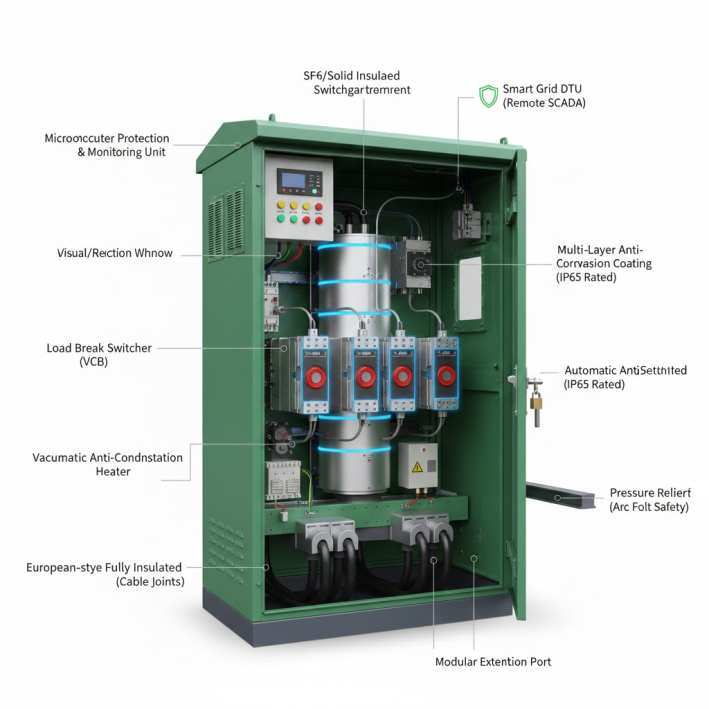
When designing 10kV power distribution schemes for urban grids or industrial parks, are you facing this dilemma: How to ensure absolute safety of high-voltage distribution within limited outdoor space while resisting harsh environmental erosion?
Traditional outdoor distribution relies on massive civil engineering cable trenches or bulky brick-and-mortar switching stations. However, with accelerating urbanization and rising demands for power reliability, the 10kV Outdoor Cable Branch Box (also known as a Switching Station or Ring Main Unit/RMU) has emerged as the "capillaries" of the modern grid, thanks to its flexible configuration and superior protective performance.
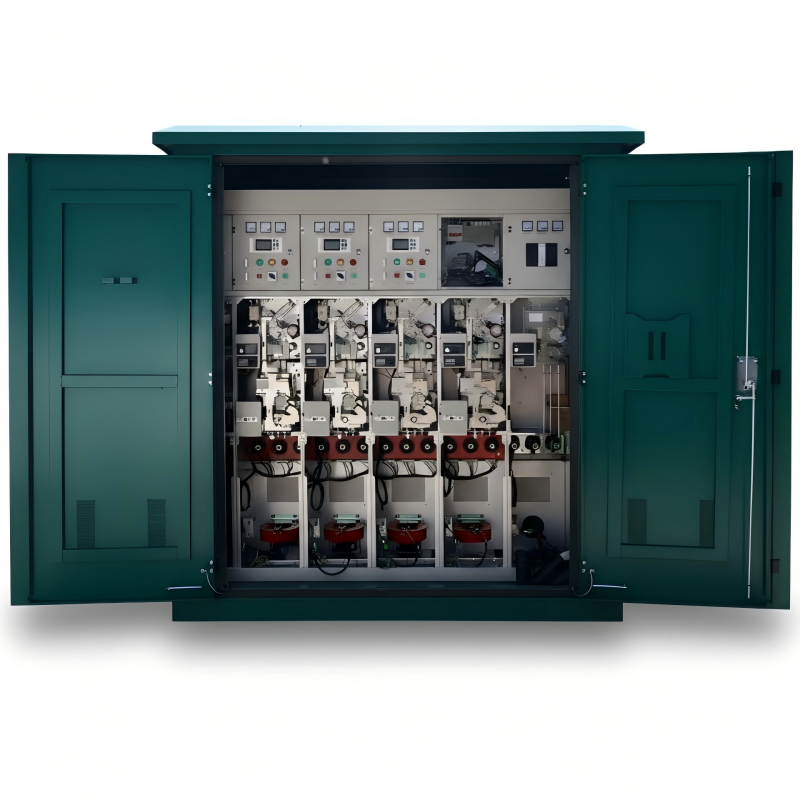
Core Evolution: From Simple "Cable Branching" to "Full-Function Switching Stations"
Early cable branch boxes provided only basic cable convergence without load-break capabilities. Modern 10kV outdoor switching stations have undergone a generational leap:
Integrated Functionality: Today’s equipment is no longer just a junction box. It integrates vacuum circuit breakers (VCB), load break switches (LBS), microcomputer protection devices, and monitoring instruments. It not only branches current but also rapidly isolates faulty sections during an anomaly, protecting the main grid's integrity.
Revolution in Insulation: Utilizing fully insulated, fully sealed, and modular designs. Core high-voltage components are encapsulated in stainless steel gas tanks or solid insulation. This reduces the footprint to just 1/4 of a traditional station, completely eliminating the impact of altitude, humidity, and salt spray on electrical clearances.
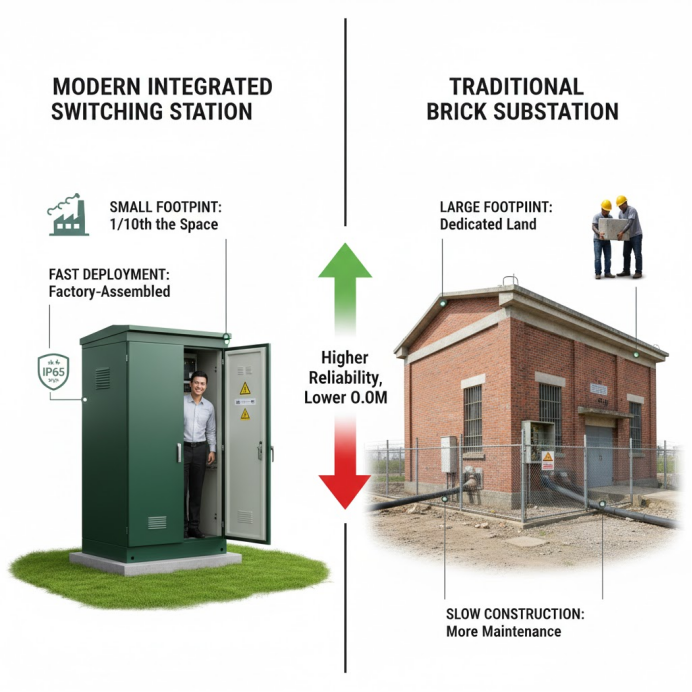
Deep Comparison: Integrated Switching Station vs. Traditional Civil Power Rooms
Dimension |
10kV Outdoor Switching Station (Custom) |
Traditional Civil Power Room |
Footprint |
Minimal; requires only a small hardened ground area for installation. |
Massive; requires independent land and complex civil construction. |
Installation Period |
Factory-prefabricated; ready for use upon site wiring. Shortens schedule by 70%+. |
Long construction cycle; heavily affected by weather and labor. |
Adaptability |
IP33 - IP65 protection; resistant to corrosion, condensation, and vermin. |
Prone to moisture and dust; requires frequent manual maintenance. |
Maintenance Cost |
Virtually maintenance-free for 20-30 years; extremely low O&M costs. |
Requires regular cleaning, rust removal, and civil repairs. |
Enclosure Craftsmanship: The Synergy of Carbon Steel and Stainless Steel
For outdoor equipment exposed long-term, the choice of enclosure determines its service life. We adopt a "Layered Protection" logic: The core switching components are permanently sealed inside a 304/316L stainless steel gas tank. Utilizing automatic laser welding, we ensure a leakage rate far below 0.1% per year over 30 years, shielding high-voltage elements from moisture.
For the outer shell, we use thickened high-strength cold-rolled carbon steel combined with industrial-grade anti-corrosion coating (degreasing, phosphating, and electrostatic powder spraying). This design provides exceptional mechanical impact resistance and salt spray endurance while reducing procurement costs by nearly 20% compared to all-stainless steel enclosures, achieving a perfect balance of performance and economy.
Human-Centric Design: More Than Safety—It's Operational Efficiency
An elite custom high-voltage cabinet is defined by its pursuit of "Operational Friendliness":
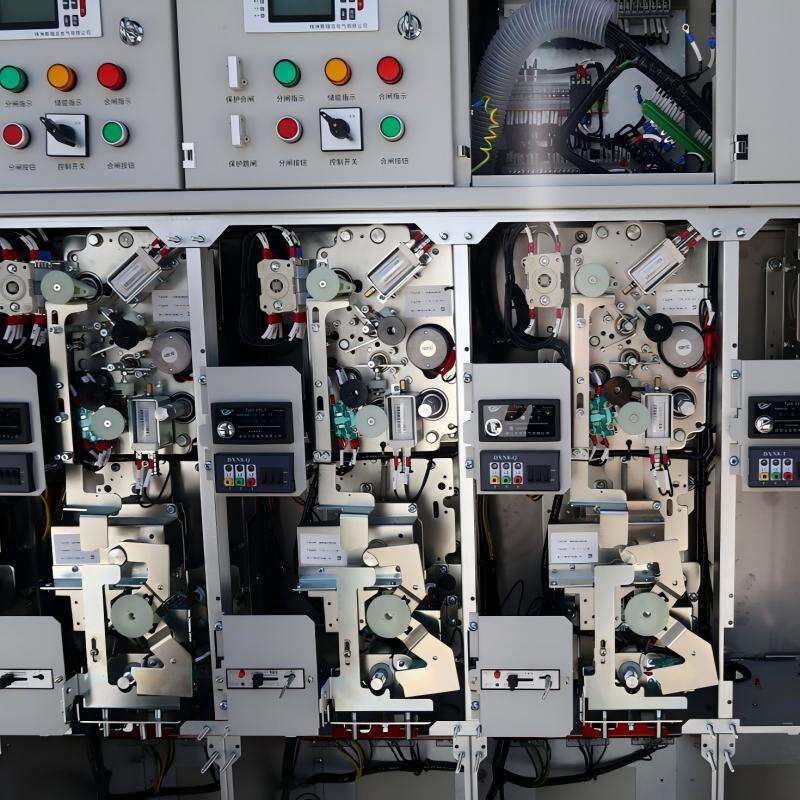
1. Visual Monitoring Windows: The front panel features large tempered glass windows. Operators can confirm the status of isolators or cable heads via mechanical indicators and live displays without opening the door.
2. Five-Proof Interlock Mechanism: Compulsory mechanical interlocks ensure "Ground before opening" and "Close door before energizing." This physically prevents misoperation-induced arc flashes, safeguarding personnel.
3. Mimic Diagram Panel: The enclosure surface clearly marks the primary system diagram with indicator lights reflecting line status. Even new technicians can grasp complex distribution logic at a glance.
4. Rapid Maintenance Space: Despite the compact footprint, the internal structure is ergonomically optimized, reserving ample space for cable terminal installation, significantly easing on-site construction and future inspections.
Selection Guide: Electrical Engineer FAQ
Q1: What is the main difference between a Switching Station and a Cable Branch Box?
A: Simply put, a Branch Box focuses on "multi-way distribution" (often using passive plug-in connectors). A Switching Station (RMU) possesses robust control and protection functions, capable of switching lines under load, serving as a core node in microgrids.
Q2: How do you handle condensation caused by extreme outdoor temperature swings?
A: We equip the cabinets with automatic constant temperature control systems (heaters + humidity controllers) that activate during high humidity or sudden drops in temperature to prevent flashovers.
Q3: Does this equipment support Smart Grid integration?
A: Absolutely. Our stations feature standard DTU (Distribution Terminal Unit) interfaces for real-time monitoring of voltage and current, supporting remote SCADA telemetry, signaling, and control.
Q4: How is the scalability for cable entry and exit?
A: Using a modular design with European/American-style fully insulated cable connectors, the system allows for future circuit expansion via busbar couplers without replacing the entire cabinet unit.
Q5: How do you ensure zero corrosion in high-humidity or coastal salt-spray environments?
A: Core GIS units are isolated from the air. The outer enclosure utilizes thick coatings, rain-shed designs, and specialized sealing strips, ensuring a 20+ year lifespan even in coastal regions.
Q6: How does the device protect personnel in the event of an internal arc fault?
A: The cabinet includes pressure relief channels (venting ports) at the bottom or rear. If a rare internal arc occurs, high-pressure gases are vented directionally to prevent the doors from bursting, minimizing accident impact.
Conclusion
In today’s pursuit of high reliability, the 10kV Outdoor Switching Station is the premier choice for municipal, residential, and industrial power distribution. By combining advanced materials with intelligent protection, it delivers decades of security while optimizing your initial investment.
Table of Contents
- Core Evolution: From Simple "Cable Branching" to "Full-Function Switching Stations"
- Deep Comparison: Integrated Switching Station vs. Traditional Civil Power Rooms
- Enclosure Craftsmanship: The Synergy of Carbon Steel and Stainless Steel
- Human-Centric Design: More Than Safety—It's Operational Efficiency
-
Selection Guide: Electrical Engineer FAQ
- Q1: What is the main difference between a Switching Station and a Cable Branch Box?
- Q2: How do you handle condensation caused by extreme outdoor temperature swings?
- Q3: Does this equipment support Smart Grid integration?
- Q4: How is the scalability for cable entry and exit?
- Q5: How do you ensure zero corrosion in high-humidity or coastal salt-spray environments?
- Q6: How does the device protect personnel in the event of an internal arc fault?
- Conclusion