 EN
EN


In today’s high-speed industrial landscape, reliable electricity is more than just a utility—it is the lifeblood of production. From heavy machinery in automated assembly lines to precision tools in plastic molding and metal processing, factory operations demand a consistent, stable, and robust power supply.
Yet, many facility managers and plant engineers grapple with power stability issues that threaten operational continuity. At the heart of solving these challenges is the 1500A industrial power distribution cabinet. Acting as the primary nerve center for factory power, these units are essential for managing high-capacity loads and ensuring that electricity is delivered efficiently to every corner of the facility.
Why High-Capacity Power Distribution is Vital for Continuous Production?
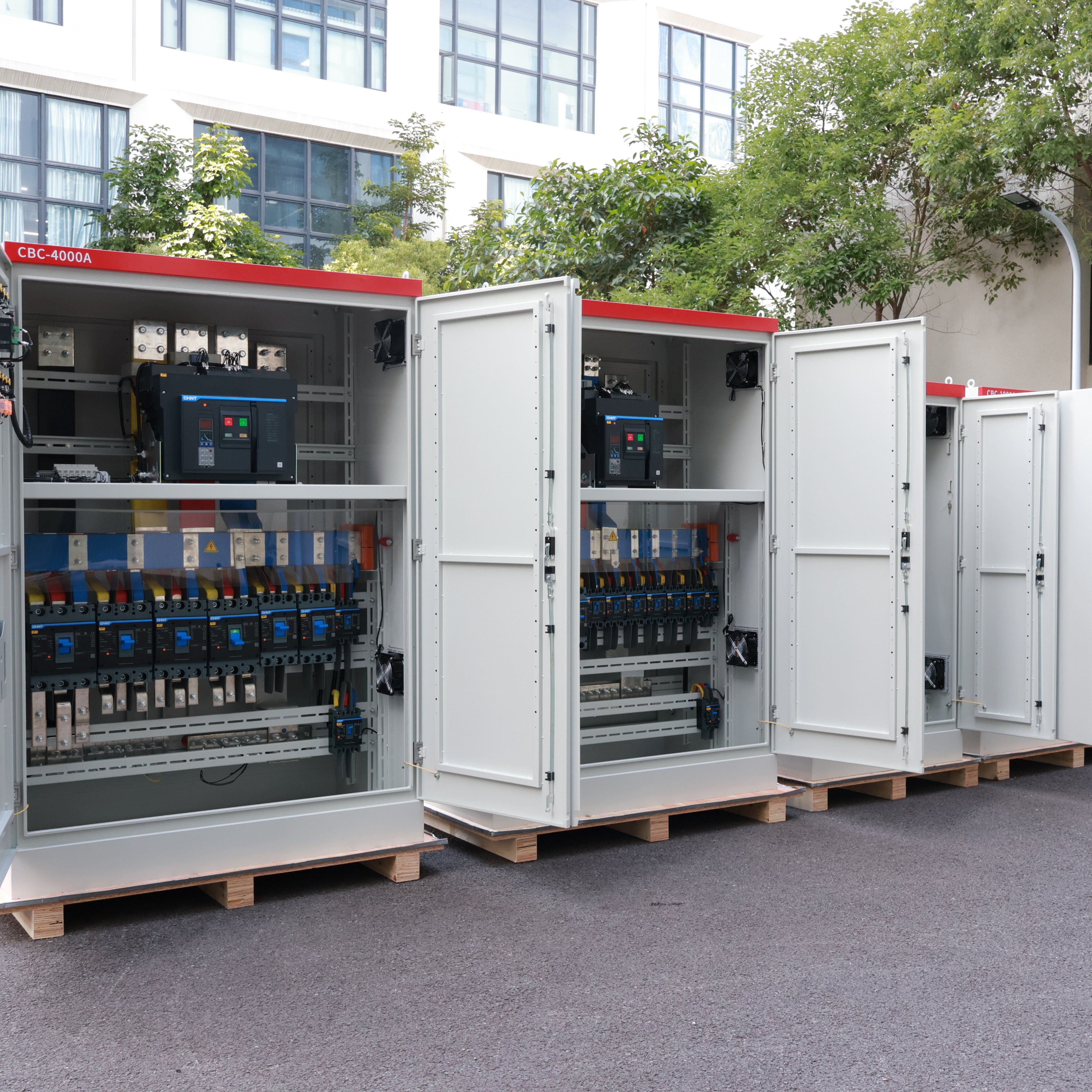
Modern factories operate around the clock, often facing heavy starting currents from large motors and the complex power requirements of modern automation. An industrial distribution cabinet rated for 1500A serves several critical functions:
Centralized Control and Protection: By aggregating the main incoming supply from the transformer, these cabinets provide a single point for monitoring, isolation, and protection against overloads, phase imbalances, and short circuits. This centralization allows for rapid emergency response and simplifies the overall electrical topology of the facility.
Operational Reliability and Uptime: Designed to handle massive continuous loads, these cabinets act as a stable buffer against grid fluctuations. They prevent "bottlenecks" in power delivery, ensuring that heavy machinery startup transients in one production line do not compromise the voltage stability or performance of sensitive equipment in another.
Safety and Regulatory Compliance: Robust distribution systems are engineered to meet stringent international electrical safety standards, such as IEC or NEMA guidelines. They utilize advanced arc flash mitigation strategies and physical isolation barriers to protect both the facility’s high-value infrastructure and its personnel from life-threatening electrical hazards.
Load Balancing and Management: With a 1500A capacity, these units allow engineers to dynamically distribute loads across multiple feeders. This minimizes the risk of overloading individual phases and ensures that the factory’s power factor remains within optimal limits, thereby reducing electricity wastage and avoiding utility penalties.
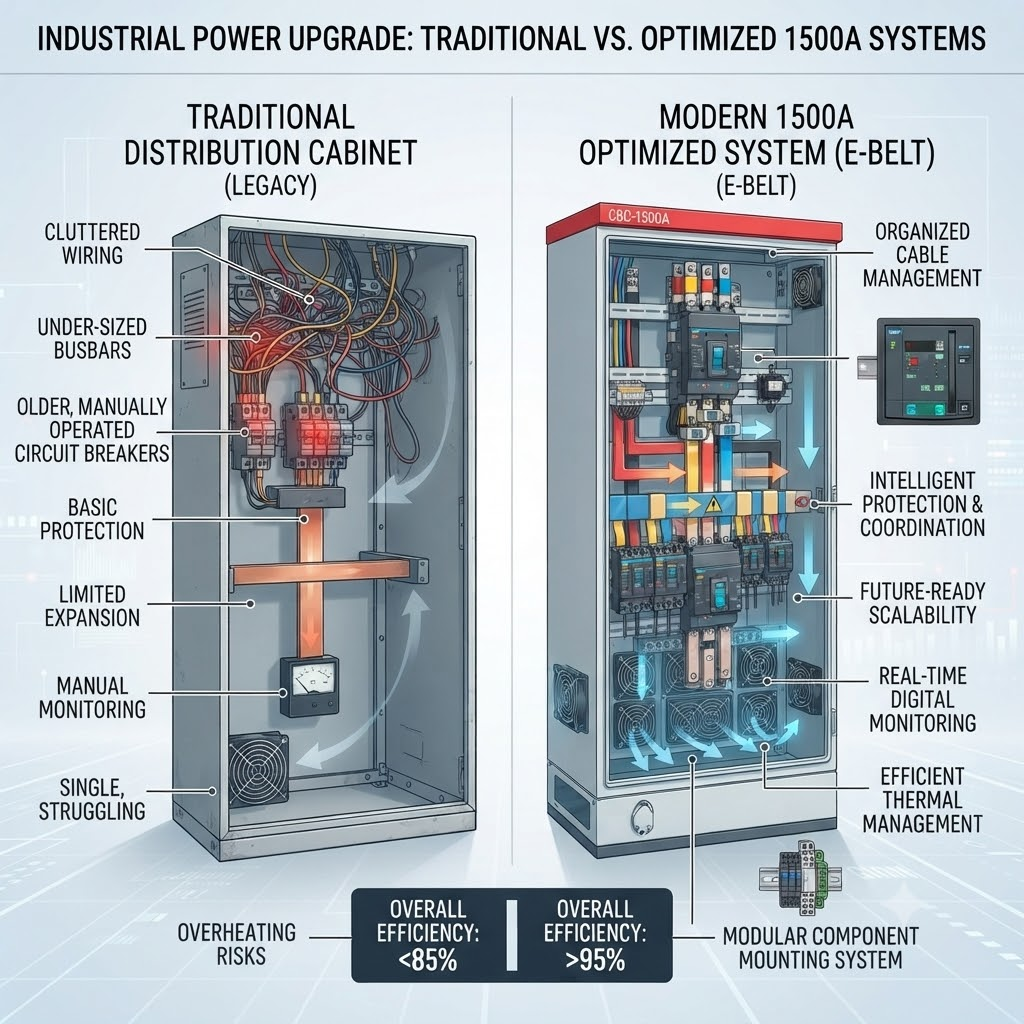
Core Differences:
Comparison: Standardized vs.Customized Distribution Systems
Comparison Metric |
Traditional distribution cabinet |
1500A Optimized Power Distribution System |
Fault Impact |
Widespread disruption |
Localized isolation |
Load Capacity |
High heat/overload risk |
Robust headroom/stability |
Protection Speed |
Delayed response |
Rapid intelligent triggering |
Maintenance |
Reactive/Manual inspection |
Predictive/Real-time monitoring |
Energy Efficiency |
High line losses |
Optimized conductor/low-loss design |
Scalability |
Limited expansion |
Modular/Future-ready |
Deep Dive: Architecture and Critical Components
A high-performance 1500A distribution cabinet is not merely an enclosure; it is a meticulously engineered system of electrical components designed for maximum uptime and ease of maintenance.
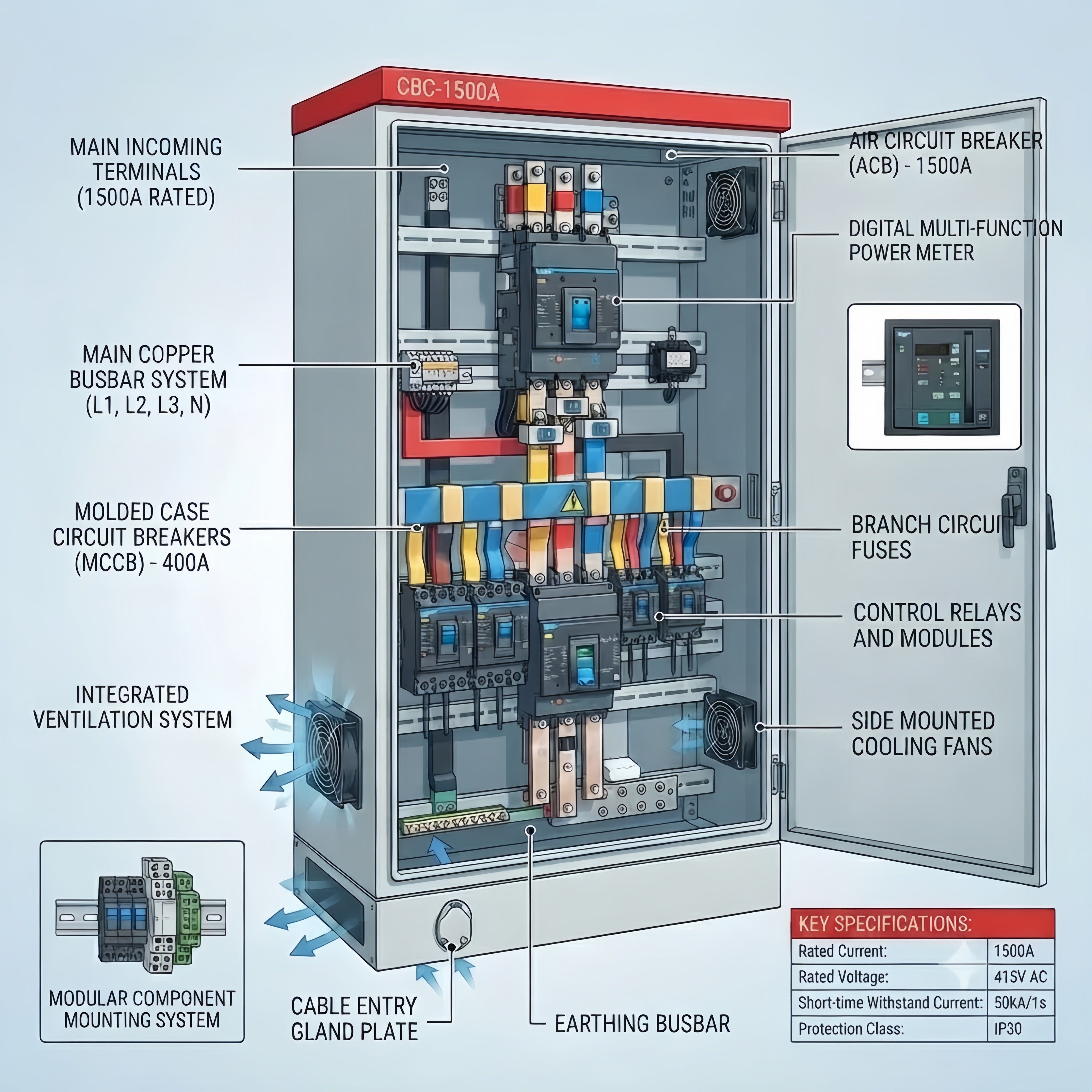
Main Incoming Circuit Breaker: The primary gateway for your facility’s power. It features high-capacity air circuit breakers (ACB) capable of handling massive fault currents. This component acts as the master switch, ensuring immediate disconnection during critical system-wide failures.
Modular Distribution Feeders: These units serve as the secondary distribution layer. By organizing outgoing circuits through precision-rated molded case circuit breakers (MCCB), the system ensures that each production cluster receives a stable, dedicated supply, preventing cross-circuit interference.
High-Conductivity Busbar Assembly: The internal "power highway." Engineered from high-purity copper or silver-plated aluminum, these busbars are sized to carry the 1500A load with minimal temperature rise. Their strategic geometry reduces magnetic field interference and heat-related degradation.
Integrated Intelligent Monitoring: Modern cabinets feature digital energy meters and temperature sensors. By tracking voltage, current, and load patterns via industrial communication protocols (such as Modbus), facility managers can identify power quality issues before they trigger a system-wide shutdown.
Advanced Thermal Management: Given the 24/7 nature of industrial workloads, these cabinets incorporate passive ventilation or active cooling loops. This ensures internal sensitive electronics and contact points remain within their optimal operating temperature range, significantly extending the service life of internal components.
FAQ
Q1: Why is a 1500A rating critical for my factory?
A1: A 1500A rating ensures the system can support the combined load of your plant's machinery—especially during heavy start-up phases—without risking circuit trips, overheating, or damaging your main transformer. It provides the necessary capacity to ensure the factory runs at full production speed.
Q2: How does modern distribution design prevent "domino effect" power outages?
A2: By utilizing precise protective device coordination, engineers ensure that if a fault occurs in a single piece of equipment, only the local circuit breaker trips. This isolates the issue immediately, leaving the rest of the factory—and the main 1500A cabinet—fully operational.
Q3: What maintenance is required to ensure 24/7 reliability?
A3: Regular maintenance is essential. This includes visual inspections for signs of heat or loose connections, periodic infrared thermography to detect "hot spots" before they become problems, and cleaning to ensure vents remain clear for proper cooling.
Q4: Does a high-capacity cabinet help with energy efficiency?
A4: Absolutely. By providing stable voltage and reducing line losses through optimized busbar design and proper cabling, a well-engineered 1500A cabinet helps minimize wasted energy, leading to lower utility overhead over time.
Q5: How do I know when it is time to upgrade my facility’s main distribution cabinet?
A5: Key indicators include frequent breaker trips under normal load, visible signs of component aging (like brittle insulation), the addition of new machinery that exceeds current capacity, or failing to meet updated electrical safety and arc flash codes.
Conclusion
This CBC-1500A industrial distribution cabinet is the core foundation for ensuring the continuity of modern factory production. With its 1500A large-capacity design, it can stably handle the instantaneous startup current of heavy machinery and effectively balance the loads of various production clusters, fundamentally reducing the risk of downtime. This product integrates an intelligent monitoring system, high-conductivity copper busbars, and advanced thermal management devices, achieving a leap from manual inspection to predictive maintenance. Choosing CBC-1500A is not only upgrading the electrical infrastructure, but also building a set of efficient, compliant, and safe and reliable power lifeline for your factory.
Table of Contents
- Why High-Capacity Power Distribution is Vital for Continuous Production?
- Core Differences:
- Deep Dive: Architecture and Critical Components
-
FAQ
- Q1: Why is a 1500A rating critical for my factory?
- Q2: How does modern distribution design prevent "domino effect" power outages?
- Q3: What maintenance is required to ensure 24/7 reliability?
- Q4: Does a high-capacity cabinet help with energy efficiency?
- Q5: How do I know when it is time to upgrade my facility’s main distribution cabinet?
- Conclusion