 EN
EN


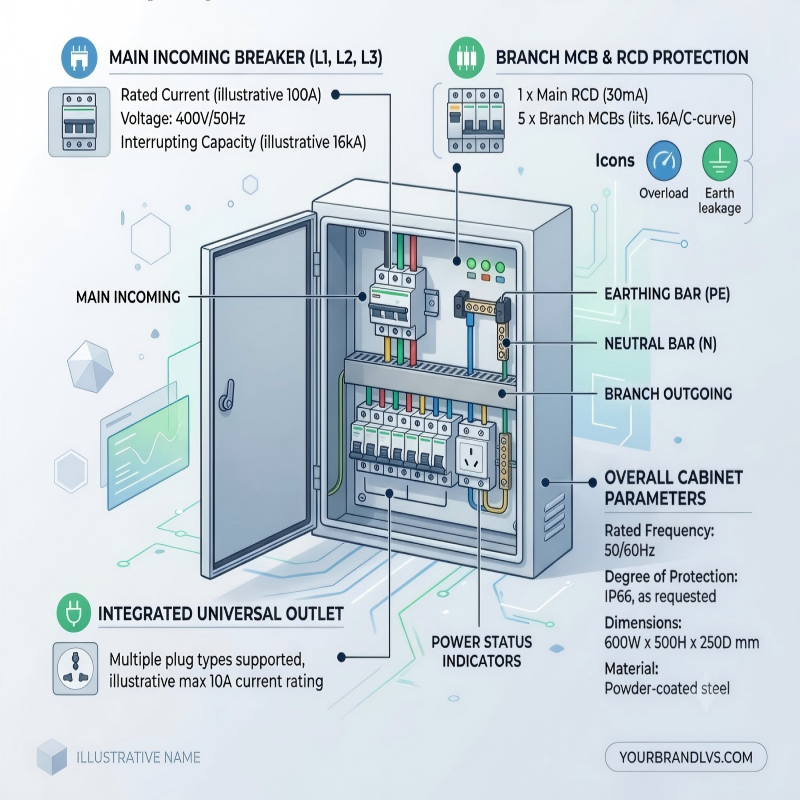
In modern industrial manufacturing and automated workshops, factories across various sectors—such as mechanical processing, plastic injection molding, textiles, fabrication, and food production—rely heavily on continuous power to drive their primary assembly lines. However, behind the scenes of every seamless operation lies a frequently overlooked yet critical piece of electrical infrastructure: the Industrial Maintenance Power Distribution Box.
Serving as a dedicated power supply terminal for temporary workshop maintenance, equipment debugging, on-site welding, and daily troubleshooting, these specialized distribution panels act as the ultimate safety net. They perfectly integrate power allocation, multi-stage overcurrent protection, and versatile plug-and-play interfaces to ensure that facility managers can carry out emergency repairs or routine turnarounds without endangering the wider factory grid.
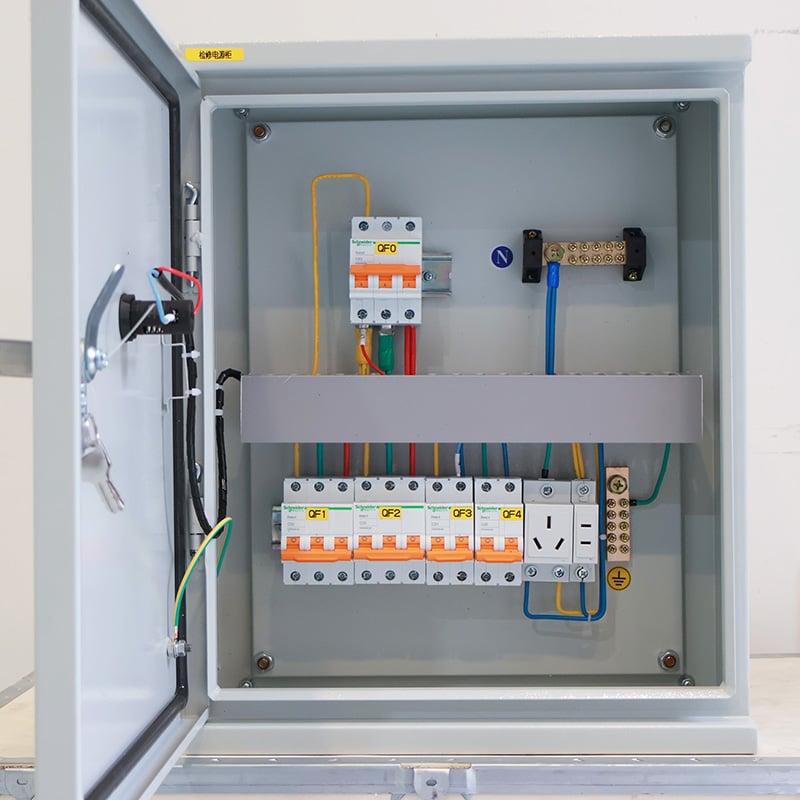
Why Do Industrial Workshops Need Dedicated Maintenance Power Distribution Boxes?
In many traditional facilities, when a machine requires urgent troubleshooting or an engineer needs to plug in diagnostic equipment, maintenance crews often resort to tapping temporary lines directly into the main distribution board or nearby machinery terminals. While seemingly convenient, this practice introduces severe electrical hazards and operational blind spots.
The Direct Risks of Unregulated Temporary Wiring:
Cascading (Nuisance) Tripping Causing Costly Downtime: If a portable power tool or welding machine experiences a short circuit or heavy current surge on an unprotected temporary line, the fault can bypass local controls and trip the upstream main circuit breaker. This instantly shuts down entire production lines, racking up massive financial losses per minute of downtime.
Severe Shock and Flash Hazards: "Spiderweb" cables dragged across factory floors are highly prone to insulation wear from forklifts, pedestrian traffic, oil exposure, and sharp metal shavings. Without localized, high-sensitivity ground fault protection, these compromised cords present a fatal electrocution risk to workers.
Lack of Standardized Power Interfaces: Different maintenance equipment (such as heavy-duty three-phase welders, single-phase testing rigs, or portable floodlights) require different voltages and receptacle configurations. Constantly swapping raw wires into terminal blocks degrades connection tightness, leading to localized overheating and devastating electrical fires.
This is precisely where a dedicated industrial maintenance power distribution box proves essential. By drawing power from a centralized source and splitting it into distinct, protected sub-circuits, it establishes a safe, standardized, and fully isolated node for any temporary power requirement on the shop floor.
Core Differences:
Comparison:Unregulated Temporary Wiring vs. Standardized Maintenance Box
Metric / Feature |
Unregulated Temporary Wiring |
Standardized Maintenance Box |
Trip Isolation |
Nuisance tripping shuts down main lines. |
Localized faults isolated to the branch breaker. |
Shock Protection |
Lacks high-sensitivity ground fault safety. |
30mA RCD/GFCI provides instant shock defense. |
Setup Speed |
Hours wasted on hardwiring and phase checks. |
Seconds needed with standard plug-and-play sockets. |
Enclosure Durability |
Exposed terminals vulnerable to debris/impact. |
Heavy-duty steel box shields internal components. |
Environmental Seal |
Open connections suffer from oil and water leaks. |
High IP-rated sealing blocks moisture and dust. |
Code Compliance |
Violates standard industrial safety codes. |
Aligns fully with electrical inspection audits. |
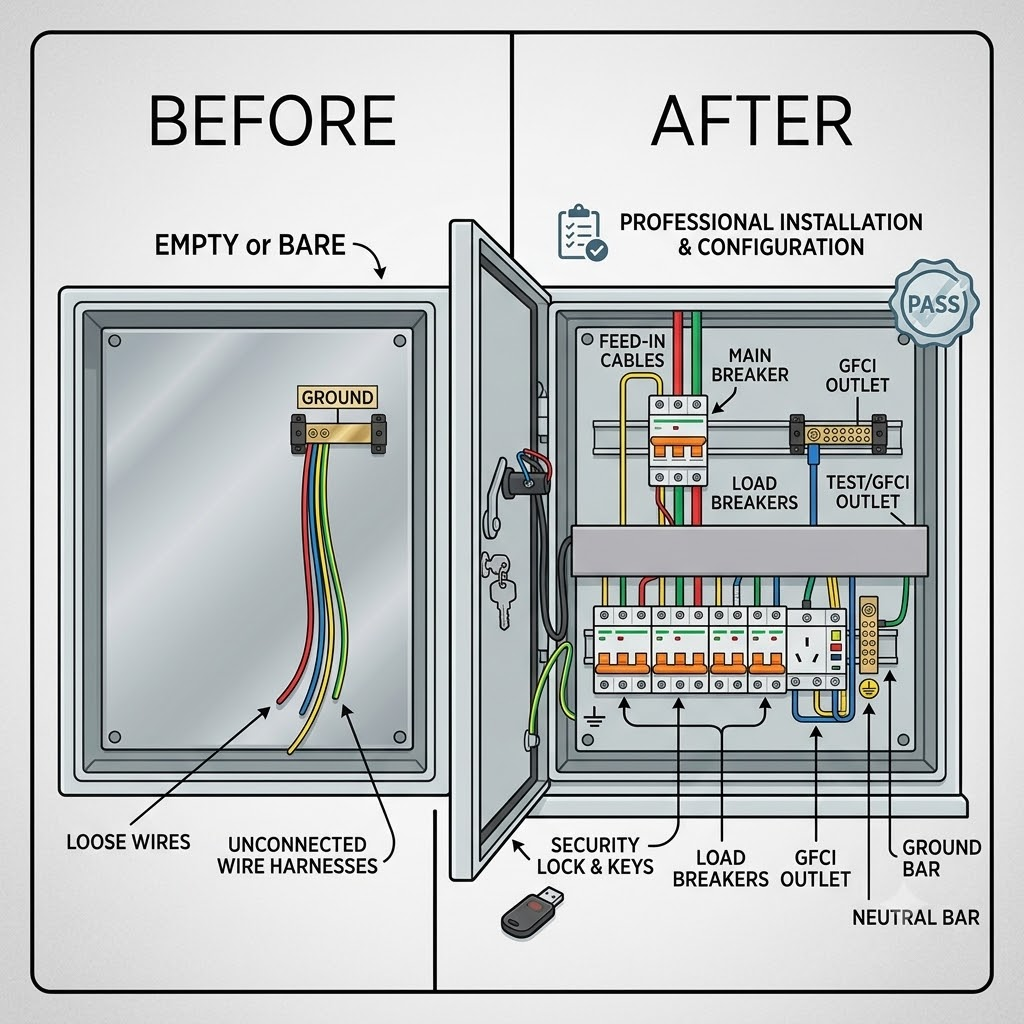
System Architecture and Operational Mechanism of Maintenance Distribution Panels
A well-engineered industrial maintenance power distribution box is built systematically using high-grade industrial components designed to handle heavy mechanical and electrical stress:
Main Disconnect Switch / Main Circuit Breaker: Acts as the primary point of isolation for the entire enclosure, delivering total overcurrent and short-circuit protection while allowing operators to completely de-energize the box when not in use.
Branch Miniature Circuit Breakers (MCBs): Provide dedicated short-circuit and thermal overload protection for individual socket circuits or hardwired terminal lines.
Residual Current Devices (RCD / GFCI): High-sensitivity monitoring devices installed on socket branches to instantly cut power (within milliseconds) if a current imbalance is detected, protecting personnel against lethal electric shocks.
Standardized Industrial Socket Modules: Integrated directly into the lower or side panels of the box, featuring spring-loaded covers and secure locking mechanisms for single-phase (2-wire/3-wire) and three-phase (4-wire/5-wire) configurations.
Neutral (N) and Ground (PE) Busbars: Solid brass or copper distribution blocks ensuring reliable grounding of the enclosure frame and balanced distribution for complex multi-phase systems.
In practice, when a maintenance team needs to conduct a routine overhaul on a production line, they simply open the enclosure door, insert the standardized industrial plug of their welding kit or heavy-duty vacuum into the corresponding receptacle, and flip the branch MCB. Even if the welding machine draws a massive inrush current upon startup, the localized breaker safely manages the peak demand, ensuring neighboring automated machinery continues to run completely undisturbed.
FAQ
Q1: How do I choose the correct IP rating for a factory maintenance panel?
A1: Match your selection to the shop floor environment. Use IP42 or IP44 steel enclosures for standard, dry machining or packaging lines to block basic dust. For harsh conditions involving heavy airborne powder (textiles/plastics) or daily chemical washdowns (food/chemical processing), upgrade to IP55 or IP66 enclosures equipped with foam gaskets and watertight seals.
Q2: Should I use Type C or Type D circuit breakers in a maintenance box?
A2: Use Type C breakers (tripping at 5–10x rated current) for standard resistive loads like hand tools, diagnostic rigs, and portable lights. Choose Type D breakers (tripping at 10–20x rated current) for high-surge inductive loads like heavy-duty air compressors, extraction fans, or industrial welders to eliminate nuisance tripping during startup.
Q3: How do you prevent a local tool short circuit from tripping the factory's main breaker?
A3: Ensure strict amperage and time coordination between devices.Pair this with a slight intentional time delay on the main upstream unit, allowing the local branch breaker to clear faults instantly without disturbing the main line.
Q4: Is an RCD or GFCI mandatory for all maintenance socket circuits?
A4: Yes, it is globally required by industrial electrical safety codes. Technicians frequently operate handheld tools while standing on conductive surfaces or working near moisture. To prevent fatal electrocution, all receptacle circuits must feature an RCD rated for a maximum residual current of 30mA and an instant cutoff speed under 0.1 seconds.
Q5: What are the key maintenance steps to prevent electrical fires in these boxes?
A5: Follow these four core steps:
1).Torque terminals quarterly to counteract loose connections caused by machinery vibrations.
2).Clear out conductive dust bi-annually using dry compressed air or an ESD-safe vacuum.
3).Press the "T" (Test) button monthly to verify that the RCD's internal trip mechanism functions.
4).Inspect outlets regularly for physical wear, loose contact friction, or heat discoloration, replacing damaged sockets immediately.
Conclusion
In summary, a dedicated industrial maintenance power distribution box is an indispensable asset for any modern manufacturing facility. By replacing hazardous, unregulated temporary wiring with a standardized, isolated power source, it effectively eliminates the risks of costly production downtime, severe shock hazards, and electrical fires. Investing in a high-quality maintenance panel equipped with precise circuit protection and robust environmental sealing not only guarantees strict regulatory compliance but also safeguards your most valuable assets—your workforce and your machinery. Through routine preventative maintenance and proper component selection, this robust electrical solution ensures your shop floor remains safe, efficient, and always ready for unexpected operational demands.
Table of Contents
- Why Do Industrial Workshops Need Dedicated Maintenance Power Distribution Boxes?
- Core Differences:
- System Architecture and Operational Mechanism of Maintenance Distribution Panels
-
FAQ
- Q1: How do I choose the correct IP rating for a factory maintenance panel?
- Q2: Should I use Type C or Type D circuit breakers in a maintenance box?
- Q3: How do you prevent a local tool short circuit from tripping the factory's main breaker?
- Q4: Is an RCD or GFCI mandatory for all maintenance socket circuits?
- Q5: What are the key maintenance steps to prevent electrical fires in these boxes?
- Conclusion