 EN
EN


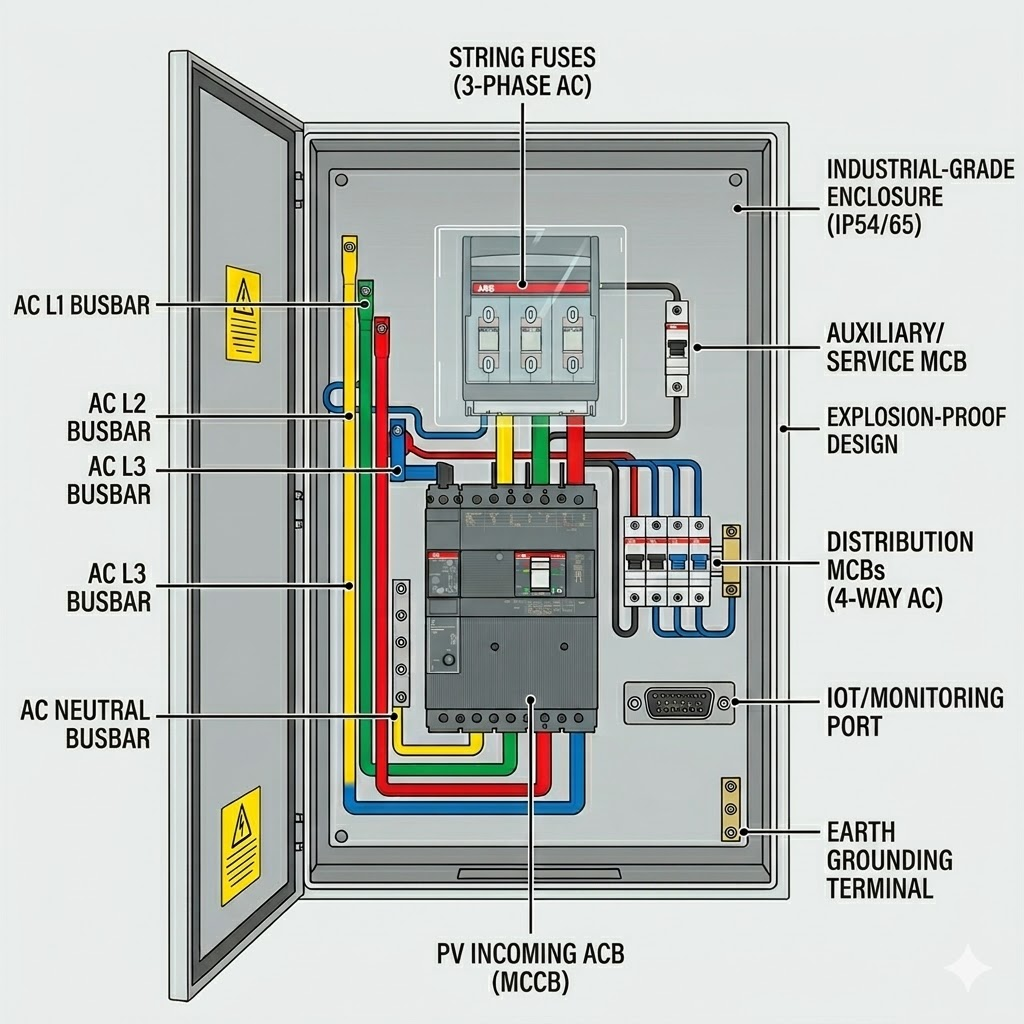
In the current global pursuit of energy transition and carbon neutrality, commercial and industrial distributed photovoltaic (PV) power generation has become the primary choice for enterprises looking to optimize their energy structure and reduce operational costs. Within this complex energy infrastructure, a stable and efficient LV power distribution system serves as the "neural hub" of the entire power station.
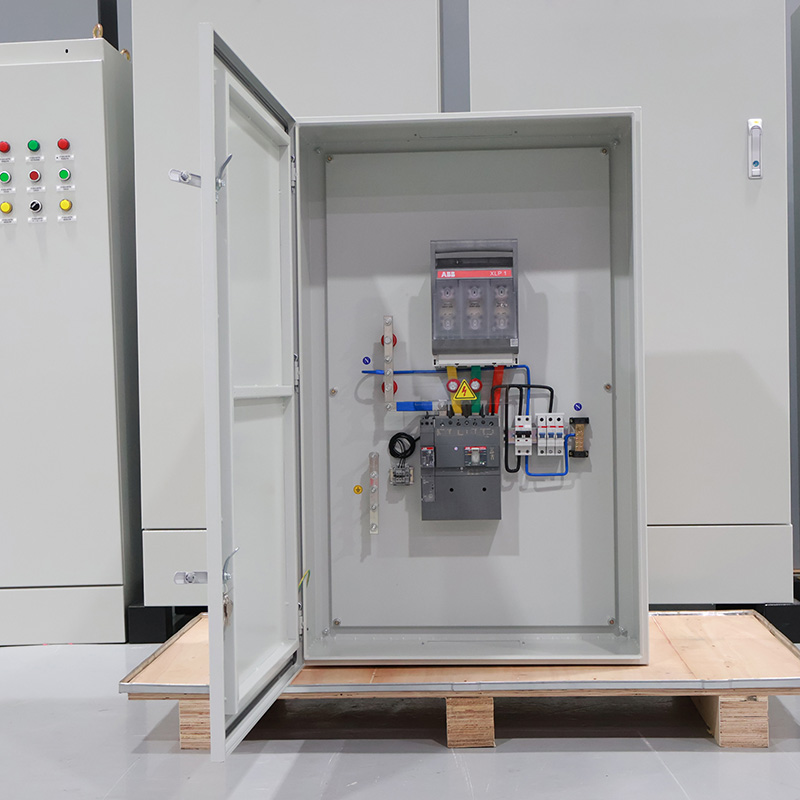
Understanding PV Dedicated Low-Voltage Power Distribution Cabinets
A PV dedicated low-voltage power distribution cabinet is far more than a simple metal enclosure. It is a highly specialized electrical assembly engineered specifically to bridge the gap between PV inverter output and a facility’s internal electrical grid.
Unlike standard distribution equipment, these units are purpose-built to manage the unique characteristics of solar energy. As solar power is inherently variable—affected by cloud cover, time of day, and seasonal shifts—the power output fluctuates continuously. A dedicated cabinet is designed to handle these irregularities, providing stable, reliable power integration. Internally, it integrates high-precision circuit breakers, robust surge protection devices (SPD) to mitigate lightning risks, and energy metering components that track every kilowatt generated. Furthermore, these cabinets are equipped with intelligent monitoring modules that function as the "brain" of the station, offering real-time data on energy yield and system health, which enables owners to make data-driven decisions regarding their energy self-consumption or net-metering strategies. By effectively aggregating multiple inverter outputs into a unified, protected, and monitored flow, these cabinets ensure that the energy produced by your PV array is safe, compliant with grid standards, and optimized for maximum efficiency.
Core Differences:
Dedicated PV Cabinets vs. Standard Distribution Cabinets
Feature |
PV Dedicated Distribution Cabinet |
Standard Distribution Cabinet |
Primary Use |
Solar PV power aggregation & grid connection |
General facility power distribution |
Surge Protection |
Advanced, multi-stage lightning protection |
Basic or absent |
Environmental Design |
High IP rating (dust/water resistance) |
Varies (mostly indoor) |
Load Characteristics |
Handles fluctuating solar current |
Steady, predictable industrial loads |
Monitoring |
Integrated IoT & real-time PV data |
Manual or limited metering |
Grid Compatibility |
Optimized for inverter harmonic filtering |
General circuit protection |
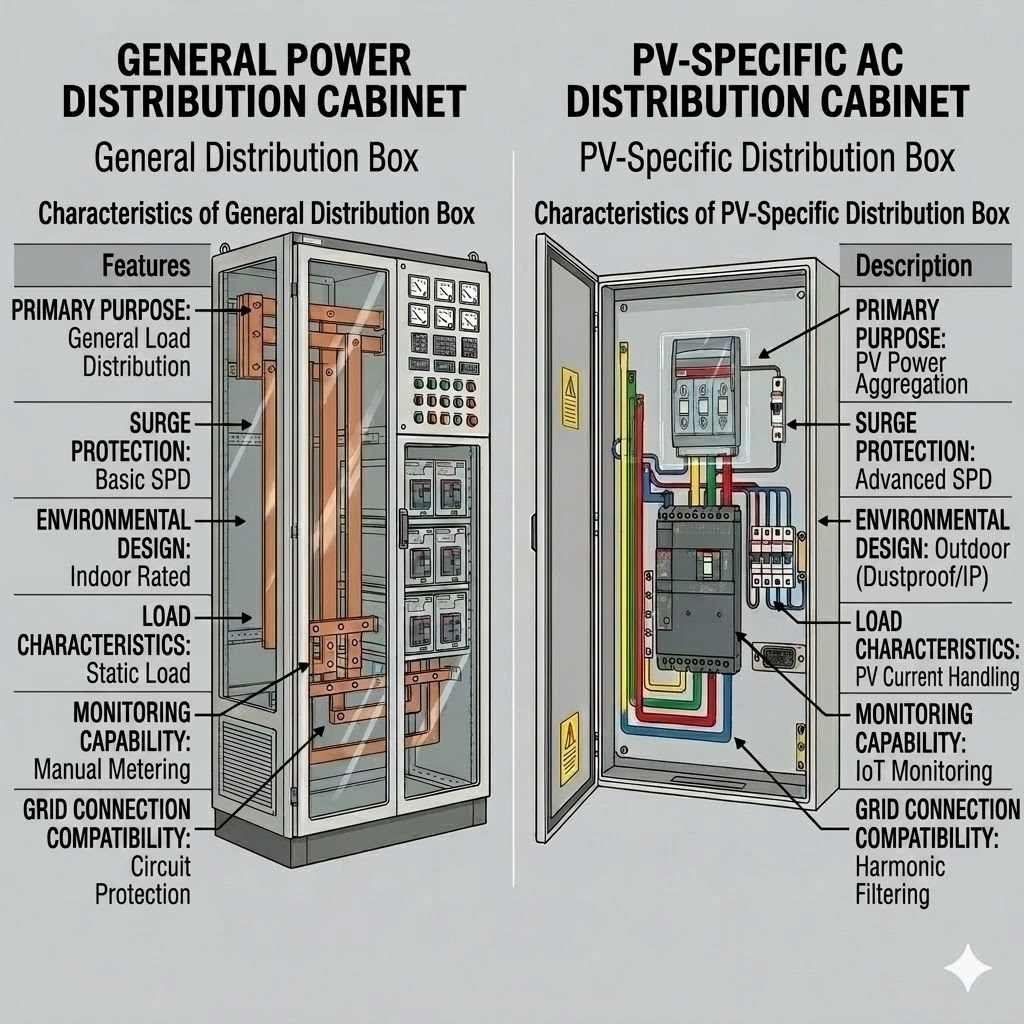
System Architecture and Operational Mechanism
A well-engineered industrial PV dedicated distribution cabinet is systematically assembled from several core electrical components:
Ingress Protection (IP Rating): Equipment must meet at least IP54 standards to ensure reliability in dusty and humid rooftop environments.
Circuit Breakers and Fuses: Core protective elements matched to the station's rated and short-circuit current to ensure precise fault response.
Surge Protection (SPD): The first line of defense for system safety against lightning surges.
Intelligent Monitoring Integration: IoT modules for real-time observation of voltage, current, and power factor via remote terminals, enabling automated operations.
Selection Criteria: How to Make the Right Choice?
Choosing the right distribution cabinet requires a tailored approach based on these dimensions:
Capacity Matching: Define total plant capacity and reserve headroom for future expansion.
Environmental Adaptability: Consider ventilation conditions to prevent component degradation from high temperatures.
Compatibility: Ensure seamless interface with inverter specifications and facility voltage levels.
Regulatory Compliance: Adhere to local grid-connection technical specifications and industrial safety standards.
FAQ
Q1: How does a PV dedicated cabinet differ from a residential one?
A1: Industrial units require higher weather resistance, insulation, and surge protection to handle PV-specific instability in harsh outdoor environments.
Q2: How often is professional maintenance required?
A2: Routine inspection every six to twelve months is recommended to check terminal security, cable heat, and seal integrity.
Q3: What are the grid requirements for installation?
A3: The facility grid must have sufficient capacity; a professional team should evaluate transformer and wiring status to prevent voltage fluctuations.
Q4: Why does the cabinet trip frequently?
A4: Likely causes include load-side overloads, loose internal wiring, or incorrectly set protective parameters; consult a professional for troubleshooting.
Q5: Does this equipment support remote monitoring?
A5: Yes, modern industrial cabinets are compatible with intelligent monitoring systems for real-time remote diagnostics and analysis.
Conclusion
Through scientific planning and selection, a high-quality low-voltage power distribution system becomes the bedrock of stable returns for your commercial and industrial PV projects. On the path to green and low-carbon operations, the meticulous management of every electrical component is a solid step toward enterprise energy transformation.