 EN
EN


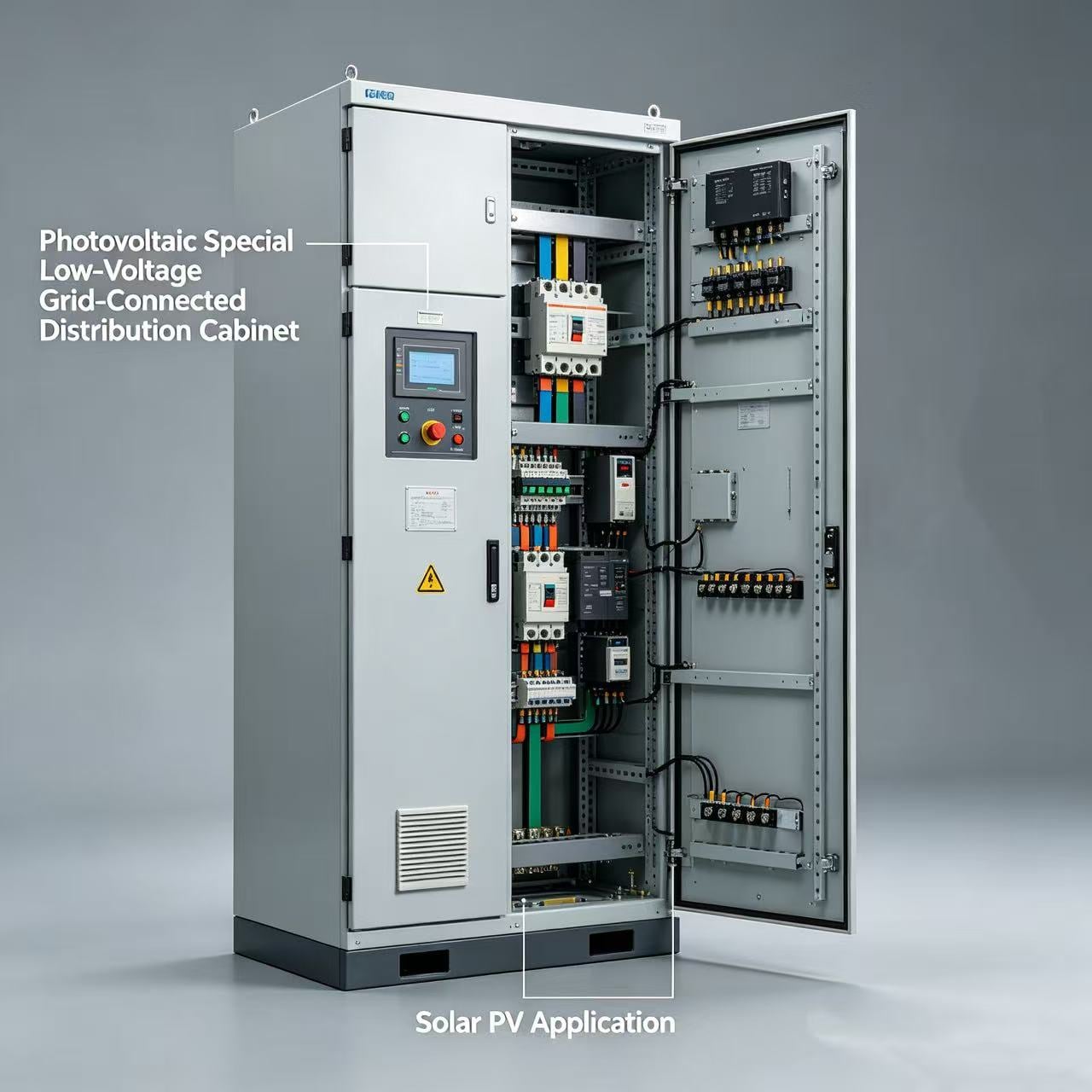
Against the macro-policy backdrop of "carbon peaking and carbon neutrality," an increasing number of industrial parks and factory rooftops are installing distributed photovoltaic (PV) power stations. However, while many business owners focus on the power generation efficiency of PV modules, they often overlook a critical link—the low-voltage grid-connected distribution cabinet.
It is not only the "gate" for PV power to be integrated into the factory's power system, but also a key asset that ensures the safe, stable operation of the power station and boosts the Return on Investment (ROI) of energy projects.
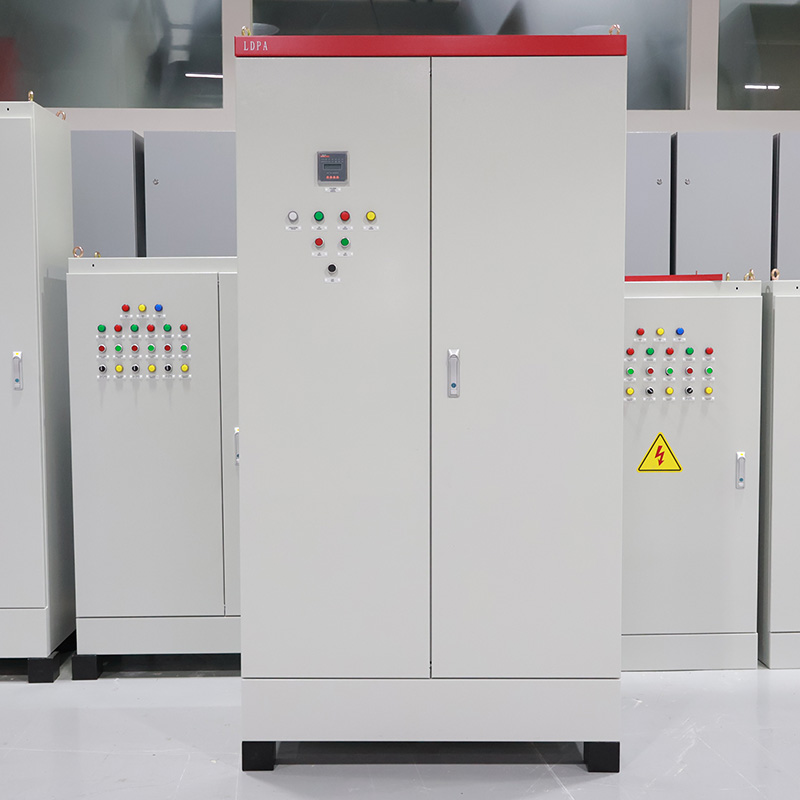
Why Do Commercial & Industrial PV Systems Require Specialized Grid-Connected Cabinets?
After the direct current (DC) generated by a distributed PV system is converted into alternating current (AC) by an inverter, it cannot be connected directly to the grid or the factory transformer; it must be managed and protected through a specifically designed grid-connected distribution cabinet. From a macro perspective, this is more than just a physical connection—it is a deep integration of multiple functions:
Power Convergence and Transmission Optimization: Large-scale distributed PV projects are typically composed of multiple string inverters. As the terminal for the output of all inverters, the grid-connected distribution cabinet uses scientific busbar design to converge multiple power lines steadily. High-standard busbar processing can effectively reduce heat generation during transmission and minimize internal resistance losses, thereby ensuring that PV power is maximally consumed by the factory loads.
Multi-Dimensional Safety Protection Logic (Core) This is the "immune system" of the grid-connected cabinet. Its core function is to ensure safe isolation between the grid and the PV station, including but not limited to:
Anti-Islanding Protection: When a power outage or electrical fault occurs on the grid side, the cabinet must detect and disconnect within milliseconds to prevent the PV station from continuing to feed power into the de-energized grid line, thereby protecting the lives of maintenance personnel.
Over-voltage and Under-voltage Protection: Monitoring voltage fluctuations at the grid-connection point to ensure power quality meets grid stability requirements.
Short-circuit and Overload Cut-off: In the event of an accidental current surge within the distribution cabinet, physical isolation mechanisms quickly cut the circuit to prevent the accident from spreading to the factory's main transformer.
Precision Metering and Fine-Grained Monitoring: With the advancement of "behind-the-meter" power trading and market-oriented power transactions, precise electricity metering has become increasingly important. The cabinet integrates professional-grade power acquisition devices, which not only record total power generation but also monitor key parameters such as three-phase voltage unbalance and power factor in real-time, providing intuitive data support for operations personnel to determine system health rather than relying on simple "on/off" status.
Core Differences:
Simple Distribution Scheme vs. Industrial-Grade Grid-Connected Cabinet
Evaluation Metric |
Simple Distribution Scheme |
Industrial-Grade Grid-Connected Cabinet |
Energy Loss |
Severe line heating, resulting in wasted generation. |
Uses high-conductivity busbars to reduce line loss and boost efficiency. |
Safety |
Components age quickly, posing risks of frequent tripping or fire. |
Features multi-level protection for long-term reliability and lower maintenance. |
Grid Compliance |
High voltage fluctuation, prone to anti-islanding errors. |
Equipped with perfect grid-connection logic, meeting all grid standards. |
Expansion Capacity |
Requires frequent replacement of parts as PV scale grows. |
Modular design with reserved interfaces, supporting future system upgrades. |
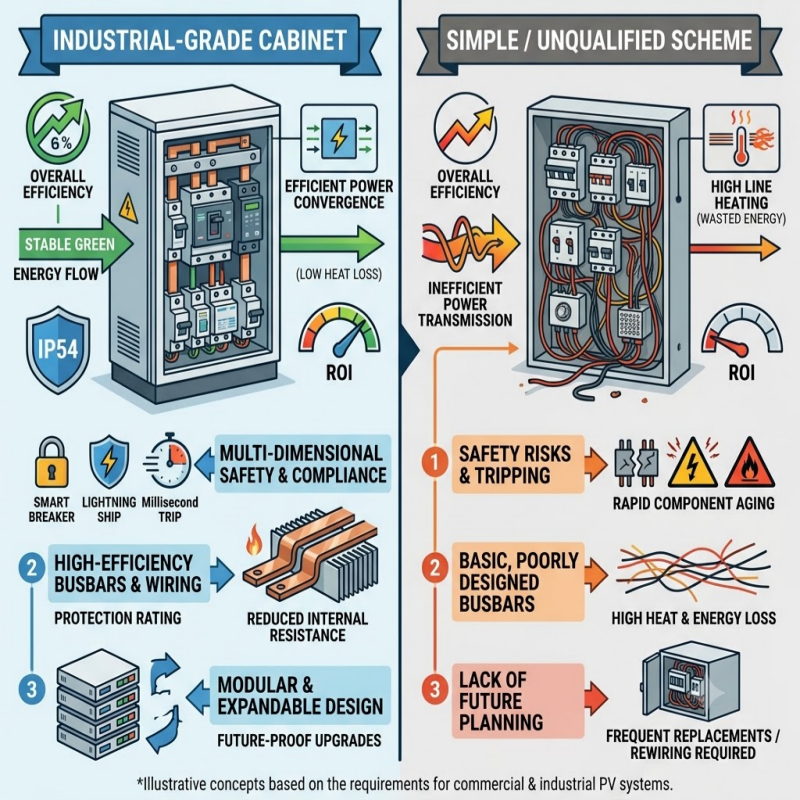
System Architecture and Deep Operational Mechanism: Deconstructing the Cabinet
A mature industrial-grade PV grid-connected distribution cabinet is not merely a stack of switches, but a rigorous energy scheduling system, primarily consisting of the following core components:
Master Control Circuit Breaker (Smart Breaker): As the "brain" of the entire cabinet, it manages the switching of the main incoming lines. In modern PV projects, such breakers often include remote communication interfaces, allowing them to link with grid dispatch centers or enterprise energy management systems (EMS) to achieve remote control and staged load shedding.
Surge Protection System (SPD): Since PV stations are often located on rooftops, they are high-risk areas for lightning strikes. The industrial-grade SPD configured inside the cabinet dissipates instantaneous high-voltage lightning currents, limiting over-voltage to a range the equipment can withstand, thereby completely protecting the downstream control systems and inverters from induced lightning damage.
Precision-Grade Electrical Parameter Acquisition Module: The system utilizes high-precision current transformers and voltage acquisition units to parse power quality indicators in real-time. These modules are crucial for identifying hidden faults such as grid harmonics and current fluctuations, serving as the foundation for the long-term, efficient operation of the power station.
Busbars and Physical Isolation Structure: The internal copper busbar arrangement strictly follows electrical clearance and creepage distance design requirements, ensuring no arc short-circuits occur under high current. As seen in the clear busbar paths and wiring layouts in distribution cabinet (10).jpg and distribution cabinet (6).jpg, proper spatial layout is not only aesthetically pleasing but also enhances heat dissipation through convection, extending the lifespan of electrical components.
Auxiliary Protection and Control Loops: Comprising intermediate relays, fuses, and auxiliary switches, these form the logic operation layer of the entire protection scheme. Through signal interlocking, they ensure the highest level of operational safety logic among manual operations, automatic cut-offs, and remote coordination.
During actual operation, the above components work together through a closed-loop logic: the system compares the factory's real-time load with the PV power output and dynamically adjusts the operating parameters at the grid-connection point through the intelligent control strategy of the distribution cabinet. Whether facing a steady daytime generation state or responding to sudden grid voltage fluctuations, this architecture ensures that green energy is injected into the factory's internal power grid precisely, stably, and safely.
FAQ
Q1: What is the difference between a PV grid-connected cabinet and a standard distribution cabinet?
A1: A standard distribution cabinet focuses on load distribution, whereas a PV grid-connected cabinet focuses on "bidirectional power flow control." It requires higher heat resistance and protection ratings, and must include specific anti-islanding protection logic tailored to PV generation characteristics to prevent accidents when the grid is powered down.
Q2: How do I choose the right capacity for a grid-connected cabinet?
A2: It should be matched according to the total installed capacity of the station and the total capacity of the factory transformer. A "20% capacity reserve" principle is usually followed, taking into account current project needs while reserving physical space and current headroom for future expansion (such as adding more PV panels or energy storage systems).
Q3: Why does the grid-connected cabinet need to consider heat dissipation?
A3: The currents flowing through the internal busbars of PV grid-connected cabinets are significant, generating heat during long-term operation. If the cabinet's ventilation design is poor, high temperatures will cause circuit breakers to "derate," leading to unnecessary tripping, and in severe cases, accelerate the aging of electrical component insulation.
Q4: What are the protection rating requirements for industrial-grade cabinets?
A4: Given that commercial and industrial environments may contain dust, moisture, or even corrosive gases, outdoor rooftop PV grid-connected cabinets are recommended to have at least an IP54 protection rating to ensure safe and stable operation under various extreme weather conditions.
Q5: What maintenance is required for these cabinets during daily operation?
A5: A comprehensive inspection every six months is recommended. Key areas include using infrared thermal imagers to detect overheating at wiring terminals, checking circuit breaker contact wear, cleaning dust inside the cabinet to maintain good heat dissipation, and testing the effectiveness of surge protection devices.
Conclusion
In the wave of energy transformation, choosing an industrial-grade grid-connection solution is not only the foundation of regulatory compliance but also a smart investment to maximize PV generation revenue. Through scientific system layout and preventive maintenance, your distributed PV power station will be able to continuously and efficiently create green value for you.
Table of Contents
- Why Do Commercial & Industrial PV Systems Require Specialized Grid-Connected Cabinets?
- Core Differences:
- System Architecture and Deep Operational Mechanism: Deconstructing the Cabinet
-
FAQ
- Q1: What is the difference between a PV grid-connected cabinet and a standard distribution cabinet?
- Q2: How do I choose the right capacity for a grid-connected cabinet?
- Q3: Why does the grid-connected cabinet need to consider heat dissipation?
- Q4: What are the protection rating requirements for industrial-grade cabinets?
- Q5: What maintenance is required for these cabinets during daily operation?
- Conclusion