 EN
EN


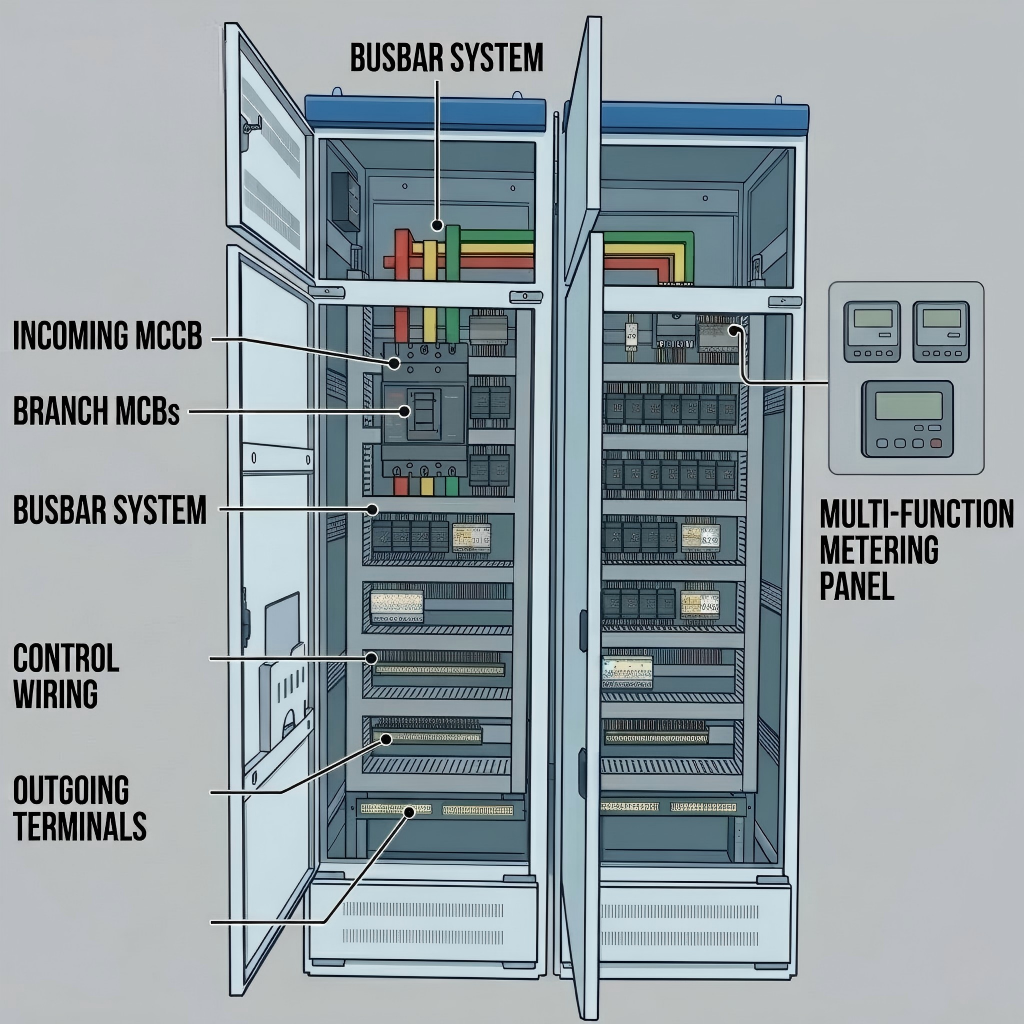
In the landscape of modern industrial production—ranging from mechanical manufacturing and chemical processing to textile production—stable and efficient power distribution is the lifeline of enterprise operations. However, when managing increasingly complex electrical demands, many factory managers overlook a critical factor: how to safely and efficiently distribute electrical energy from the main grid to individual production machines.
Serving as the "power hub" of industrial electrical systems, the GGD-type LV switchgear has become an indispensable core facility in modern distribution rooms. Its robust design and high reliability ensure not only the smooth transmission of electricity but also act as a sturdy barrier for production safety.

The Industrial Value: Why Standardized Distribution Matters
The integration of professional low-voltage switchgear is not merely a hardware upgrade; it is a fundamental strategy for operational continuity. From a macro perspective, it serves three vital functions:
Systemic Resilience: By housing high-performance circuit breakers and protection relays, the switchgear acts as a firewall against electrical surges, short circuits, and overloads. This prevents localized faults from escalating into widespread production line failures.
Operational Optimization: A well-engineered distribution system minimizes voltage drops and resistive losses. By ensuring that sensitive equipment receives a clean and stable power supply, it significantly extends the service life of expensive industrial machinery.
Future-Proofing Infrastructure: The GGD design provides a scalable architecture. Its modular nature allows facility managers to easily integrate new monitoring technologies or expand capacity as production needs evolve, deferring the need for complete system overhauls.
Safety and Regulatory Compliance: Proper distribution cabinets meet stringent industrial safety standards, reducing the risk of workplace electrical accidents and ensuring that factory operations comply with regional grid requirements.
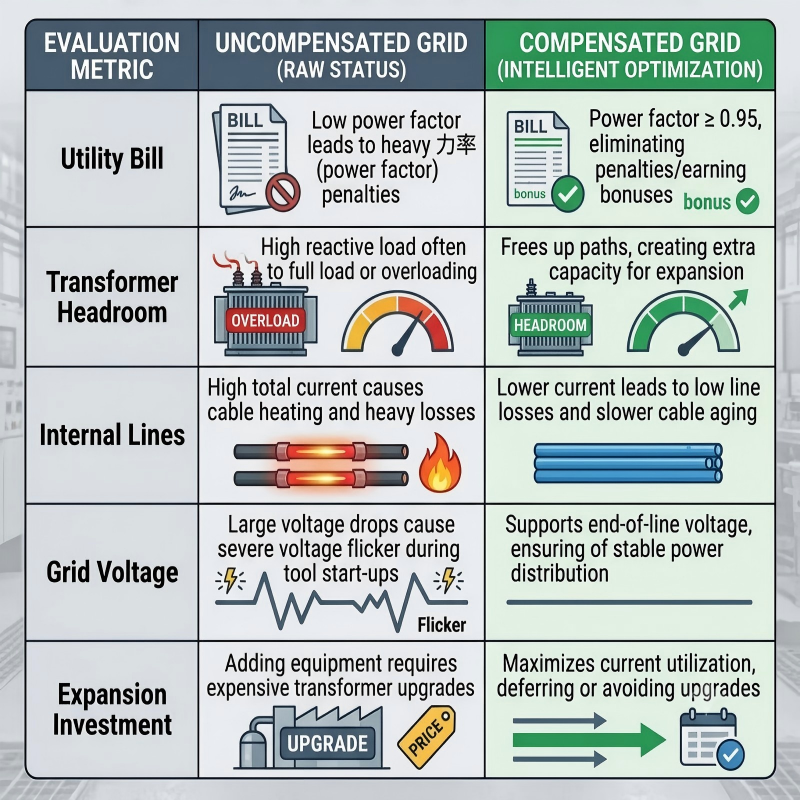
Core Differences:
Comparison: Uncompensated vs. Compensated Electrical Systems
Evaluation Metric |
Uncompensated System |
Intelligent Compensated System |
Utility Costs |
High power factor penalties |
No penalties; potentially bonuses |
Transformer Capacity |
Often overloaded |
Frees up headroom for expansion |
Internal Cabling |
High current; heavy losses |
Lower current; improved efficiency |
Grid Voltage |
Severe voltage fluctuations |
Stable, reliable voltage support |
Equipment Longevity |
High heat; accelerated aging |
Lower operating temperatures |
Future Investment |
Requires frequent upgrades |
Maximizes current asset utilization |
Core System Architecture: How the "Power Hub" Operates
A GGD switchgear cabinet is more than a steel enclosure; it is a sophisticated assembly of electrical control units working in harmony to manage high-energy flows.
Incoming & Main Control: This section functions as the primary gatekeeper. It utilizes heavy-duty main circuit breakers to isolate the entire cabinet from the main grid, providing the ability to safely de-energize the system for maintenance while managing the total power throughput.
Branch Distribution & Protection: Inside, the cabinet is partitioned into multiple functional circuits. Each branch is equipped with dedicated protection devices, such as molded case circuit breakers (MCCBs), which act as individual guardians for specific production machines, preventing localized issues from affecting the entire plant.
Termination & Signal Interface: Reliable electrical performance depends on the quality of connections. Terminal blocks within the cabinet provide a clean interface for power and control wiring, reducing contact resistance and ensuring that signals between the PLC/metering panels and the machinery remain accurate.
Environmental Management: To maintain peak performance, the system includes passive and active cooling solutions. By managing the thermal environment, the switchgear prevents the premature failure of sensitive components and ensures that the internal electronics remain stable even during peak production hours.
FAQ
Q1: What defines GGD switchgear?
A1: It is a fixed-installation, robust industrial cabinet designed for high-stability, reliable power distribution in factories.
Q2: Why use MCCBs in these cabinets?
A2:They offer the ideal balance of space efficiency, high breaking capacity, and reliable short-circuit protection for industrial loads.
Q3: How often is maintenance required?
A3: Periodic inspections are necessary to check for wiring tightness, dust accumulation, and signs of thermal stress on terminals.
Q4: Is it suitable for high-dust environments?
A4: Yes, but it requires regular cleaning of internal components and ventilation systems to maintain insulation performance.
Q5: When should a system be upgraded?
A5: Upgrades are recommended if you experience frequent unexplained outages, overheating components, or need to expand plant load capacity.
Conclusion
GGD type low-voltage distribution cabinets feature a reliable fixed structure, well-designed circuit protection system and excellent system resilience, effectively guaranteeing the safety and continuity of power supply for production. By adopting intelligent power compensation solutions, enterprises can greatly improve power utilization efficiency, cut operational costs and extend service life of equipment. Understanding its core structure and conducting regular professional maintenance are essential for the long-term efficient operation of industrial power distribution systems.