 EN
EN


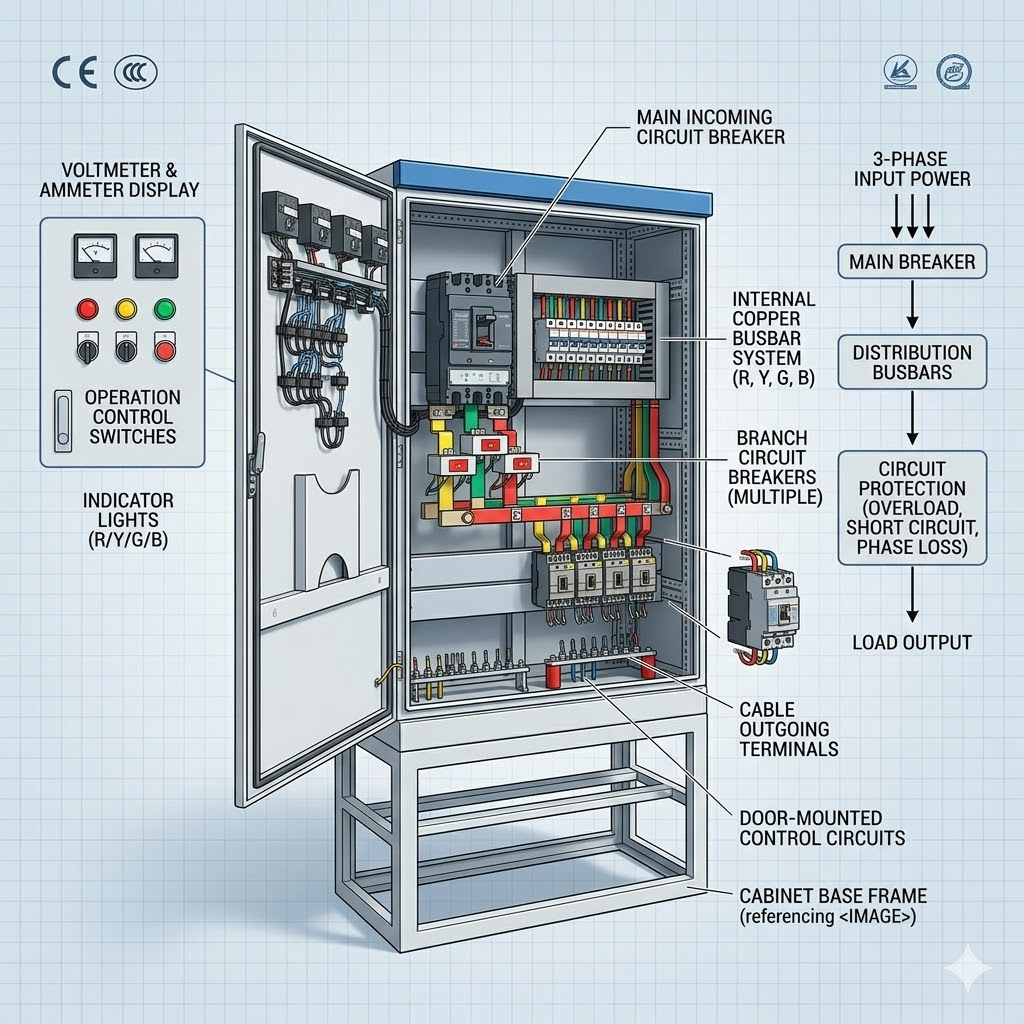
In industrial production and facility management, the distribution box is the critical hub of the electrical system. Many users find it difficult to choose between "LV complete switchgear" and "standard distribution boxes." This guide provides a professional perspective on the core differences to help you make the optimal choice for your operations.
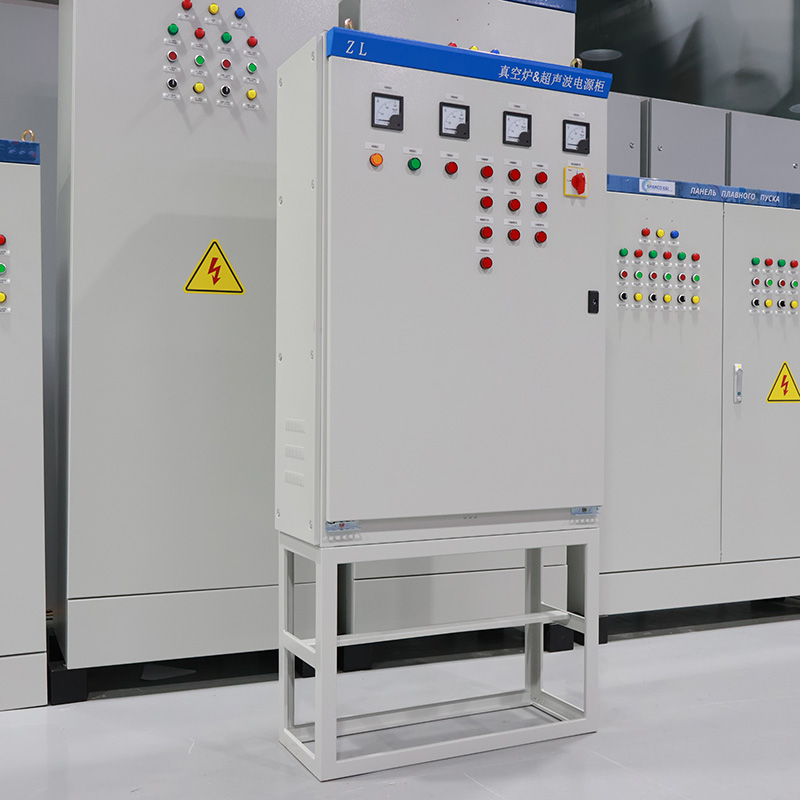
Why Industrial Facilities Require Professional Power Distribution Cabinets
Industrial electrical systems operate under extreme conditions, demanding high standards for safety, continuity, and reliability. A professional power distribution cabinet does far more than just split power; it acts as an essential safeguard for the entire production ecosystem through:
Dynamic Load Protection: Unlike basic systems, these cabinets provide precise overload, short-circuit, and phase-loss protection specifically tailored for high-load equipment like motors and frequency inverters. This prevents permanent electrical damage during the high-current surges common in industrial startup cycles.
Selective Fault Isolation: A core objective is to ensure "production continuity". Professional cabinets utilize tiered protection settings, ensuring that a fault on a single specific branch circuit is isolated immediately by its dedicated breaker, thereby preventing a plant-wide power outage.
Optimized Electrical Infrastructure: By employing robust internal busbar configurations and high-grade conductive materials, these cabinets minimize internal resistance. This significantly reduces heat generation within the cabinet, which in turn prevents the premature aging of electrical components and improves overall energy efficiency.
Advanced Safety Standards: These units are engineered to meet stringent industrial safety codes. They utilize fire-resistant, high-IP-rated dust-proof, and temperature-tolerant enclosures. This comprehensive protection suppresses electrical hazards at the source, maximizing the safety of both personnel and capital assets in harsh factory environments.
Core Differences:
Industrial Complete Switchgear vs. Standard Distribution Boxes
Feature |
Industrial Complete Switchgear |
Standard Distribution Box |
Standardization |
High; certified (CCC/International) |
Low; generic or custom-assembled |
Protection |
High; fire/dust/heat-resistant |
Moderate; dry, indoor only |
Scalability |
Modular design |
Fixed design |
Primary Use |
Factory power, production lines |
Lighting, offices |
Reliability |
Extremely high; full-load ready |
Moderate; low-load use |
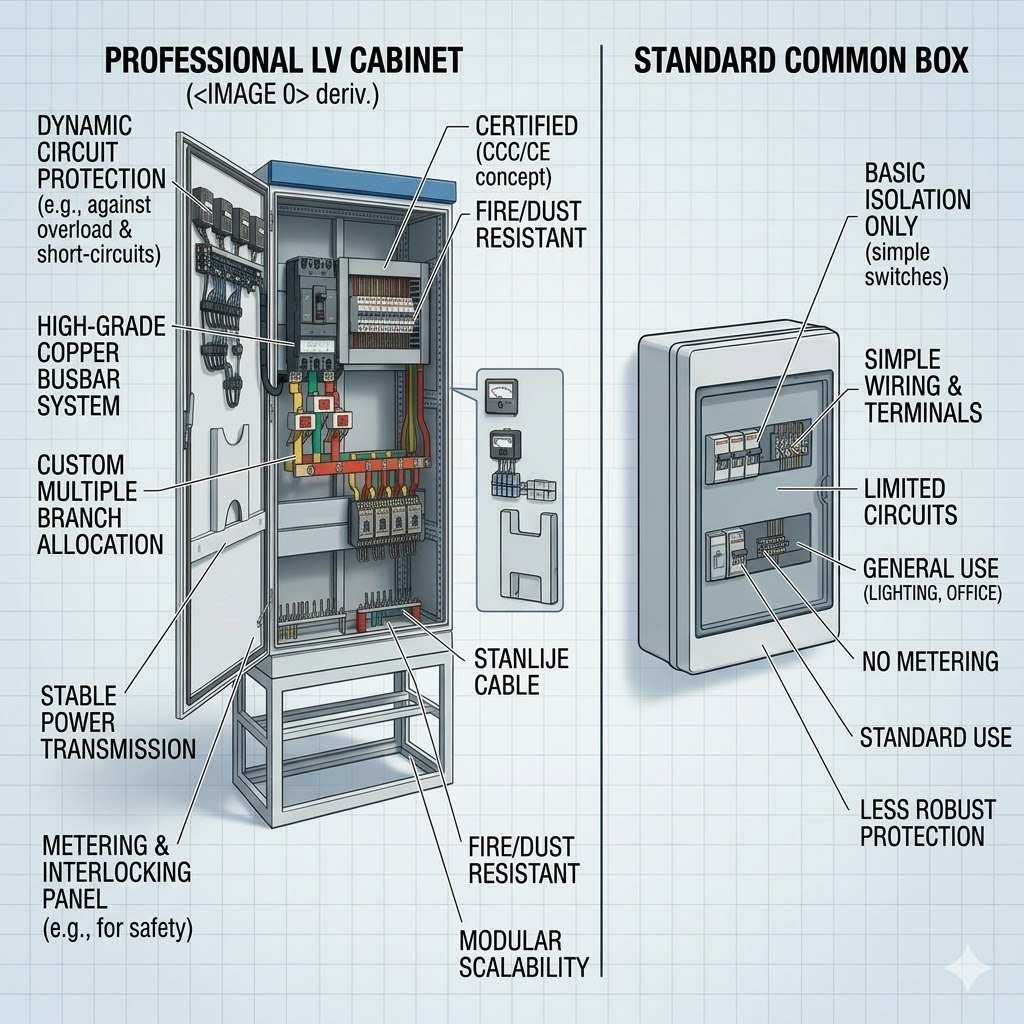
The Architecture and Core Operational Logic
A scientifically engineered power distribution system is not merely a collection of switches; it is an integrated energy management architecture designed for high-performance reliability:
Main Control and Gateway Unit: This serves as the system's "Commander". It is responsible for the secure intake of total power and houses the primary switching components. These units are equipped with advanced trip sensors that continuously monitor for total system imbalances, ensuring that the main supply line remains within safe operating parameters.
Intelligent Branch Allocation: Each production machine has unique power requirements. The cabinet is configured with multiple precision-calibrated branch circuits. This "point-to-point" logic ensures that power delivery is customized to the specific current demands of each machine, providing a stable voltage supply that is immune to the noise and interference generated by neighboring heavy equipment.
Engineered Busbar Distribution: Acting as the "arteries" of the system, the busbar network is the structural backbone of the cabinet. High-quality industrial cabinets utilize heavy-duty, treated copper busbars that are dimensioned specifically to handle continuous full-load current without creating heat "hotspots," which are a primary cause of system failure.
Transparent Monitoring Interface: Modern industrial units have transitioned into data-rich hubs. They integrate real-time digital monitoring for voltage, amperage, and power factor. By providing a "transparent" view of electrical health, these systems allow facility managers to monitor consumption patterns and perform predictive maintenance, effectively moving from reactive repair to proactive energy management.
FAQ
Q1: How do I choose the right distribution box?
A1: It depends on the application. For shop floor machinery or high-power motors, you must select industrial-grade complete switchgear. For office lighting or small devices, a standard distribution box is sufficient.
Q2: Is bigger capacity always better?
A2: No. Oversizing wastes budget and increases no-load losses, while undersizing leads to frequent tripping. Always calculate loads based on your total installed capacity and the nature of your machinery.
Q3: Does the distribution box require maintenance?
A3: Yes. We recommend a comprehensive inspection every six months to clear dust, tighten loose screws, and test the sensitivity of circuit breakers to ensure trouble-free operation.
Q4: What are the common faults in industrial distribution boxes?
A4: The most common issues include overheating due to poor terminal contact, frequent tripping due to circuit overload, and insulation degradation caused by high humidity.
Q5: Can I add circuits whenever I want?
A5: This is not recommended. Unauthorized additions can overload the main busbar and create fire hazards. Always have a professional electrician assess the total load before performing any expansion.
Conclusion
This guide elaborates on industrial low-voltage power distribution cabinets, introducing their advantages including comprehensive protection, fault isolation, excellent heat dissipation and high safety performance that suit harsh industrial environments, as well as their overall structure composed of main control units, branch circuits, busbars and real-time monitoring systems. It also makes a clear comparison between industrial complete switchgear and ordinary distribution boxes in terms of standards, protection, scalability and applicable scenarios, and answers frequent questions about selection, capacity configuration, daily maintenance, common faults and circuit expansion, reminding users to choose equipment based on actual load demands, stick to regular maintenance and avoid unauthorized modifications, and consult professional technicians before purchase to guarantee stable production power supply.