 EN
EN


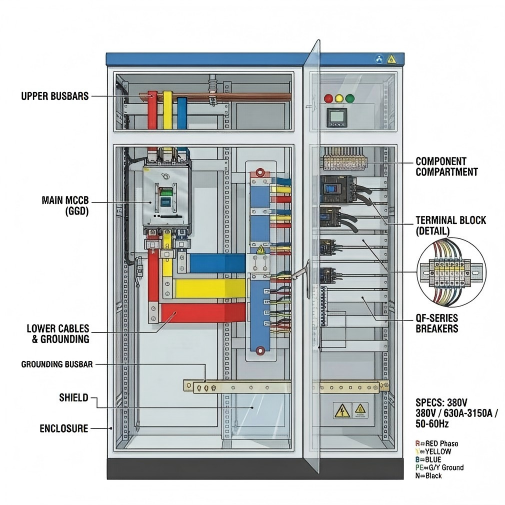
For small-to-medium manufacturing plants and modern industrial workshops, a stable, safe, and efficient power supply is the literal heartbeat of production. Downtime due to electrical failure can mean thousands of dollars in lost productivity. This is where the GGD type low voltage complete distribution cabinet (commonly referred to in international markets as an LV switchgear assembly or main distribution board) plays a critical role.
As a time-tested, robust engineering solution, the GGD cabinet acts as the central hub for workshop power intake, circuit distribution, and comprehensive electrical safety management. In this comprehensive guide, we will explore what GGD distribution cabinets are, how they fit into industrial power infrastructure, and why they remain a premier choice for global factory setups.
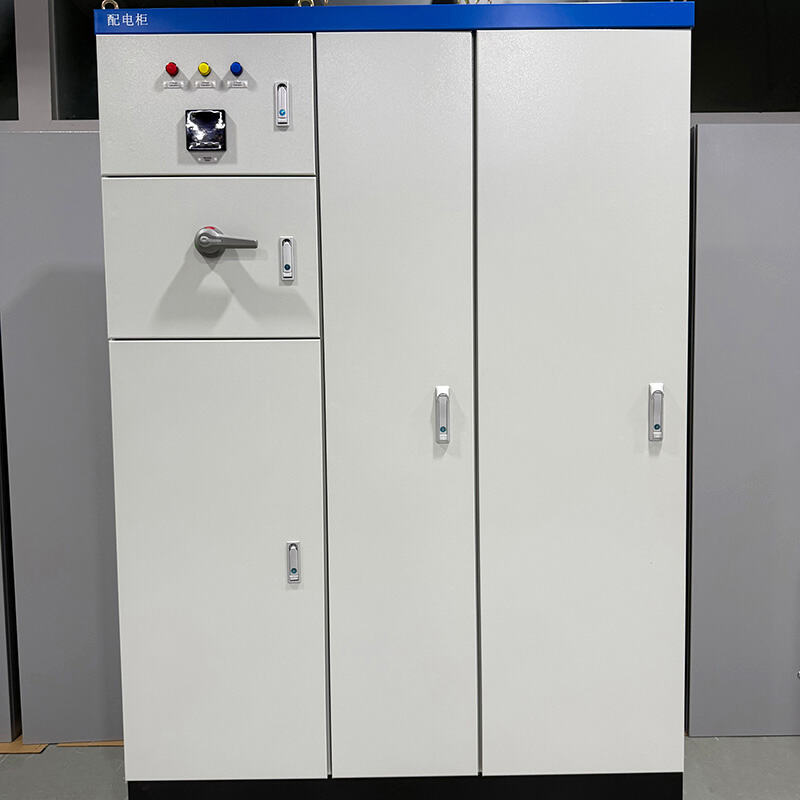
What is a GGD Low Voltage Distribution Cabinet?
The GGD is a standardized, fixed-type low voltage switchgear assembly designed for AC 50Hz/60Hz power distribution systems with a rated operating voltage typically up to 380V–415V.Unlike drawout or modular switchgears that feature complex moving parts, the GGD utilizes a high-strength, fixed-frame structure constructed from heavy-duty industrial steel sheet metal. This specific design prioritizes structural rigidity, exceptional thermal dissipation, and high short-circuit resistance. It serves three fundamental purposes in an industrial electrical layout:
Power Receipt (Incoming Control): Safely accepting bulk power from the main transformer.
Feeder Distribution: Dividing the main electrical supply into multiple sub-circuits to power specific machinery, production lines, and auxiliary workshop facilities.
System Protection: Isolating faults to prevent overloads, short circuits, and electrical fires from crippling the entire facility.
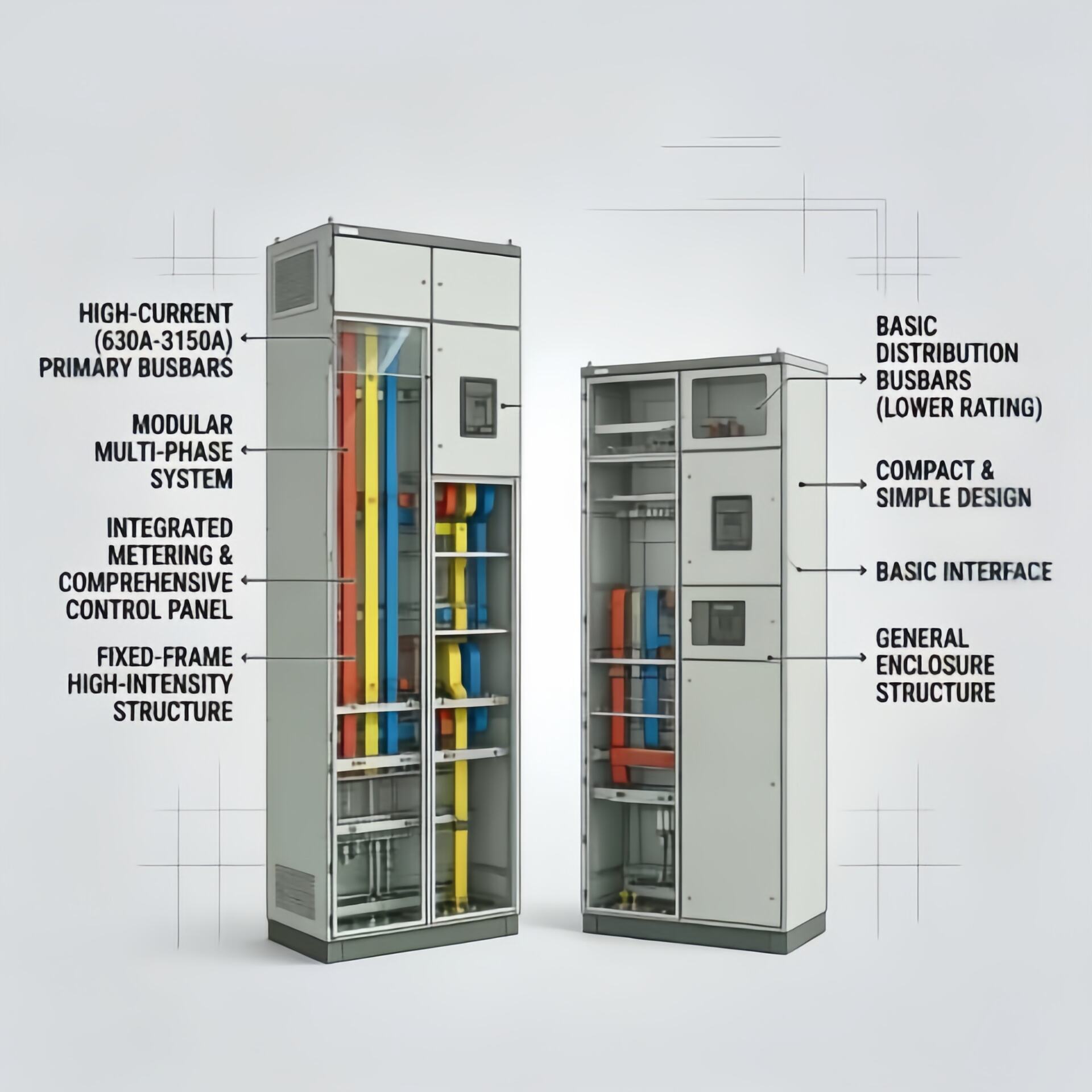
Core Differences:
GGD Cabinets vs. Standard Enclosures
Feature / Metric |
GGD Low Voltage Switchgear |
Standard Distribution Board/Box |
Structure Type |
High-strength, modular fixed frame |
Simple sheet metal welded body/box |
Current Capacity |
High power (Up to 3150A max busbar) |
Light to medium power (Typically under 630A) |
Thermal Design |
Built-in ventilation slots (natural chimney effect) |
Closed enclosure, relies on surface dissipation |
Short-Circuit Level |
High (Icw); designed for severe fault stress |
Limited withstand capacity; for secondary circuits |
Primary Target |
Industrial workshops And main incoming systems |
Sub-circuit branching, commercial & residential |
System Integration |
Seamless matching with capacitor bank cabinets |
Standalone deployment or localized control |
Components of an Industrial Main Distribution Board
An industrial-grade GGD cabinet houses an array of robust components tailored for heavy-duty operational cycles. While configurations can be customized based on specific single-line diagrams, a standard unit typically integrates:
Main Circuit Breakers (MCCBs/ACBs): The frontline defense system. These high-capacity breakers handle the main incoming and outgoing currents, instantly cutting off power if an overcurrent or short-circuit anomaly is detected.
Copper Busbar Matrix: High-conductivity, color-coded copper busbars form the internal power highway. They are precisely engineered to withstand high thermal loads and mechanical stress during peak operation.
Current Transformers (CTs) And Digital Metering: Integrated into the front panel to provide real-time monitoring of phase currents, voltages, and energy consumption metrics for plant operators.
Control And Protection Circuits: Auxiliary wiring networks featuring fuses, surge protection devices (SPDs), and indicator lights to ensure continuous system diagnostics and status signaling.
Common Application Scenarios in Modern Manufacturing
GGD low voltage switchgears are universally deployed across a wide spectrum of industrial and commercial infrastructures, including:
Mechanical And Hardware Processing: Managing high-inrush currents from heavy machinery, stamping presses, and CNC milling centers.
Plastic Injection Molding Plants: Providing stable power to heating elements and high-power hydraulic pump motors.
Textile And Food Processing Workshops: Ensuring continuous, multi-shift operation with dust-resistant enclosures.
System Integration Note: In a professional industrial power distribution setup, a GGD feeder cabinet rarely works in isolation. It is typically paired with low voltage capacitor energy compensation cabinets (power factor correction banks). This pairing optimizes power quality, reduces reactive power losses, improves the power factor, and helps factories avoid hefty penalties from local utility companies.
FAQ
Q1: What is the main difference between a fixed GGD cabinet and drawout switchgear?
A: GGD is a fixed switchgear where components are bolted permanently onto the internal frame, offering superior cost-efficiency, easier maintenance, and excellent natural airflow. Drawout switchgears (like MNS/GCK) use movable component drawers for rapid hot-swapping without shutting down power. For standard factory workshops with stable loads, GGD delivers a much faster and practical ROI.
Q2: Why is color-coding and insulation of copper busbars necessary?
A: Color-coding ensures rapid phase identification during installation and troubleshooting, minimizing human error. High-quality industrial cabinets add heat-shrinkable insulation sleeves over the copper bars to prevent phase-to-phase short circuits caused by accidental dust buildup, moisture, or small animals entering the enclosure.
Q3: How do GGD cabinets handle heat during high-load operations?
A: They rely on smart structural ventilation. The GGD frame features dedicated ventilation slots at both the top and bottom. As internal components generate heat, it creates a natural chimney effect—drawing cool air from the bottom and releasing hot air through the top. For peak load setups, auxiliary cooling fans can be added.
Q4: Can a GGD cabinet be installed in outdoor industrial environments?
A: Standard GGD units are rated IP30/IP40, meaning they are built strictly for indoor factory environments. For outdoor use, the internal GGD layout must be installed inside a heavy-duty, weatherproof outer kiosk (such as an IP55 or IP65 stainless steel enclosure) to protect against heavy rain, dust, and UV exposure.
Q5: What key metrics should procurement managers check before ordering?
A: Project managers need to match the board against their facility's electrical drawings using four vital parameters: Rated Voltage (e.g., 380V/415V), Rated Current (up to 3150A based on plant load), Short-time Withstand Current (Icw for fault protection), and the Ingress Protection (IP) rating suitable for the workshop floor.
Conclusion
This guide breaks down GGD low-voltage distribution cabinets, a robust, fixed-type industrial power distribution solution for factory power intake, circuit distribution, and electrical safety protection. Superior to standard distribution boards in current capacity, short-circuit resistance and heat dissipation, it is widely used in manufacturing workshops. It also covers core components, typical application scenarios, supporting power factor correction setup, and key practical FAQs about differences from drawout switchgears, heat dissipation, installation and procurement parameters, highlighting its cost-effectiveness and reliability for industrial power systems.
Table of Contents
- What is a GGD Low Voltage Distribution Cabinet?
- Core Differences:
- Components of an Industrial Main Distribution Board
- Common Application Scenarios in Modern Manufacturing
-
FAQ
- Q1: What is the main difference between a fixed GGD cabinet and drawout switchgear?
- Q2: Why is color-coding and insulation of copper busbars necessary?
- Q3: How do GGD cabinets handle heat during high-load operations?
- Q4: Can a GGD cabinet be installed in outdoor industrial environments?
- Q5: What key metrics should procurement managers check before ordering?
- Conclusion