 EN
EN


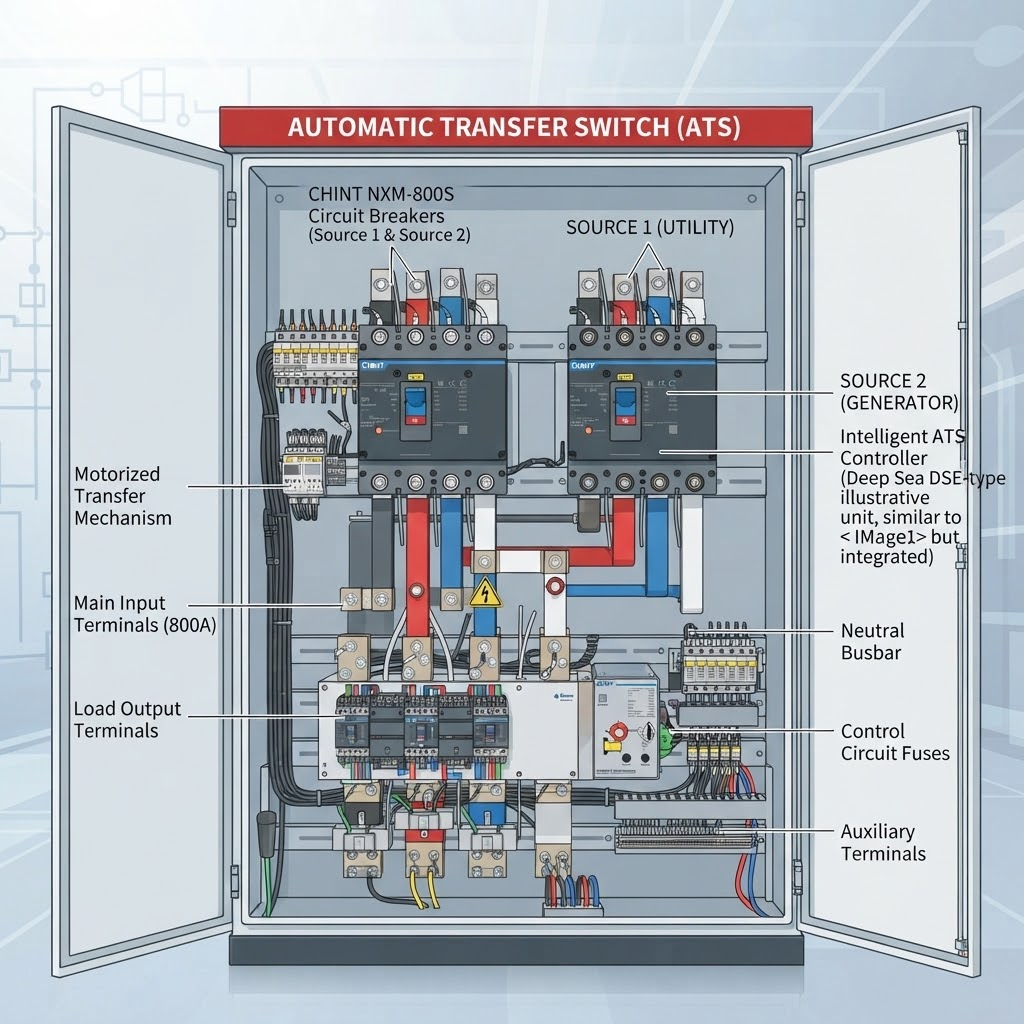
У индустријским и комерцијалним објектима, одржавање непрекидног напајања није само погодност – то је оперативна неопходност. Без обзира да ли се ради о покретању тешких расхладних компресора, континуираних производних линија или критичне инфраструктуре података, неочекивани нестанци струје могу довести до озбиљних оперативних губитака, оштећења опреме и скупих застоја.
Да би се заштитили од кварова у мрежи, објекти се ослањају на специјализовану опрему за управљање напајањем. Међу њима, ормар за двоструко пребацивање напајања са аутоматским прекидачем (ATS) истиче се као основна заштита. Али како... АТС ормарић разликује од стандардног електричног кућишта?
У овом водичу, анализирамо дизајн, функцију и кључне разлике између ATS ормара за двоструки пренос енергије и општих електричних кућишта како бисмо вам помогли да разумете њихове одговарајуће улоге у индустријској дистрибуцији енергије.
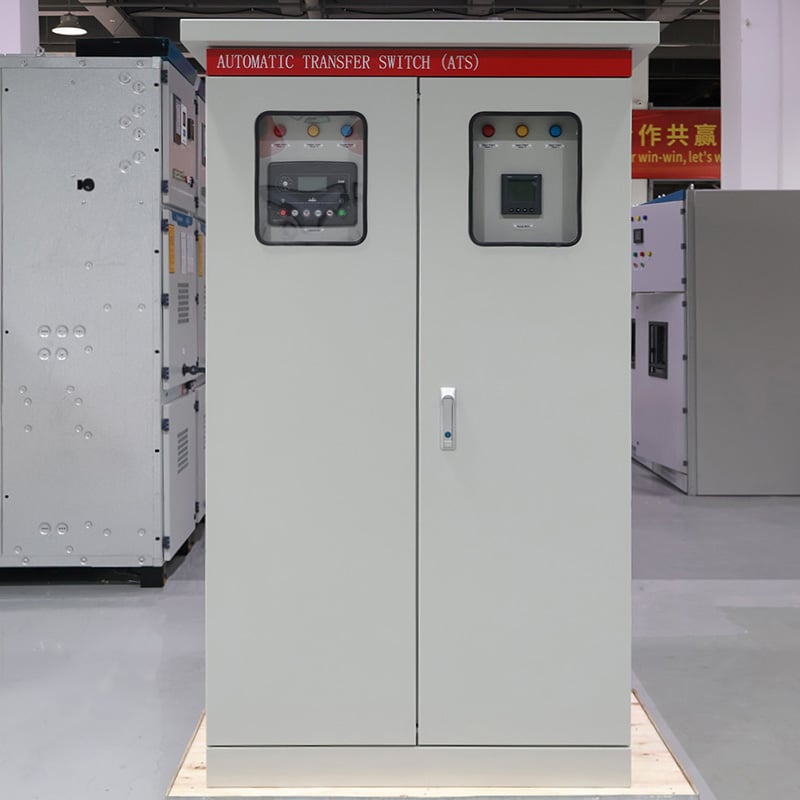
Шта је ATS двоструки преносни ормарић?
ATS ормар за двоструки пренос напајања је специјализовано индустријско кућиште велике снаге дизајнирано за управљање и аутоматизацију пребацивања напајања између два независна извора напајања - обично примарне комуналне мреже и резервног дизел генератора.
У својој суштини, систем континуирано прати долазно примарно напајање (као што је трофазни четворожични напајање из мреже од 800 А). Ако дође до потпуног нестанка струје, губитка фазе, озбиљног пада напона или флуктуације фреквенције, интелигентна контролна јединица ATS ормара аутоматски покреће сигнал за покретање резервног генератора. Када се напон и фреквенција генератора стабилизују, систем покреће моторизовани механизам за прекидање како би беспрекорно пребацио оптерећење без ручне интервенције.
Кључне карактеристике ATS ормарића:
Интеграција са два извора: Прихвата улазе и из примарне комуналне услуге и из резервне генерације.
Аутоматизовано праћење и управљање: Опремљен програмабилним дигиталним контролерима који прате напон, фазни редослед и фреквенцију у реалном времену.
Механизам за прекидање велике струје: Користи робусне моторизоване прекидаче или механизме контактора велике снаге способне да безбедно поднесу велика струјна оптерећења (нпр. 800А и више).
Безбедност међусобног блокирања: Поседује механичке и електричне блокаде како би се спречило истовремено повезивање комуналног напајања и напајања генератора, избегавајући опасно повратно напајање.
Шта је стандардно електрично кућиште?
Стандардно електрично кућиште (често називано разводном кутијом, разводном кутијом или кућиштем панела) је заштитно метално или неметално кућиште дизајнирано за затварање електричних компоненти као што су прекидачи, терминални блокови, релеји и ожичење.
За разлику од ATS кућишта, стандардно електрично кућиште је кућиште опште намене. Његова примарна мисија је заштита животне средине и организација. Оно штити унутрашње електричне компоненте од прашине, влаге, физичког удара и случајног људског контакта, али не поседује аутоматизовану логику пребацивања извора или могућности управљања двоструким напајањем, осим ако није прилагођено одређеним уређајима.
Кључне карактеристике стандардних кућишта:
Дистрибуција из једног извора: Обично прима напајање из једног узводног напајања и дистрибуира га преко више прекидача грана.
Модуларна свестраност: Може се конфигурисати за осветљење, грејање, вентилацију и климатизацију, контролу мотора или општу дистрибуцију електричне енергије.
Фокусирана заштита: Даје приоритет физичкој заштити од продора (ИП оцене), структурној издржљивости и термалном управљању.
Основне разлике:
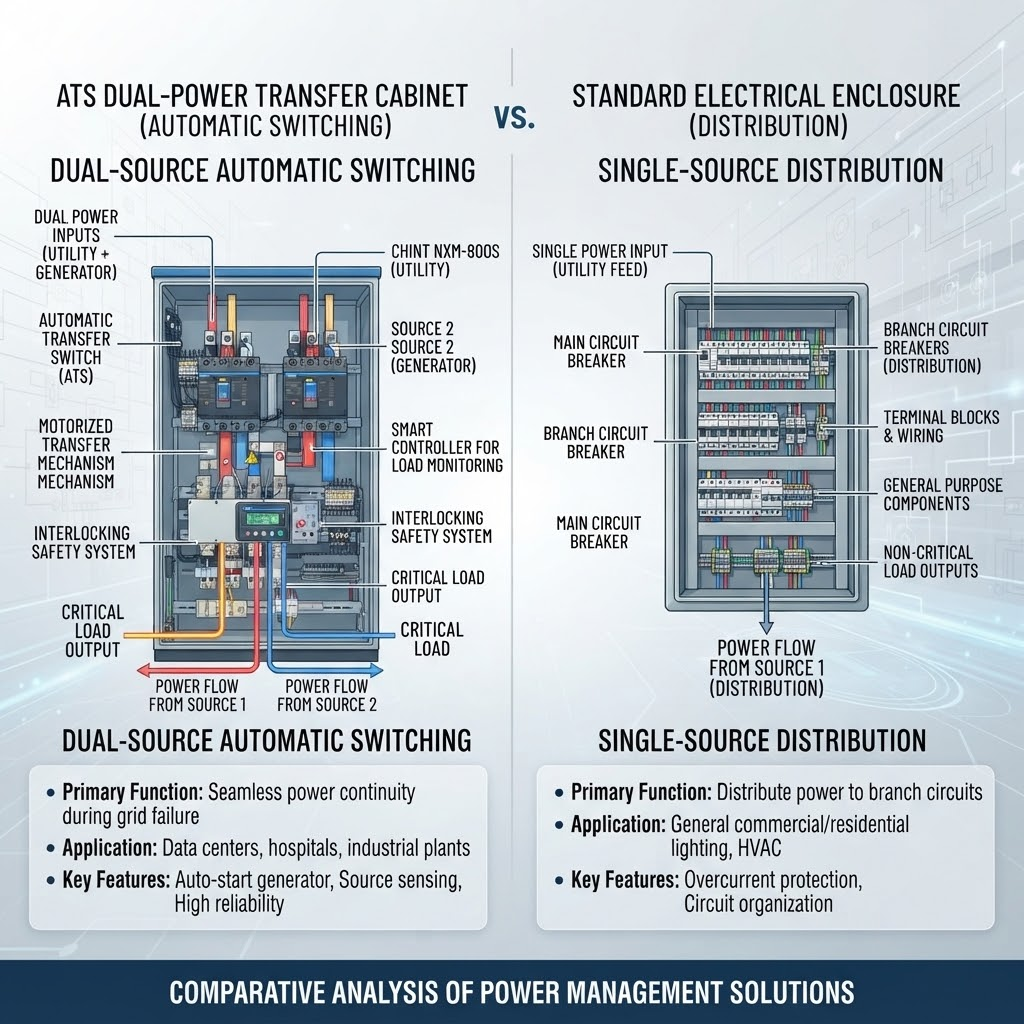
ATS кућиште са двоструким напајањем у односу на стандардно електрично кућиште: Табела упоређивања
Карактеристика / Аспект |
ATS двоструки преносни ормарић |
ATS двоструки преносни ормарић |
Основна функција |
Аутоматски пребацује између примарног и резервног извора напајања током квара мреже |
Смешта, организује и штити опште компоненте електричне дистрибуције |
Улаз снаге |
Двоструки улази за напајање (комунална мрежа + резервни генератор) |
Типично један улаз за напајање (један узводни фидер) |
Контролна интелигенција |
Интегрисани дигитални контролер за аутоматско праћење напона/фазе |
Пасивно становање (ослања се на спољне или ручне уређаје за управљање) |
Унутрашње компоненте |
Моторизовани прекидачи, интелигентни контролери, блокаде, сабирнице |
Аутоматски прекидачи, терминални блокови, каблови, заштитници од пренапона |
Фокус на примену |
Критични континуирани објекти који не захтевају време застоја (нпр. хладњаче, постројења) |
Општа комерцијална, индустријска или стамбена дистрибуција |
Оперативни режим |
Аутоматизована и ручна заштита од отказа |
Ручна или статичка дистрибуција кола |
Зашто је ATS ормар неопходан за критичне индустријске објекте?
У окружењима континуиране производње – као што су индустријска расхладна постројења, хемијска прерада или центри података – изненадни прекид напајања може изазвати катастрофалне последице. На пример, у великим постројењима за производњу леда, изненадни нестанак струје тренутно зауставља компресоре, што доводи до неравнотеже притиска расхладног средства, топљења леда, кварења серија и потенцијалног оштећења компресора приликом изненадног ручног поновног покретања.
ATS ормар са двоструким напајањем елиминише ове ризике пружајући:
1.Тренутна изолација грешке: Детекција аномалије у милисекундама и покретање генерисања резервне копије у хитним случајевима.
2.Беспрекорни пренос оптерећења: Штити осетљива моторна оптерећења и тешке машине од неправилних флуктуација снаге, ублажавајући термичке или лучне ризике.
3.Аутоматизовани опоравак: Обнавља нормалан рад без потребе да особље ручно пребацује тешке индустријске прекидаче у просторијама са опасним електричним уређајима.
Кључна разматрања при избору кућишта ATS-а
Приликом планирања или спецификације ATS система за двоструки пренос енергије за индустријски пројекат, инжењери морају да процене неколико критичних параметара:
Називна струја и носивост: Осигурајте да расклопна постројења и робусна конструкција сабирница одговарају укупним захтевима постројења за оптерећење (нпр. 400A, 800A или више трофазне снаге).
Архитектура система: Проверите да ли је потребна конфигурација са 3 или 4 пола (трофазни четворожични са прекидачем неутралног вода) на основу стандарда за уземљење и прекидач неутралног вода.
Карактеристике контролера: Потражите програмабилне параметре праћења, евидентирање догађаја, портове за даљинску комуникацију (Modbus/Ethernet) и могућности ручног пребацивања.
Заштита кућишта (IP степен): Изаберите одговарајућу заштиту од прашине и воде (нпр. IP54 или IP65) у зависности од тога да ли је ормар инсталиран у чистој затвореној просторији са електричним уређајима или у тешком индустријском окружењу.
Често постављене питања
П1: Која је примарна функција ATS ормара за двоструки пренос енергије?
А 1aTS ормар за двоструки пренос напајања континуирано прати примарно напајање из електронске мреже, аутоматски пребацујући оптерећење на резервни генератор током прекида напајања или падова напона како би се осигурао непрекидан индустријски рад.
П2: Како се ATS панел пребацује између напајања из мреже и резервног генератора?
А 2систем користи дигитални контролер за детекцију кварова у мрежи, сигнализирање генератору за покретање и управљање моторизованим прекидачима за беспрекорну промену извора напајања када се параметри стабилизују.
П3: Зашто је трофазни четворожилни ATS систем од 800A неопходан за велика индустријска оптерећења?
А 3трофазни четворожилни ATS систем од 800A пружа висок струјни капацитет и робусне сабирнице потребне за безбедно управљање великим индуктивним оптерећењима у индустријским објектима без термичког или лучног ризика.
П4: Који IP заштитни знак и заштиту животне средине захтевају индустријска ATS кућишта?
А 4индустријска ATS кућишта обично захтевају степен заштите од продора IP54 или IP65 како би се заштитила од прашине, влаге и случајног прскања у захтевним индустријским радним окружењима.
П5: Какво рутинско одржавање захтева ГГД?
А 5aTS кућиште је посебно намењено за аутоматско прекидање са два извора, док стандардно дистрибутивно кућиште једноставно садржи заштитне прекидаче за дистрибуцију једног доводног напајања.
Закључак
Избор праве стратегије електричних кућишта је од виталног значаја за оперативну безбедност и континуитет пословања. Док стандардна електрична кућишта чине окосницу свакодневне дистрибуције електричне енергије, ATS ормари за двоструки пренос енергије служе као крајња линија одбране од неочекиваних прекида у напајању мрежом. Разумевањем њихових различитих улога, системских захтева и предности интеграције, инжењери објеката могу да изграде робусну, безбедну енергетску инфраструктуру која одржава критичне операције глатким у било којим околностима.
Садржај
- Шта је ATS двоструки преносни ормарић?
- Шта је стандардно електрично кућиште?
- Основне разлике:
- Зашто је ATS ормар неопходан за критичне индустријске објекте?
- Кључна разматрања при избору кућишта ATS-а
-
Често постављене питања
- П1: Која је примарна функција ATS ормара за двоструки пренос енергије?
- П2: Како се ATS панел пребацује између напајања из мреже и резервног генератора?
- П3: Зашто је трофазни четворожилни ATS систем од 800A неопходан за велика индустријска оптерећења?
- П4: Који IP заштитни знак и заштиту животне средине захтевају индустријска ATS кућишта?
- П5: Какво рутинско одржавање захтева ГГД?
- Закључак