 EN
EN


Dalam infrastruktur industri dan komunikasi moden, agihan kuasa yang stabil merupakan nyawa sistem operasi. Khususnya bagi stesen komunikasi State Grid, sebuah Panel Agihan DC jauh lebih daripada sekadar kotak sambungan biasa; ia adalah "Penjaga Keselamatan" dan "Otak Pemantauan" yang memastikan isyarat komunikasi kekal tidak terganggu 24/7.
Artikel ini memberikan analisis mendalam mengenai panel pengagihan DC ini yang direka khas untuk stesen komunikasi. Kami akan menganalisis logik utamanya, pemilihan komponen bertaraf industri, dan mengapa rekabentuk tersuai telah menjadi trend dominan dalam grid kuasa moden.
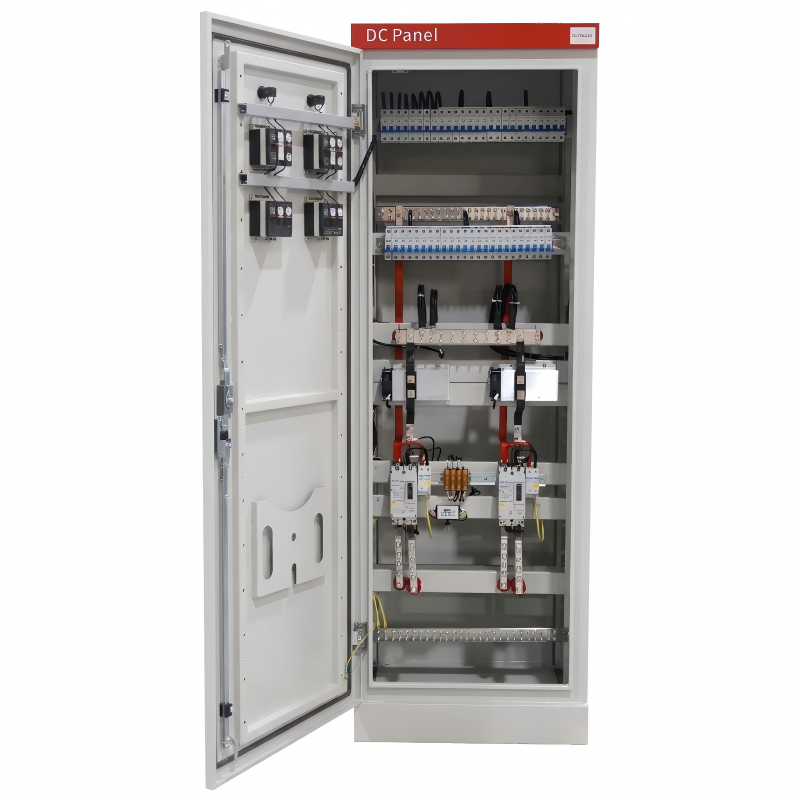
Apakah Panel Pengagihan DC (Panel DC)?
Panel Pengagihan DC ialah sejenis peralatan elektrik profesional yang digunakan untuk mengurus, mengagihkan, dan memantau kuasa DC secara terpusat. Di stesen komunikasi, panel ini biasanya berfungsi sebagai penghubung antara penyearah atau bank bateri dengan beban terminal. Ia menerima kuasa DC (biasanya 48V, 110V, atau 220V DC) dan mengagihkannya secara tepat kepada pelbagai peranti suis komunikasi.
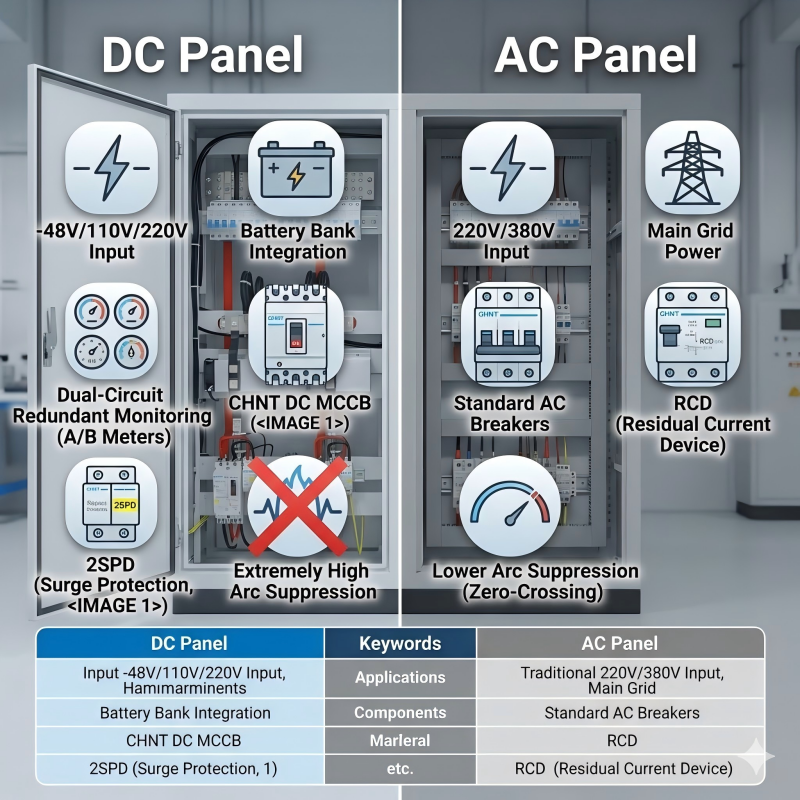
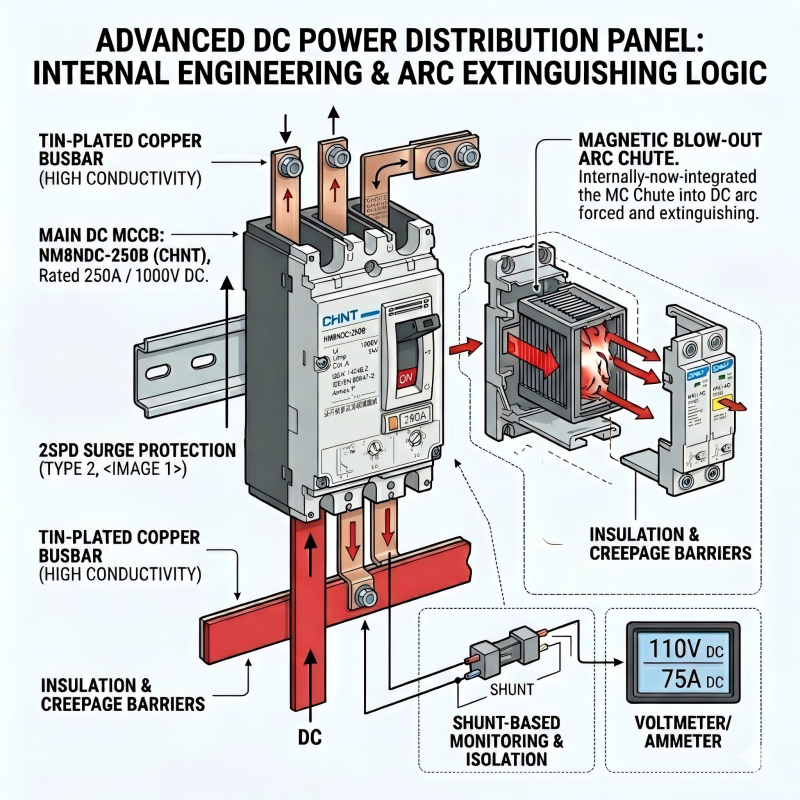
Berbanding panel AC tradisional, panel DC mempunyai keperluan teknikal yang lebih ketat dari segi penekanan lengkung (arc suppression), perlindungan polariti, dan kestabilan voltan. Panel ini mesti secara khusus menangani cabaran memadamkan lengkung, kerana arus DC tidak mempunyai "titik persilangan sifar".
Analisis Komponen Utama: Mencerminkan Kecekapan Pembuatan Profesional
Pemerhatian terhadap struktur dalaman panel pengagihan DC berprestasi tinggi ini menunjukkan rekabentuk yang sepenuhnya berfokus pada kebolehpercayaan tinggi:
Sistem Pemantauan Dual-Sirkuit Berketepatan Tinggi:
Bahagian hadapan kabinet mengintegrasikan voltmeter dan ammeter dual-sirkuit. Rekabentuk pemantauan berlebihan ini membolehkan personel operasi dan penyelenggaraan (O&M) membandingkan status operasi dua sumber kuasa bebas secara masa nyata, memastikan fluktuasi voltan kekal dalam had keluwesan keselamatan semasa operasi peralatan.
Pemutus Litar DC Tahap Industri & Perlindungan Terhadap Lonjakan:
Komponen perlindungan utama menggunakan pemutus arus terus (DC) khas dari jenama terkenal seperti CHINT (contohnya siri NM8NDC DC MCCB), dengan voltan kadar sehingga 1000 V. Gabungan ini bersama Peranti Pelindung Gelombang Jenis 2 (2SPD) membolehkan sistem menahan kesan kejutan voltan tinggi secara seketika akibat kilat atau pengalihan sistem, serta melindungi kad komunikasi mahal di bahagian hilir.
Reka Bentuk Busbar & Penebat yang Dioptimumkan:
Bahagian dalaman dilengkapi dengan busbar tembaga berlapis timah berketelusan tinggi dan penyokong penebat merah yang ditebalkan. Reka bentuk ini tidak hanya meningkatkan kapasiti pengaliran arus tinggi tetapi juga mengurangkan secara ketara risiko litar pintas elektrik akibat kelembapan atau pengumpulan habuk melalui susunan jarak merayap (creepage distance) yang strategik.
Panel DC berbanding Panel AC: Perbandingan Spesifikasi Teknikal
Memahami perbezaan teknikal antara panel-panel ini adalah penting untuk memastikan keselamatan kuasa stesen asas:
Ciri |
Panel Agihan Arus Terus (Panel DC) |
Panel Agihan Arus Ulang-alik (Panel AC) |
Aplikasi |
Bilik Telekomunikasi, Pusat Data, Penyimpanan Tenaga Suria |
Kuasa Industri, Pembinaan Awam |
Pemadaman Busur |
Sangat Tinggi (Memerlukan tiupan magnet khas) |
Lebih Rendah (Arus secara semula jadi padam pada titik sifar) |
Konfigurasi Utama |
Shunt DC, Pemantauan Kutub, Pemutus Litar DC |
MCB AC, Kontraktor AC, Perlindungan Kebocoran |
Metrik Teknikal |
Kawalan Jatuhan Voltan, Penekanan Riak |
Faktor Kuasa, Jumlah Distorsi Harmonik (THD) |
Mengapa Stesen Komunikasi Memerlukan Panel DC Yang Disesuaikan?
Pengoptimuman Ruang Ekstrem:
Untuk stesen komunikasi dengan ruang terhad, struktur Reka Bentuk Slim (berdiri di lantai) digunakan untuk mencapai pengagihan cabang berketumpatan tinggi dalam tapak yang seminimal mungkin.
Jaminan Kuasa Dual-Redundan:
Kotak pelindung tersuai menyokong logik input redundan 1+1. Jika litar kuasa utama gagal, sistem akan beralih secara lancar ke kuasa cadangan, mencapai "kelangsungan operasi tanpa henti" bagi perkhidmatan komunikasi.
Antara Muka Operasi & Penyelenggaraan Digital:
Berdasarkan keperluan khusus, modul komunikasi RS485 atau Ethernet boleh diintegrasikan. Ini membolehkan semua parameter elektrik dan status pemutus dihantar ke sistem pemantauan latar belakang secara masa nyata, menyokong pemeriksaan jarak jauh.
Soalan Lazim (FAQ)
Soalan 1: Mengapa kuasa DC lebih diutamakan berbanding kuasa AC untuk stesen komunikasi?
A: Sistem DC menyediakan penyelesaian sandaran yang paling boleh dipercayai apabila dipasangkan dengan bank bateri. Semasa kegagalan bekalan kuasa, bateri membekalkan kuasa secara langsung kepada peralatan tanpa memerlukan penyongsang. Ini mengelakkan kehilangan tenaga semasa proses penukaran dan mencegah sebarang kelengahan masa dalam pengalihan bekalan kuasa.
S2: Adakah pemutus litar DC boleh digantikan dengan pemutus litar AC?
J: Tidak sama sekali. Oleh kerana arus DC tidak mempunyai titik silang sifar secara semula jadi, lengkung yang terhasil amat sukar untuk dipadamkan. Penggunaan pemutus litar AC untuk memutuskan arus DC boleh dengan mudah menyebabkan lengkung berterusan, yang seterusnya mengakibatkan kebakaran peralatan atau kegagalan elektrik sepenuhnya.
S3: Bagaimanakah saya memilih arus bernilai bagi panel agihan DC?
J: Pemilihan harus mengikut peraturan 1.25 hingga 1.5 kali beban. Sebagai contoh, jika jumlah arus bernilai keseluruhan peralatan yang disambungkan ialah 100A, maka kapasiti bar bus atau pemutus litar sebanyak 125A atau 150A disyorkan untuk mengendali lonjakan semasa permulaan dan mencegah haba berlebihan semasa operasi jangka panjang.
Soalan 4: Seberapa pentingkah Peranti Pelindung Surja (SPD) dalam Panel DC Telekomunikasi?
Jawapan: Ia sangat kritikal. Memandangkan stesen komunikasi kerap dilengkapi dengan antena luaran atau terletak di kawasan terpencil, stesen-stesen ini amat rentan terhadap kilat teraruh. SPD Jenis 2 (Perlindungan Surja Jenis 2) menghadkan voltan tinggi seketika kepada tahap yang boleh ditahan oleh peralatan, berfungsi sebagai barisan pertahanan akhir bagi papan litar mahal.
Soalan 5: Adakah panel ini menyokong pemantauan jarak jauh?
Jawapan: Ya. Struktur dalaman direka dengan ruang terbuka khas untuk Unit Pemantauan Pintar Digital. Melalui protokol RS485/Modbus, operator boleh memantau status suis dan data arus setiap cabang secara masa nyata dari pusat kawalan yang berjarak berpuluh batu.
Kesimpulan
Panel pengagihan DC ini, yang direka khusus untuk stesen komunikasi State Grid, membina halangan kukuh bagi rangkaian komunikasi moden melalui pemilihan komponen perkakasan yang ketat (seperti komponen khusus DC CHINT) dan rekabentuk struktur industri yang tersusun.
Sama ada anda sedang mencari panel elektrik berstandard tinggi untuk persekitaran DC 48V/110V/220V atau memerlukan penyesuaian bertaraf NEMA/IP bagi iklim tertentu, rekabentuk industri profesional dan proses pembuatan merupakan asas kestabilan peralatan anda.